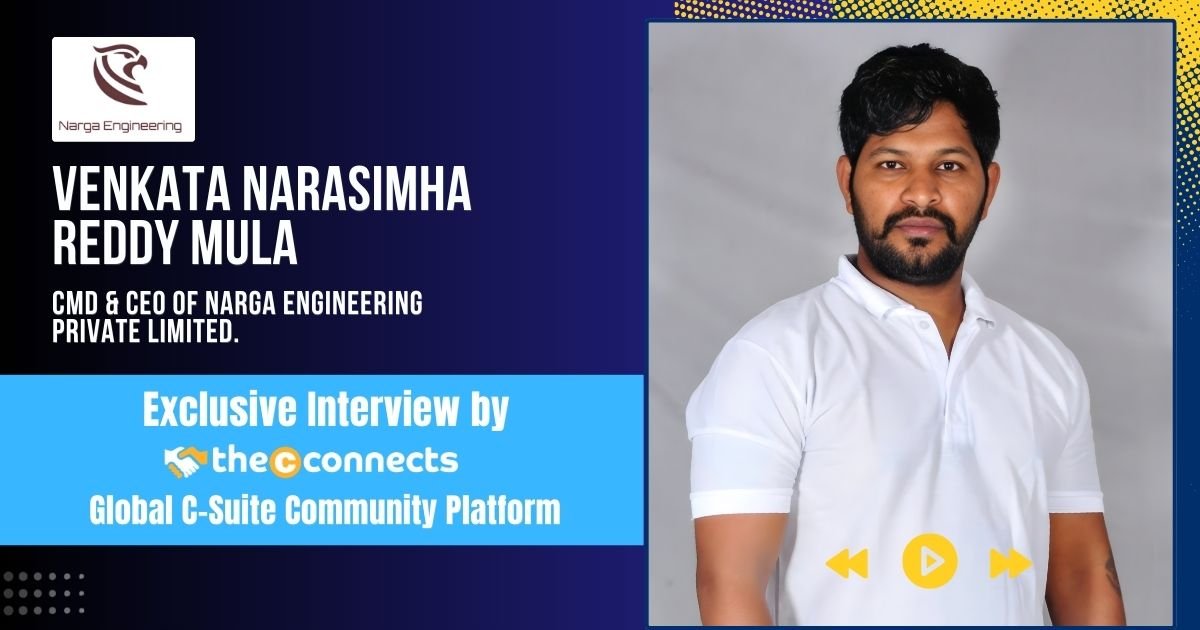

TheCconnects: Venkata, it’s a pleasure to have you with us. When we look at your journey, it’s clear that engineering, leadership, and innovation have always been central themes. Take us back to the beginning-how did your professional journey unfold, and what eventually led you to where you are today?
Venkata Narasimha Reddy Mula: Thank you, it’s great to be here. My journey has been very hands-on from the start. I began my career deeply rooted in manufacturing and automotive engineering, working closely with hardware, systems integration, and production environments. Those early years taught me the value of precision, discipline, and responsibility-especially when you’re building systems that people rely on for safety and mobility. Over time, I found myself naturally moving into leadership roles, not because I wanted a title, but because I enjoyed solving complex problems and bringing teams together around a shared vision. That progression ultimately led me to lead Narga Engineering Private Limited, where I now focus on building an R&D-driven organization that can compete globally in next-generation automotive and mobility technologies.
TheCconnects: Many leaders talk about pivotal influences in their lives. Who or what has shaped the way you think about leadership and innovation?
Venkata: I’d say my biggest influences came from two directions. First, mentors I worked with early in my career-people who believed in doing things the right way, even when shortcuts seemed tempting. They emphasized quality, accountability, and long-term thinking. Second, the engineering discipline itself influenced me deeply. Engineering doesn’t allow assumptions; it demands proof, testing, and repeatability. That mindset shaped how I approach leadership as well. I believe leaders should be builders at heart-people who understand the details but can also see the bigger picture.
TheCconnects: Building an engineering-led company in today’s environment is no easy task. What have been some of the toughest challenges you’ve faced, and how did you navigate them?
Venkata: One of the biggest challenges has been balancing speed with reliability. The market moves fast, especially in areas like EVs, AI-driven systems, and connected mobility. But when you’re dealing with automotive-grade hardware or safety-critical systems, you simply cannot compromise on quality. Early on, we made a conscious decision to adopt aerospace-grade processes and ISO-aligned standards, even though it required more effort and discipline. Another challenge was building the right team. Talent is abundant, but finding people who share your values and long-term vision takes time. I overcame these challenges by being very clear about our mission and by staying patient-growth that’s rushed often becomes fragile.
TheCconnects: You’ve spent over a decade in manufacturing and automotive engineering. What lessons from that journey still guide your decisions today?
Venkata: A few lessons stand out very clearly. First, innovation without execution is just an idea. You need strong manufacturing discipline to turn concepts into reliable products. Second, systems thinking is everything. A vehicle or mobility platform isn’t just hardware or software-it’s an ecosystem. And finally, trust matters. Customers, partners, and employees all place trust in what you build. Once that trust is broken, it’s incredibly hard to earn back.
TheCconnects: The automotive and mobility space is rapidly evolving, especially with software-defined vehicles and AI. From your perspective, what’s the biggest challenge brands face today?
Venkata: The biggest challenge is integration. Many brands adopt new technologies in silos-AI here, connectivity there, hardware somewhere else. But the future belongs to those who can integrate hardware, software, data, and security into a cohesive platform. Another challenge is future-proofing. Technology cycles are getting shorter, but vehicles are expected to last for years. Designing systems that can evolve through software updates while maintaining safety and compliance is not trivial. That’s where deep R&D and long-term architecture planning become essential.
TheCconnects: How does Narga Engineering address these challenges for its customers?
Venkata: Our approach is very deliberate. We focus on end-to-end engineering-from concept and R&D to manufacturing and deployment. Whether it’s zonal ECUs, embedded systems, or intelligent telematics, we design platforms that are modular, secure, and scalable. For example, our Seslaa brand focuses on safety-first automotive technology, like the Seslaa N1-Rex dashcam, which combines edge AI, high-resolution vision, and real-time connectivity. The goal is always the same: reduce complexity for our customers while increasing reliability and intelligence in their systems.
TheCconnects: You often speak about software-defined vehicles and the “next epoch” of mobility. What does that future look like to you?
Venkata: To me, the future of mobility is intelligent, connected, and sustainable. Vehicles will increasingly behave like platforms-capable of learning, adapting, and improving over time. Software-defined vehicles will allow faster innovation cycles, better safety features, and more personalized user experiences. At the same time, sustainability will be non-negotiable. Energy efficiency, smart charging infrastructure, and responsible manufacturing will define which companies truly succeed in the long run.
TheCconnects: Outside of work, how do you unwind? Do you find it difficult to disconnect from such a fast-moving industry?
Venkata: It can be difficult, but I believe balance is essential. I enjoy spending quiet time reading-especially about technology, leadership, and history. I also like stepping away from screens and spending time reflecting. Sometimes the best ideas come when you’re not actively chasing them. Staying grounded helps me return to work with better clarity and focus.
TheCconnects: Finally, what advice would you give to aspiring entrepreneurs and engineers who want to build companies in the automotive or deep-tech space?
Venkata: My advice would be simple but honest. First, build strong fundamentals-technical depth matters, especially in deep-tech industries. Second, be patient. Real engineering companies aren’t built overnight. Third, respect the responsibility that comes with innovation. When your products affect safety, mobility, or infrastructure, you’re accountable not just to customers, but to society. If you keep learning, stay disciplined, and remain committed to quality, success will follow naturally.
TheCconnects: Thank you, Venkata, for sharing such thoughtful insights. It’s inspiring to see leaders who combine deep engineering expertise with a clear vision for the future.
Venkata: Thank you. It was a pleasure speaking with you.