
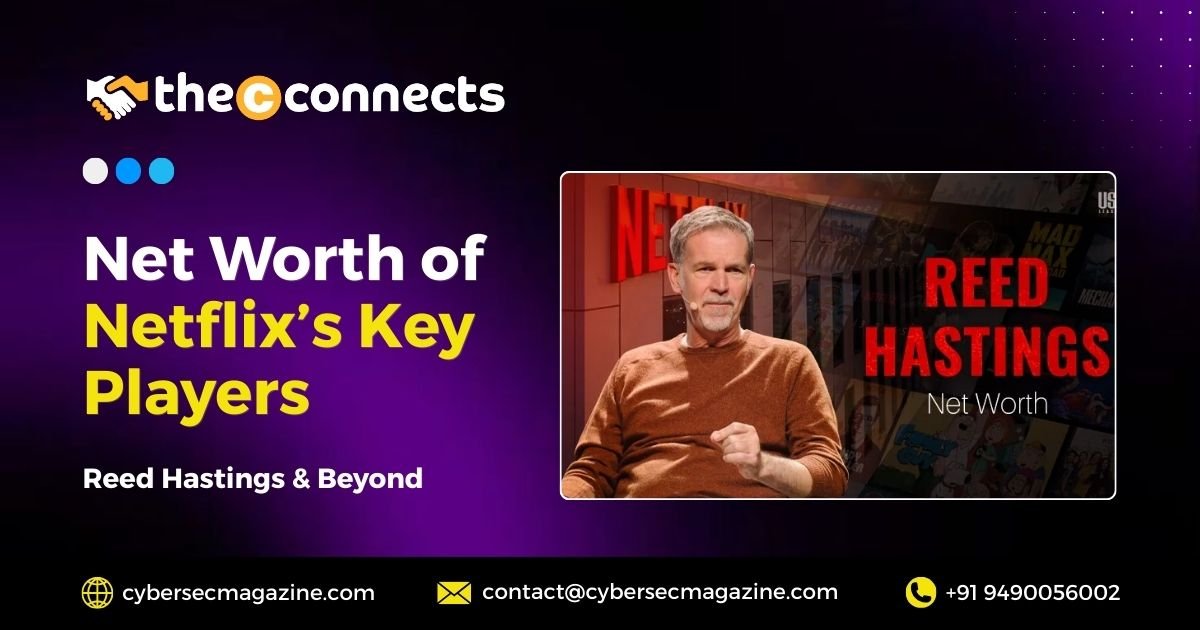

Netflix is a rare business: simultaneously a technology company, a media studio, and a global distribution platform. For entrepreneurs, media executives, and C-suite leaders, the company’s value creation story is a masterclass in product-market fit, recurring revenue, and strategic reinvestment. But what about the fortunes behind the brand? This deep dive untangles the net worth of Netflix’s most important people – from founder Reed Hastings to the co-CEOs who now run the company – and explains how equity, compensation design, and corporate strategy shape real, realizable wealth.
1. Reed Hastings: founder, chairman, philanthropist – and a complex wealth picture
Reed Hastings cofounded Netflix in 1997 and shepherded it from DVD-by-mail through streaming to the content powerhouse it is today. Although he stepped back from day-to-day CEO responsibilities in recent years and now serves as executive chair, Hastings remains one of the most consequential executives in Silicon Valley. Estimates of his net worth vary across outlets, but summary trackers tied to his Netflix holdings and public filings placed him in the multibillion-dollar range in 2025.
Hastings has also made headlines for large philanthropic commitments. In 2024 he and his wife announced a $1.1 billion gift to the Hastings Fund at the Silicon Valley Community Foundation, demonstrating how ultra-high net worth executives often convert paper wealth into public legacy and social capital. That kind of giving reduces headline net worth but is a deliberate tool for long-term impact and tax planning.
2. Ted Sarandos: content chief turned co-CEO – compensation meets realizable wealth
Ted Sarandos rose through the content ranks to become co-CEO, presiding over the company’s aggressive push into original programming. Unlike founders who may retain concentrated, locked-up equity, Sarandos’s financial position is driven by a mix of restricted stock awards, option grants, and periodic share sales tied to compensation programs. Recent executive compensation frameworks adopted by Netflix put the co-CEO target packages (including Sarandos’s) in structured, long-term restricted stock units and capped base pay-an approach designed to align leadership wealth with sustained company performance.
Analysts tracking insider holdings estimate Sarandos’s personal stake and stock realizations make his net worth notable but materially lower than founder stakes; public trackers cite hundreds of millions as a conservative, realizable figure depending on recent stock transactions and grants. For corporate leaders, Sarandos’s trajectory shows that C-level wealth at public companies often comes from carefully staged equity awards rather than one-off headline valuations.
3. Greg Peters: the product, international and now co-CEO bet
Greg Peters, who rose through product and international leadership roles before becoming co-CEO, represents a newer pattern: operational executives who accumulate equity that vests over long horizons. Peters’s net worth is driven by stock grants and insider share transactions; conservative trackers place his realizable wealth in the low hundreds of millions as of late 2025, reflecting both holdings and material secondary sales over recent years. Like other executives, Peters has realized some upside through planned sell-downs while preserving long-term alignment with shareholder value.
4. How Netflix’s compensation design creates (and limits) wealth
Netflix’s approach to executive compensation is instructive for boards everywhere. After shareholder pushback in prior years, Netflix reframed executive packages to include fixed base salaries, performance targets, and time-bound restricted stock units, rather than large, discretionary option grants. This structure reduces headline volatility in executive pay and ties executive upside more tightly to company performance and retention goals. From a wealth perspective, this means senior leaders accrue meaningful, but measured, personal fortunes rather than sudden windfalls. The corporate aim is clear: hedge against turnover risk and align leadership incentives for long-run content and subscriber economics.
5. Founder equity vs. executive equity: why the numbers differ
The reason Reed Hastings’s paper wealth is often discussed separately from Sarandos and Peters is simple: founders typically accumulate large, concentrated stakes early when valuations were low, so their percentage ownership converts into outsized paper riches as market caps grow. Executives who join later or are promoted internally accumulate compensation through grants that vest over time and often include clauses limiting immediate sale. For boards and CFOs, that means the headline “net worth” of company leaders is a mixture of ownership history, liquidity opportunities, and personal financial choices.
6. Realizable wealth: sell-downs, secondary markets, and philanthropy
Net worth is only meaningful when it can be realized without compromising corporate control or violating insider rules. Over the past decade Netflix executives have periodically sold shares-partly to diversify personal portfolios and partly to finance philanthropic commitments or lifestyle needs. Secondary sales, open-market trading, and carefully disclosed insider transactions are the usual channels. Hastings’s large philanthropic gifts are a reminder that a deliberate conversion of equity into public impact is now a common pattern among tech founders.
7. What entrepreneurs and C-suite leaders should learn
- Design equity with realism. Early founder equity and disciplined dilution strategies create the biggest wealth multipliers.
- Align comp to longevity. Time-bound, performance-based stock awards keep leadership focused on long-term enterprise value rather than short-term stock moves.
- Plan liquidity for life events. Secondary programs give executives options to diversify without forcing IPOs.
- Use philanthropy strategically. High-value donations lower headline net worth but amplify legacy and can serve tax and reputational purposes.
- Communicate transparently. Given the public nature of modern companies, boards should explain compensation frameworks to investors to avoid perceptions of misalignment.
8. Final perspective: wealth as governance signal
Netflix’s key players-founder Reed Hastings and his executive successors-reveal how modern corporate wealth is produced and disciplined. Founder stakes can create enduring fortunes, but they also carry public responsibilities. Executive compensation, carefully restructured after stakeholder feedback, demonstrates how public governance and market scrutiny shape who gets rich, how fast, and under what terms. For TheCconnects readers-entrepreneurs, board members, and C-suite executives-the Netflix story is a primer: durable wealth follows structural importance, disciplined governance, and a clear plan to convert paper value into real, purpose-driven capital.
Get featured or publish with TheCconnects Magazine
TheCconnects is an analyst-driven media, production, and publishing platform connecting leaders, founders, and executives with influential global visibility.
📧 Email: contact@thecconnects.com
📞 Call: +91 91331 10730
💬 WhatsApp: https://wa.me/919133110730


