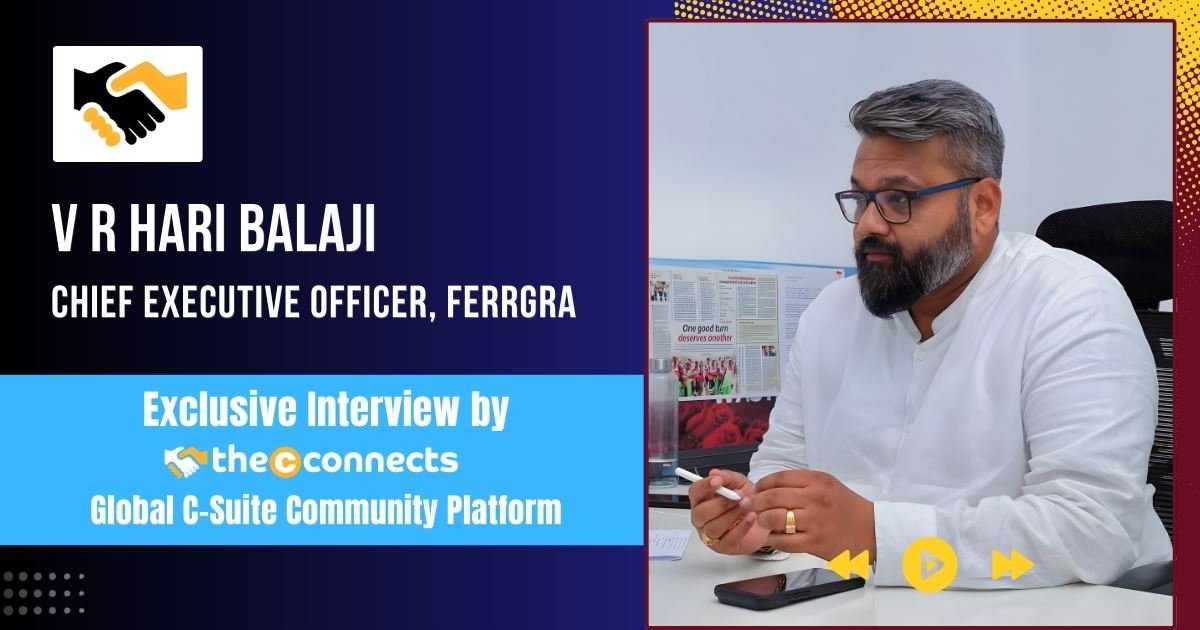

V. R. Hari Balaji is a seasoned professional with more than two decades of experience spanning hospitality, humanitarian disaster response, healthcare systems, and urban infrastructure leadership. His career journey reflects a unique blend of service excellence, operational strategy, and community-focused governance.
After building a strong academic foundation in hotel management across India and Switzerland, Hari Balaji began his career in international hospitality and hospital environments. Over time, his exposure to humanitarian challenges led him to transition into disaster management and public systems strengthening, collaborating with organizations such as UNICEF, Sphere India, CARE India, and UNFPA.
Today, as the CEO of Ferrgra, he leads large-scale sanitation infrastructure delivery and operational systems under advanced public-private partnership frameworks. His work focuses on integrating technology, governance, and citizen-centric service standards to strengthen urban sanitation systems.
In this exclusive conversation with TheCconnects, V R Hari Balaji shares insights from his professional journey, leadership philosophy, and vision for building resilient civic infrastructure.
TheCconnects: Can you walk us through your journey and what connects all your roles?
V R Hari Balaji:
My professional journey spans over two decades across hospitality, humanitarian disaster response, and urban infrastructure leadership. I began with a strong foundation in hotel management, studying in India and Switzerland. Later, my exposure to large-scale crises shaped my shift into disaster management and community-focused systems.
The connecting thread across all my roles is building structured systems that ensure dignity, safety, and service quality for people, whether in hospitals, disaster zones, or city sanitation infrastructure.
TheCconnects: Why did you leave an international career and return to India?
V R Hari Balaji:
After working in international hospitality and hospital environments, I realized that my skills could create greater impact in India’s public systems. I pursued an MBA in Hospital Management and transitioned into humanitarian and disaster response roles with organizations like UNICEF, Sphere India, CARE India, and government partners.
This shift was driven by my desire to contribute to resilience-building and integrated crisis response frameworks.
TheCconnects: What was one major challenge you saw during disaster response work?
V R Hari Balaji:
During disaster deployments, one key challenge is that vulnerabilities-especially related to gender and protection-often remain invisible.
In my training work with UNFPA and government agencies, I focused on sexual and reproductive health during disasters and strengthening response systems. Ensuring safety, dignity, and coordination in relief settings is critical for successful humanitarian response.
TheCconnects: You are now leading a major sanitation infrastructure project. What does your role involve?
V R Hari Balaji:
Currently, I serve as the CEO of Ferrgra in Chennai, where I oversee end-to-end delivery of sanitation infrastructure under the DBFOT model and Hybrid Annuity framework.
My responsibility includes managing operations, service quality, uptime, compliance, and stakeholder governance across Zones 7–10.
TheCconnects: How does technology improve public sanitation service delivery?
V R Hari Balaji:
Modern sanitation management must be proactive. Our operational framework uses performance monitoring, citizen feedback, and digital governance to ensure accountability.
This approach brings structured service delivery similar to hospitality standards, but applied to essential civic infrastructure.
TheCconnects: What was your experience in solid waste management before Ferrgra?
V R Hari Balaji:
At Urbaser Sumeet, I was part of the pre-commissioning team for one of the world’s largest IoT- and KPI-based solid waste management projects.
I led Information, Education, and Communication (IEC) initiatives, curated awareness campaigns, and handled corporate communication and PR across seven zones, covering 8.5 lakh households and 12,000 staff.
TheCconnects: What is the biggest professional lesson you’ve learned?
V R Hari Balaji:
The most important lesson is that empathy alone is not enough-impact requires systems, coordination, and governance.
Whether managing humanitarian projects across India or leading civic-tech sanitation operations today, structured collaboration is what ensures sustainable outcomes.
TheCconnects: What advice would you give aspiring leaders in civic-tech and social impact?
V R Hari Balaji:
Don’t chase speed-chase depth of impact. Civic systems require long-term thinking, stakeholder alignment, and trust-building.
True innovation lies in designing services that last, scale responsibly, and deliver dignity to citizens daily.