
Why Analyzing Competitor Funnels is the Ultimate Growth Hack
In the fast-paced world of digital business, creating a high-converting customer journey from scratch is a daunting and expensive task. Every day, companies spend millions of dollars testing landing pages, optimizing email sequences, and tweaking ad copy to figure out what turns a casual browser into a loyal buyer. Fortunately, you do not have to reinvent the wheel. The secret to accelerating your own business growth lies in mastering competitor analysis and reverse-engineering the most successful digital marketing funnels in your industry.
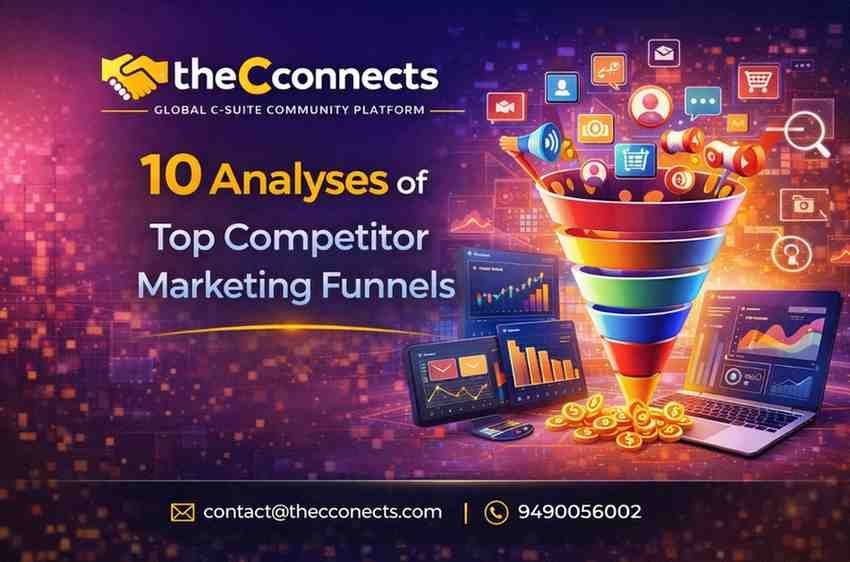
A marketing funnel represents the psychological and practical journey your customer takes, from the moment they first realize they have a problem (Awareness), to evaluating solutions (Consideration), to making a purchase (Conversion). When you analyze how industry giants and direct competitors structure their sales funnels, you gain a massive strategic advantage. You can see exactly which conversion strategies are working, identify gaps in their approach, and adapt their proven frameworks to fit your own brand.
Whether you are a startup founder looking for cost-effective lead generation or a seasoned marketer aiming to optimize a complex B2B sales cycle, studying the best in the business is mandatory. In this comprehensive guide for TheCconnects Magazine, we have broken down 10 of the most effective and innovative competitor marketing funnels. We will explore their structural mechanics, the tools they use, and most importantly, how you can extract and apply their strategies to skyrocket your own conversion rates.
1. HubSpot: The Inbound Content Machine
The Funnel Structure
* Awareness: HubSpot generates massive organic traffic through an incredibly comprehensive SEO-driven blog. They rank for almost every conceivable keyword related to marketing, sales, and customer service.
* Consideration: Instead of asking for a sale immediately, they offer high-value, ungated and gated resources-like free marketing templates, eBooks, and industry reports-in exchange for an email address.
* Conversion: Once a user is in their ecosystem, they are nurtured via targeted email sequences and offered a free version of HubSpot’s CRM. The final conversion to a paid tier happens organically as the user’s business grows and requires more advanced features.
Key Strategies and Tools Used
HubSpot practically invented “Inbound Marketing.” Their primary tool is their own CRM and marketing automation software, paired with relentless content marketing. They rely heavily on lead generation through “content upgrades” (e.g., reading an article about social media and being offered a free social media calendar template).
Why It Is Effective & How to Adapt It
It works because it leads with immense, undeniable value. By the time a customer pays for HubSpot, they have already received thousands of dollars worth of free education and utility. Adaptation: You do not need HubSpot’s budget to do this. Identify the biggest pain points of your target audience, write high-quality, SEO-optimized blog posts solving those problems, and offer a free, downloadable tool or template to capture their email.
2. ClickFunnels: The “Value Ladder” Approach
The Funnel Structure
* Awareness: Aggressive Facebook and YouTube ad campaigns, often featuring the founder (Russell Brunson), combined with a massive affiliate marketing network.
* Consideration: The entry point is rarely the core software. Instead, it is a “Free Plus Shipping” book offer (like DotCom Secrets). The customer pays a few dollars for shipping, entering their credit card details.
* Conversion: Once the credit card is entered, the user is immediately presented with a series of One-Click Upsells (e.g., an audiobook version, a premium course). Eventually, they are pitched the core software subscription via a webinar or an email sequence.
Key Strategies and Tools Used
This is a classic “Tripwire” sales funnel. By getting the customer to make a micro-commitment (paying $9.95 for shipping), they break the buyer’s friction. Tools involved include ClickFunnels software, Stripe for frictionless upsells, and heavy retargeting pixels.
Why It Is Effective & How to Adapt It
This funnel liquidates ad spend immediately. The revenue from the book shipping and immediate upsells pays for the Facebook ads, allowing them to acquire software leads essentially for free. Adaptation: If you sell a high-ticket service, create a low-cost, high-value entry product (an audit, a mini-course, a physical book) to convert cold traffic into buyers before pitching your premium offering.
3. Canva: The Product-Led Growth (PLG) Funnel
The Funnel Structure
* Awareness: Canva captures users who are actively searching for solutions via programmatic SEO. If you Google “Instagram Story Template” or “Resume Builder,” Canva has a dedicated landing page ranking at the top.
* Consideration: The consideration phase is the product itself. Users are prompted to create a free account to instantly use the template they searched for.
* Conversion: The user hits a “paywall” when they try to export their design using a premium element (like a specific stock photo or a transparent background). The friction to upgrade to Canva Pro is incredibly low because the user has already finished their work and simply wants the final result.
Key Strategies and Tools Used
Canva relies on Product-Led Growth, where the product acts as its own primary marketing tool. They use dynamic landing pages, cloud-based design software, and freemium pricing models.
Why It Is Effective & How to Adapt It
It eliminates the traditional “sales pitch.” The user experiences the “Aha!” moment of value before ever being asked for money. Adaptation: If you offer SaaS or a digital service, give users a highly functional free version. Gate the “convenience” or “advanced” features behind a paywall, rather than gating the core utility.
4. Netflix: The Frictionless Trial & Retargeting Loop
The Funnel Structure
* Awareness: Broad-reach brand marketing, trailers on YouTube, social media buzz, and outdoor billboards advertising exclusive content.
* Consideration: The Netflix homepage is a masterclass in minimalist conversion optimization. It features a single, clear value proposition: “Unlimited movies, TV shows, and more. Cancel anytime.”
* Conversion: The signup process is completely frictionless. Netflix requires minimal information to start an account. If a user abandons the checkout, Netflix uses aggressive, personalized email sequences and retargeting ads featuring the specific shows the user was browsing.
Key Strategies and Tools Used
Netflix uses extreme simplicity and risk reversal (“Cancel anytime”). They utilize advanced data analytics to personalize the landing page artwork based on the user’s demographic and browsing history.
Why It Is Effective & How to Adapt It
Netflix understands that their biggest enemy is hesitation. By removing all visual clutter from their landing page and emphasizing that there are no long-term contracts, they eliminate purchase anxiety. Adaptation: Audit your own landing pages. Remove unnecessary navigation links, reduce the number of form fields to the absolute minimum, and prominently display a risk-free guarantee to boost conversions.
5. Zapier: The Programmatic SEO Funnel
The Funnel Structure
* Awareness: Zapier connects different apps together. They generated awareness by programmatically creating thousands of unique landing pages for every possible app combination (e.g., “Connect Gmail to Slack,” “Connect Trello to Asana”).
* Consideration: Users land on these highly specific pages via Google search. Zapier clearly explains how the two apps will work together and offers pre-built templates to set up the automation instantly.
* Conversion: Users sign up for a free tier. As they automate more tasks and build more complex “Zaps,” they inevitably hit their monthly task limit, prompting a seamless upgrade to a paid plan.
Key Strategies and Tools Used
Programmatic SEO is the backbone here. They use database-driven web development to automatically generate thousands of search-engine-optimized landing pages targeting highly specific, low-competition, high-intent keywords.
Why It Is Effective & How to Adapt It
It captures users at the exact moment of high intent. If someone is searching “how to connect Mailchimp to Google Sheets,” they need a solution right now. Adaptation: Identify all the specific use cases or integrations your product/service offers. Create a dedicated, SEO-optimized landing page for each specific use case, rather than lumping them all onto one generic “Features” page.
6. Crazy Egg: The High-Converting Minimalist Page
The Funnel Structure
* Awareness: Targeted paid advertising and content marketing aimed at web developers and digital marketers looking to improve website conversions.
* Consideration: For years, Crazy Egg’s homepage had almost no text. It was simply a headline and a single form field asking the user to “Enter your website URL to see your heatmap.”
* Conversion: Once the user entered their URL, they were pushed to a secure checkout page to start a 30-day free trial. To actually see the heatmap they just requested, they had to complete the registration.
Key Strategies and Tools Used
This funnel utilizes the “Zeigarnik effect”-the psychological principle that people remember uncompleted tasks better than completed ones and feel a strong urge to finish what they start.
Why It Is Effective & How to Adapt It
By asking for the URL first, Crazy Egg gets the user to invest effort immediately. Once the user takes that first micro-step, the psychological barrier to entering an email address drops significantly. Adaptation: Instead of asking for an email address upfront on your landing page, ask an engaging, interactive question first. Use a multi-step form where the user makes a small, low-friction choice before being asked for their contact details.
7. MasterClass: The Celebrity Authority Funnel
The Funnel Structure
* Awareness: MasterClass heavily utilizes highly polished, cinematic video ads on YouTube, Facebook, and Instagram featuring globally recognized celebrities (e.g., Gordon Ramsay cooking, Serena Williams playing tennis).
* Consideration: The ads drive traffic to beautifully designed landing pages that feature “Class Trailers.” These trailers are designed to feel like premium movie previews, building immense emotional desire and aspiration.
* Conversion: The pricing model is simple-an annual subscription for access to all classes. They use heavy retargeting; if you watch the Gordon Ramsay trailer but don’t buy, you will see ads for that specific class follow you across the internet.
Key Strategies and Tools Used
The core strategy is “Authority Marketing.” They borrow the immense credibility and trust built by celebrities to sell their platform. They rely on high-production video marketing and sophisticated cross-platform retargeting.
Why It Is Effective & How to Adapt It
People don’t buy MasterClass just for information; they buy the aspiration of learning from the absolute best. Adaptation: You don’t need A-list celebrities, but you do need authority. Partner with well-known micro-influencers or industry experts in your specific niche to endorse your product. Use high-quality video testimonials as the core of your retargeting campaigns to build undeniable trust.
8. Gymshark: The Community-Driven Social Commerce Funnel
The Funnel Structure
* Awareness: Gymshark avoids traditional TV or print ads. Instead, they sponsor hundreds of fitness influencers on Instagram, TikTok, and YouTube who wear the clothing organically in their workout videos.
* Consideration: The consideration phase happens entirely on social media. Followers see the influencers participating in Gymshark challenges, attending pop-up events, and creating a massive sense of community and FOMO (Fear Of Missing Out).
* Conversion: Gymshark drives traffic to their e-commerce store during massive, highly anticipated “Blackout” sales or limited-edition product drops. The scarcity drives immediate, high-volume conversions.
Key Strategies and Tools Used
Influencer marketing, community building, and scarcity-driven e-commerce. They utilize Shopify Plus to handle massive traffic spikes and rely heavily on social media analytics to track which influencers drive the most sales.
Why It Is Effective & How to Adapt It
Gymshark didn’t just build a customer base; they built a cult-like community. Buyers feel like they are joining an exclusive fitness club. Adaptation: Shift your focus from transactional marketing to relational marketing. Identify passionate micro-influencers in your space. Give them free products in exchange for honest reviews, and focus on building a community around your brand’s lifestyle, not just the product features.
9. Slack: The Bottom-Up B2B Funnel
The Funnel Structure
* Awareness: Word of mouth and organic team adoption. A single employee or small team starts using Slack for a specific project because it is vastly superior to email.
* Consideration: The free version of Slack is highly functional for small groups. As the team uses it, they naturally invite other departments to join the workspace to collaborate better. This creates a powerful viral loop within the company.
* Conversion: The primary conversion trigger is the “10,000 message limit.” Once the company relies heavily on Slack, older messages disappear from the free version’s search history. To unlock their own company history, the IT department or management is forced to upgrade to a paid enterprise tier.
Key Strategies and Tools Used
This is a classic “Bottom-Up” SaaS sales model. Instead of pitching the CEO, Slack pitches the end-user. The product has built-in viral mechanics (you cannot use a chat app alone, so you must invite others).
Why It Is Effective & How to Adapt It
It bypasses the traditional, slow B2B procurement process. By the time management realizes they need to pay for the software, their entire staff is already addicted to using it. Adaptation: If you sell B2B software, make it incredibly easy for an individual employee to start using it for free without needing IT approval. Build sharing and collaboration mechanics directly into the tool so your users do the marketing for you.
10. Basecamp: The Anti-Corporate Storytelling Funnel
The Funnel Structure
* Awareness: Basecamp’s founders (Jason Fried and DHH) generate massive awareness through contrarian thought leadership. They write bestselling books, host podcasts, and post heavily on X (Twitter), challenging standard Silicon Valley business practices.
* Consideration: Their landing pages are unique. Instead of corporate jargon, they write long-form, conversational copy that reads like a letter from a friend. They openly attack the chaos of their competitors (like Slack or Jira).
* Conversion: They offer a straightforward 30-day free trial. Unlike most SaaS companies that charge “per user,” Basecamp charges a flat monthly fee regardless of team size, making the conversion decision a no-brainer for growing businesses tired of scaling software costs.
Key Strategies and Tools Used
Brand storytelling, polarizing copywriting, and disruptive pricing models. They use their own platform for everything and rely on organic brand loyalty rather than paid ads.
Why It Is Effective & How to Adapt It
Basecamp succeeds by picking a fight. They define exactly who they are for, and more importantly, who they are against. This creates fierce brand loyalty. Adaptation: Do not be afraid to be polarizing in your marketing copy. Identify a standard industry practice that frustrates your target audience, call it out, and position your product as the antidote. Furthermore, simplifying your pricing structure can often be the greatest conversion optimization tactic of all.
Conclusion: Engineering Your Ultimate Conversion Machine
As these 10 competitor analysis breakdowns demonstrate, there is no single “perfect” way to build a marketing funnel. Whether you leverage the product-led growth of Canva, the inbound content engine of HubSpot, or the psychological scarcity of Gymshark, the most effective conversion strategies all share one common trait: a deep, empathetic understanding of the customer’s journey.
By analyzing these digital marketing funnels, you can identify the exact points of friction in your own sales process. Stop guessing what might work. Look at what the market leaders are doing, deconstruct their strategies, and adapt their proven mechanics-from frictionless landing pages to automated email nurturing-to fit your unique brand. When you stop treating marketing as a series of disconnected ads and start engineering a cohesive, psychological funnel, your conversion rates will transform.
📞 Contact Us for More Marketing Insights
If you would like to stay updated with the latest marketing trends or, to share updated information about this particular article, or contribute and publish an article on this platform, please feel free to reach out to us
📩 Email: contact@thecconnects.com
📞 Call: +91 91331 10730
💬 WhatsApp: https://wa.me/919133110730