
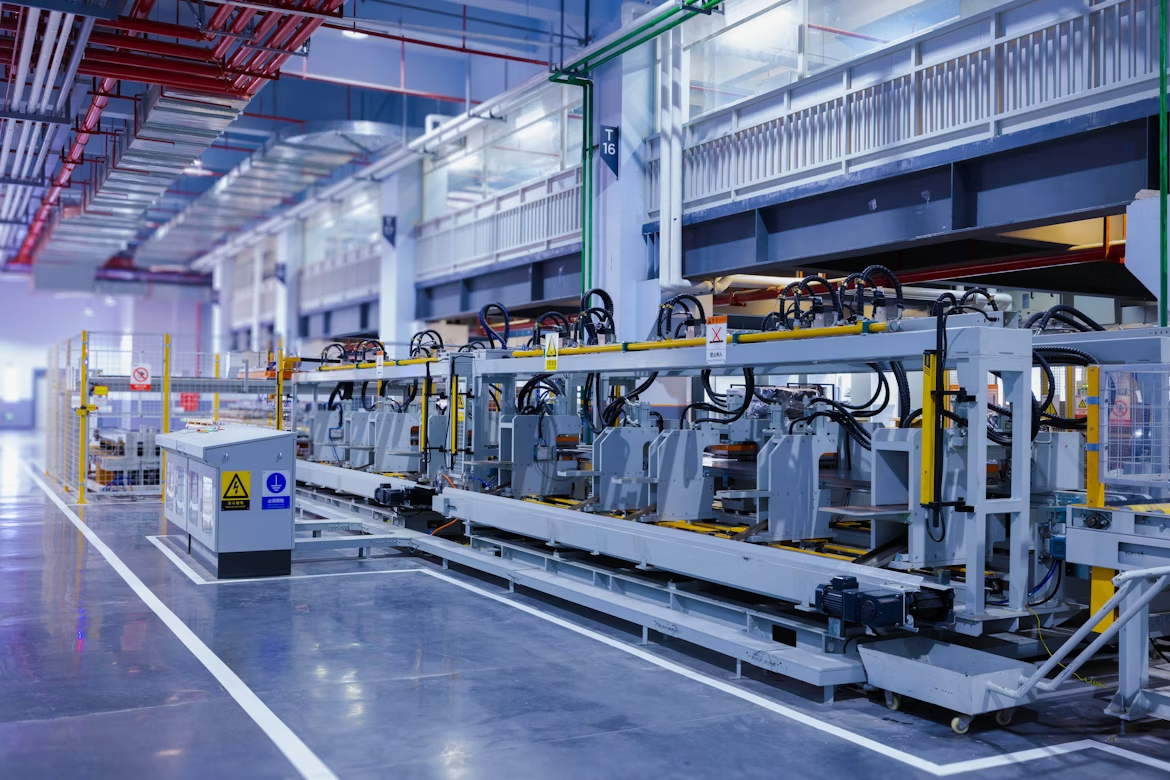

Running a large factory is never simple, and inefficiencies can quietly drain time and money. You might not notice them immediately, but they build up fast over weeks and months.
Thankfully, most operational issues can be prevented with the right habits. When you focus on consistency, communication, and proactive maintenance, your factory runs much more smoothly.
For instance, if a machine is getting rusty, deal with it urgently. A simple “soda blasting near me” search on Google will help you find solutions to deal with heavy machinery rust and dirt. Similarly, training your employees to deploy efficient work models will help maintain efficiency throughout the floor or factory.
Here are a few such practical tips that help you avoid common inefficiencies and keep everything moving steadily.
Optimize Inventory and Supply Chain Processes
Inventory mismanagement is another common source of inefficiency in large-scale operations. When materials arrive late or in incorrect quantities, production schedules quickly fall apart.
You need accurate forecasting and real-time tracking systems to maintain proper inventory levels. When suppliers understand your needs, they can respond faster during urgent situations. Efficient supply chain coordination keeps everything flowing smoothly from raw materials to finished products.
Strengthen Communication Across All Departments
One of the biggest causes of inefficiency in large factories is poor communication between teams. When departments operate in silos, small misunderstandings quickly become major delays.
According to a Grammarly report, improved communication boosts productivity for 64% of business leaders and 55% of knowledge workers. Clear information and expectations enable team members to work with much greater efficiency. Consequently, focusing on better communication is a proven strategy for achieving superior workplace results.
You need clear communication channels that connect production, maintenance, logistics, and management teams daily. Regular briefings and updates help everyone stay aligned with production goals and timelines.
It also helps to encourage workers to share feedback without hesitation or fear. Frontline employees often notice problems long before managers do, and their insights matter. When communication flows both ways, problems are solved faster, and workflows become more predictable.
Keep Machinery Running Smoothly and Reliably
Nothing throws a wrench in your production schedule quite like a machine going down at the wrong time. And in a factory setting, that kind of disruption can ripple through everything fast.
If you’re only fixing things after they’ve already broken down, you’re looking at longer shutdowns and repair bills that could’ve been avoided. Taking a proactive approach keeps things running smoothly and makes your operations a whole lot more predictable day to day.
And don’t underestimate the value of just keeping your equipment clean. Dirt, rust, and built-up contaminants can quietly chip away at your machines over time, dragging down their efficiency without you even noticing at first.
Many factories rely on commercial soda blasting and soda blasting industrial equipment cleaning to remove buildup safely. According to Lightning Mobile Services, soda blasting will not damage your equipment. Compared to pressure washing, soda blasting for smoke damage and grime is gentler and more effective.
Invest in Proper Workforce Training
A shrinking workforce now threatens US manufacturing goals, according to a recent Deloitte report. Payrolls have dropped from 17.2 million in 2000 to just 12.7 million today. Additionally, the industry’s economic share fell from 15.1% to only 9.4% over twenty-five years.
However, what factories and manufacturing plants need are well-trained workers. Such a workforce is one of your strongest defenses against operational inefficiencies.
When employees understand their roles clearly, they make fewer mistakes and complete tasks faster. Training should not stop after onboarding, because processes and technologies always evolve over time. Continuous learning keeps your team sharp and ready to handle challenges confidently.
You should also focus on cross-training employees in multiple roles when possible. This flexibility helps prevent bottlenecks when someone is absent or when workloads suddenly increase. Instead of allowing the workforce to shrink, factories must rethink their training programs and upskill their workers to ensure maximum operational efficiency.
Use Data to Drive Better Decisions
Data is one of the most powerful tools you have for improving factory efficiency. When you track production metrics carefully, you can identify patterns and spot issues early. This allows you to fix problems before they grow into larger operational challenges. Without data, decisions often rely on guesswork, which leads to inconsistent results.
You should focus on collecting data that truly reflects your operational performance. This includes machine output, downtime frequency, and employee productivity levels.
Analyzing these metrics helps you understand where improvements are needed most. Over time, data-driven decisions create a more efficient and predictable production environment.
FAQs
How do factories become inefficient?
Factories become inefficient due to poor maintenance, outdated equipment, and untrained staff. Workflow bottlenecks, lack of planning, and excessive downtime also contribute. Inefficient resource use, weak communication, and inconsistent quality control further reduce productivity and increase operational costs over time.
What are the factors that impact operational efficiency at a car manufacturing plant?
Key factors include supply chain reliability, equipment performance, and workforce productivity. Production planning, quality control, and inventory management also matter. Delays in parts, machine breakdowns, or poor coordination can disrupt assembly lines and significantly reduce overall efficiency.
How popular is AI in manufacturing?
According to Grand View Research, the global AI in manufacturing market was valued at $5.32 billion in 2024 and will reach $47.88 billion by 2030. This represents significant growth over the next six years, highlighting the tech’s popularity in the manufacturing sector. AI can improve manufacturing efficiency by optimizing production schedules, predicting equipment failures, and reducing downtime.
Avoiding operational inefficiencies in large factories is all about staying proactive and consistent. When you focus on keeping machines running, teams informed, and processes standardized, everything starts to fall into place.
Efficiency is not achieved overnight, but it grows steadily with the right approach. By applying these strategies, you can create a factory environment that runs smoothly and stays productive every single day.


