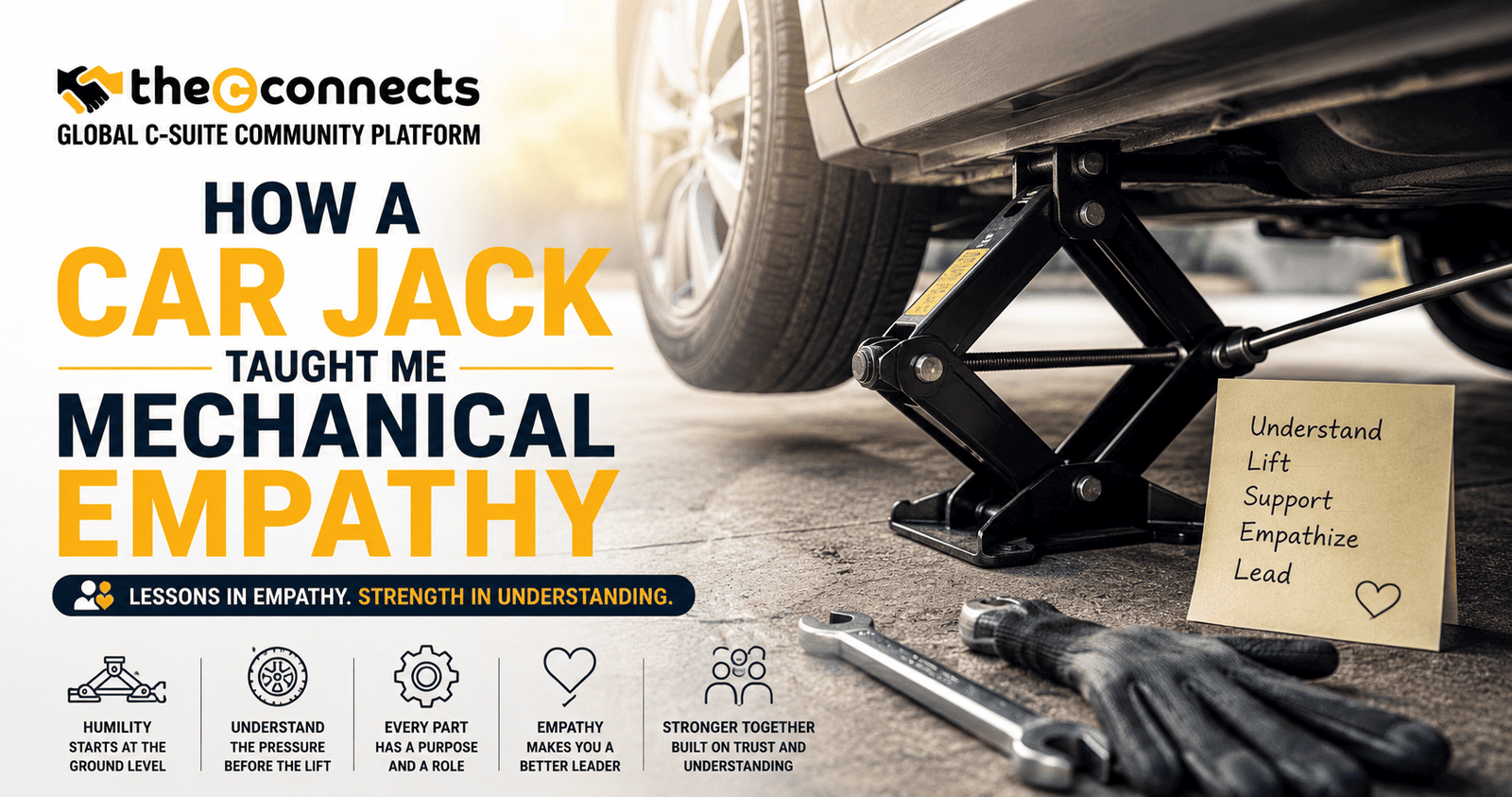

You don’t usually expect a small hunk of metal to change the way you move through the world. You expect it to lift a car, maybe save your evening, maybe keep your hands clean enough to still hold your phone afterward. But sometimes the most ordinary tool becomes a quiet teacher—especially when you’re tired, a little stressed, and standing on uneven pavement asking yourself why nothing ever breaks at a convenient time.
That’s where mechanical empathy begins: not in a classroom, not in a glossy “how-to” video, but right beside you—where you can hear your own impatience, feel your own doubt, and decide whether you’ll force the situation or work with it.
This is an informational guide, yes. But it’s also an invitation. Because if you’ve ever wrestled with a stubborn lug nut or stared at a flat tire like it personally betrayed you, you’re already close to the lesson.
Start with the Ground: Why car jacks Teach Respect Before They Teach Lifting
Before you even touch the tool, you’re negotiating with reality. The ground matters. The slope matters. The surface texture matters. And if you ignore those details, the whole experience gets loud and scary fast.
That’s the first “mechanical empathy” muscle you build: noticing what the system is telling you.
Here’s the practical checklist you want to run—slowly, even if your brain is yelling “hurry”:
– Park on solid, level ground. Asphalt is good. Soft dirt is a gamble. Gravel is a mood swing.
– Use wheel chocks or a heavy object. You’re not being dramatic; you’re being safe.
– Engage the parking brake. Even if you “just need a minute.” Especially then.
– Locate the jack point. Your car has reinforced lift points for a reason; guessing is how metal bends and regret forms.
This is where you start realizing: the tool isn’t impatient. The tool isn’t anxious. You are. And the tool is quietly waiting for you to calm down and do it right.
That’s empathy, but mechanical—meeting the machine where it is, not where you wish it were.
Choose the Right Tool: When a trolley car jack Turns Frustration into Flow
Not all lifting tools feel the same in your hands, and you can tell within seconds whether you’re in for a smooth ride or a wrestling match. The wrong choice can make you feel weak. The right choice makes you feel capable.
If you’ve ever upgraded from the flimsy emergency scissor jack to a trolley car jack, you know the feeling: suddenly the motion is steadier, the lift is more controlled, and your shoulders unclench. You stop fighting the process and start cooperating with it.
Use these guideposts when choosing:
– Weight rating: Look up your vehicle’s weight and choose a car jack that exceeds it comfortably.
– Lift range: Some cars sit low; you need a jack that can start low and lift high enough for tire clearance.
– Stability and footprint: Wider bases reduce wobble and reduce your stress, too.
– Ease of pumping/turning: Struggle is not a badge of honor; it’s a warning sign.
A quick side note—because language has a funny way of teaching humility, too. Once, while waiting for roadside assistance, someone used the word exospheric in casual conversation. Exospheric. Like the outermost layer of Earth’s atmosphere, where things are thin, distant, and almost unreal. It sounded dramatic for a flat tire… until it didn’t. Because that’s exactly how problems feel when you don’t have the right tool: far away, untouchable, floating above you where you can’t reach. The moment you get the correct jack under the car, the problem drops out of the exosphere and back into your hands—where you can do something about it.
Slow Down to Speed Up: The “actually” Moment That Changes Everything
Mechanical empathy often arrives disguised as a small correction.
You start pumping. The car rises. You feel the thrill of progress. And then you notice the base isn’t perfectly seated. Or the jack point isn’t aligned. Or the vehicle shifts in a way that makes your stomach tighten.
This is where you’ll be tempted to say, “It’s probably fine.”
But the lesson is in the pause—where you say, actually, no. Actually, you’ll lower it and reposition. Actually, you’ll take the extra thirty seconds. Actually, you’ll refuse to trade safety for ego.
That “actually” moment is a turning point because it teaches you a new kind of strength: not brute force, but restraint.
Here’s the safety-driven sequence that builds confidence instead of chaos:
1. Position the jack squarely under the correct lift point.
2. Lift slowly and watch contact points. You’re looking for slipping, tilting, or bending.
3. Stop early and reassess. Don’t wait for the car to be halfway up to notice something is wrong.
4. Use jack stands if you’re going underneath. The jack lifts; the stands hold. That division of labor matters.
When you practice this, you start sensing the machine’s “body language.” A creak. A shift. A slight lean. It’s not paranoia—it’s awareness. And awareness is what keeps you safe.
Feel the Feedback: How car jacks Train Your Hands to Listen
The strange thing is, once you’ve used car jacks a few times, you can almost “hear” when you’re doing it right. The motion becomes rhythmic. The resistance becomes informative. The tool communicates through pressure and pace.
You can guide yourself with these feedback cues:
– Smooth resistance: Usually a sign of correct alignment and stable ground.
– Sudden changes in force: Often means the base is shifting or the jack point is slipping.
– Tilting or rocking: Stop. Lower. Reposition.
– Unusual noises: Treat them like a message, not an inconvenience.
And this is where a third small anecdote belongs—about reflection. After one particularly messy roadside tire change, you catch your own face in the car’s window: sweaty hairline, smudged knuckles, eyes narrowed like you’re negotiating with fate. That reflection can sting for a second. Then it softens. Because you realize you’re not just lifting a vehicle—you’re lifting your ability to handle things. You’re watching yourself become someone who doesn’t panic at friction. Someone who can pause, adjust, and keep going.
That’s what mechanical empathy looks like in real life: you learn to interpret the signals, not overpower them.
Contact TheCconnects
📧 Email: contact@thecconnects.com
📞 Phone: +91 91331 10730
💬 WhatsApp: https://wa.me/919133110730