
The global Enterprise Resource Planning (ERP) implementation market has entered an era defined by intelligent automation, hyper-verticalization, and cloud-native consolidation. As enterprise tech landscapes evolve in 2026, the traditional legacy ERP model has faded into memory. Organizations are completely dismantling rigid, on-premise monoliths to make way for highly flexible, composable, and AI-powered enterprise platforms.
Modern market research indicates three core structural shifts driving ERP selection and deployment today:
- The Emergence of Agentic AI Infrastructure: Modern implementations are no longer just systems of record; they function as active systems of intelligence. Leading implementation partners are embedding autonomous AI agents deeply into financial workflows, supply chain routing, and inventory forecasting to automate operations out of the box.
- Clean Core Architectures: In alignment with modern vendor directives (such as SAP’s “Clean Core” push), integrators are strictly separating standard ERP logic from custom applications. Heavy customizations are now built on external business technology platforms using low-code tools, ensuring seamless, automatic software updates.
- The Ascendancy of Super-Boutiques: While the largest global system integrators (GSIs) continue to secure massive Fortune 100 consolidations, mid-market and fast-growing enterprise buyers are pivoting heavily toward specialized “super-boutiques.” These firms offer the domain expertise of a global player alongside the rapid execution and high accountability of a specialized studio.
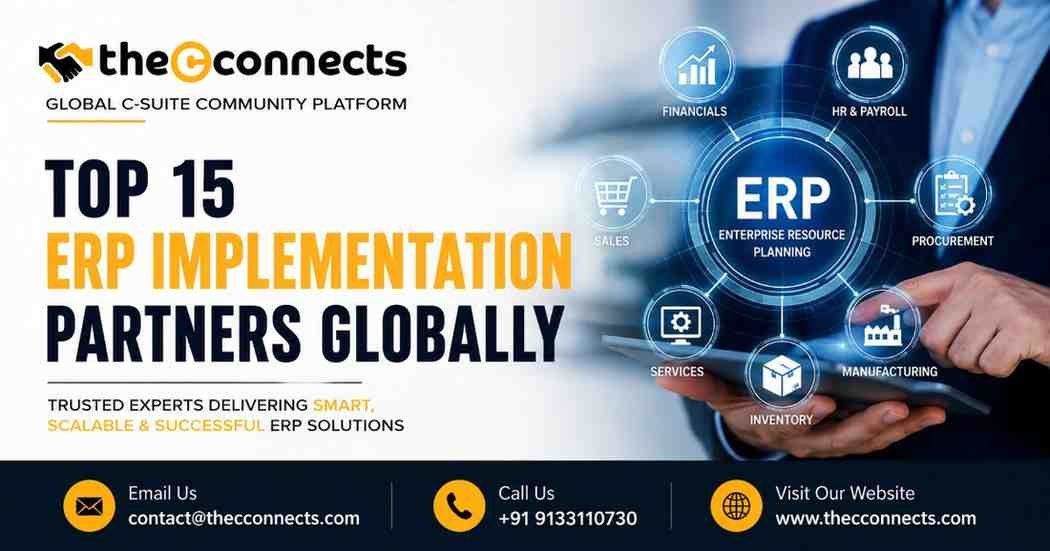
Top 15 ERP Implementation Partners Globally
1. Accenture
- Founders: Distributed Partnership (Originated from Arthur Andersen)
- Founded Year: 1989 (Spun off formally, renamed Accenture in 2001)
- Headquarters: Dublin, Ireland
- Product Categories: Global SAP S/4HANA Transformations, Oracle Fusion Cloud Ecosystems, Microsoft Dynamics 365, Workday Implementations
- Description: Accenture stands as the definitive heavyweight in global enterprise digital transformation and large-scale ERP deployment. Backed by a massive talent footprint, the firm specializes in orchestrating highly complex, multi-country ERP consolidations for multinational enterprises. Accenture leverages proprietary AI accelerators and pre-configured industry blueprints to rapidly modernize corporate financial, supply chain, and human capital architectures.
- Key Features:
- Unrivaled global delivery capacity capable of mobilizing massive cross-functional engineering teams.
- Elite global partnership status across SAP, Oracle, Workday, and Microsoft Dynamics ecosystems.
- Proprietary AI engines that systematically automate code migration and regression testing.
- Specialized business consulting units focused on post-merger ERP integrations.
- Comprehensive DevSecOps automation built directly into enterprise cloud deployments.
2. Deloitte
- Founders: William Welch Deloitte
- Founded Year: 1845
- Headquarters: London, United Kingdom (Global operations coordinated via New York, USA)
- Product Categories: Finance-Led ERP Transformations, SAP S/4HANA Cloud, Oracle Cloud Applications, Workday Enterprise Suites
- Description: Deloitte is a globally dominant consulting powerhouse widely recognized for its business-led, strategic approach to ERP modernization. The firm places corporate finance, tax structural alignment, and operational risk management at the absolute center of every system deployment. Deloitte excels at helping legacy organizations modernize their back-office infrastructure while maintaining strict regulatory compliance and minimal data friction.
- Key Features:
- Market-leading expertise in complex, finance-led enterprise ERP transformations.
- Deep domain verticalization spanning healthcare, life sciences, banking, and defense.
- Seamless alignment between ERP technical configuration and global corporate tax strategies.
- Immersive change management methodologies that ensure high internal user adoption.
- Robust data governance frameworks designed to maximize data audit readiness.
3. Capgemini
- Founders: Serge Kampf
- Founded Year: 1967
- Headquarters: Paris, France
- Product Categories: Cross-Border SAP Implementations, Oracle Cloud Infrastructure, Microsoft Cloud for Industry
- Description: Capgemini is an elite global system integrator that bridges strategic management consulting with complex engineering delivery. The firm has a major market presence in Europe and the Americas, showing deep operational expertise in discrete manufacturing, automotive supply chains, and consumer retail sectors. Capgemini specializes in helping businesses shift from disjointed local software instances to unified, highly secure cloud-based systems.
- Key Features:
- Strong leadership in European and transatlantic regulatory compliance frameworks (GDPR native).
- Industry-specific ERP templates that dramatically cut down on initial system blueprinting.
- Dedicated “Clean Core” development frameworks that eliminate system customization debt.
- Specialized engineering units for connecting IoT shop-floor hardware to top-floor ERP modules.
- High-value nearshore and offshore delivery networks that optimize long-term implementation costs.
4. PwC (PricewaterhouseCoopers)
- Founders: Samuel Lowell Price, William Cooper
- Founded Year: 1849 (Formed via modern mergers in 1998)
- Headquarters: London, United Kingdom
- Product Categories: Enterprise Cloud ERP, Business Cloud Transformations (SAP, Oracle, Workday)
- Description: PwC delivers strategic ERP implementation consulting focused heavily on executive alignment, internal governance, and structural operational change. The firm acts as a trusted advisor to the C-suite, ensuring that massive capital expenditures on platforms like SAP and Oracle map precisely back to measurable business outcomes. PwC excels at engineering audit-ready controls and compliance architecture right into the foundation of new software builds.
- Key Features:
- Strategic C-suite advisory models focused on tracking clear, long-term ROI on ERP spending.
- Built-in internal control environments that meet strict SOX and international compliance rules.
- Comprehensive business process mapping that simplifies messy legacy workflows before writing code.
- Highly integrated change management pipelines targeting executive and mid-level managers.
- Deep domain capabilities in energy, utility, infrastructure, and heavy industrial sectors.
5. EY (Ernst & Young)
- Founders: Alwin C. Ernst, Arthur Young
- Founded Year: 1989 (Via merger of historic firms dating back to 1894)
- Headquarters: London, United Kingdom
- Product Categories: Enterprise Cloud Modernization, SAP S/4HANA Private/Public Cloud, Microsoft Dynamics Solutions
- Description: EY approaches ERP implementation through a comprehensive operational lens, focusing heavily on modernizing supply chains and assisting CFOs with complex technology shifts. The firm is widely chosen by companies undertaking major corporate restructurings, global spin-offs, or initial public offerings that require fully verified, enterprise-grade software capabilities on day one.
- Key Features:
- Comprehensive CFO-aligned implementation roadmaps prioritizing cash-flow visibility.
- Exceptional operational capabilities in global supply chain tracking and logistics software.
- Pre-built testing toolsets that identify system compliance flaws prior to deployment.
- Specialized consulting teams focused on rapid mid-market enterprise scale-ups.
- Data integration structures designed to support multi-currency, cross-border trade.
6. IBM Consulting
- Founders: Charles Ranlett Flint (Originally CTR)
- Founded Year: 1911 (Consulting division scaled heavily via PwC Consulting acquisition in 2002)
- Headquarters: Armonk, New York, USA
- Product Categories: Hybrid Cloud ERP, SAP S/4HANA Ecosystems, Oracle Cloud Infrastructure, Generative AI Extensions
- Description: IBM Consulting blends deep infrastructure expertise with modern software deployment strategies. The firm is highly distinguished by its ability to execute massive hybrid cloud deployments, linking modern cloud-native software with highly secure, legacy mainframe setups. IBM incorporates its proprietary AI technologies directly into ERP platforms to supercharge standard business processes.
- Key Features:
- Elite architecture capabilities across complex hybrid and multi-cloud operating models.
- Seamless integration of proprietary AI toolsets to drive smart corporate reporting.
- Rapid, reliable migrations from legacy on-premise setups over to public cloud instances.
- Deep technical understanding of mainframe data structures and corporate databases.
- Co-innovation development models backed by global network research hubs.
7. Infosys
- Founders: N.R. Narayana Murthy (Alongside a group of 6 software professionals)
- Founded Year: 1981
- Headquarters: Bengaluru, India
- Product Categories: Global Cloud ERP Integrations, SAP Solutions, Oracle Cloud, Infor CloudSuite
- Description: Infosys is a massive global pioneer in next-generation digital services and technology consulting. The firm operates highly standardized, efficient global delivery frameworks that enable continuous development cycles across multiple time zones. Infosys specializes in large-scale system migration, software testing automation, and long-term application maintenance for multi-billion-dollar global brands.
- Key Features:
- Highly structured global delivery systems ensuring reliable, predictable software rollouts.
- Proprietary platform migration software that cuts down manual data conversion work.
- Extensive engineering benches specialized across SAP, Oracle, and modern open SaaS platforms.
- Mature post-launch system maintenance contracts governed by clear service level agreements.
- Comprehensive automated testing frameworks targeting complex data structures.
8. Argano
- Founders: Chip Register
- Founded Year: 2020
- Headquarters: Plano, Texas, USA
- Product Categories: Microsoft Dynamics 365, Oracle Cloud ERP, Composable Architecture Systems
- Description: Argano has quickly emerged as a prominent “super-boutique” in the technology consulting sector, built specifically to offer an alternative to traditional, complex global systems integrators. The firm focuses on building high-performance operational cores by closely linking high-level strategy with technical execution. Argano specializes in deploying unified platforms across finance, supply chain, and employee management functions.
- Key Features:
- Highly responsive, collaborative team structure that avoids corporate administrative friction.
- Consolidated engineering capabilities across Microsoft Dynamics, Oracle, and Salesforce.
- Strategy-first roadmapping that stays consistent from initial designs down to final deployment.
- Exceptional corporate Net Promoter Scores (NPS) reflecting strong client satisfaction.
- Clean architectural design focusing heavily on composable cloud applications.
9. Cognizant
- Founders: Kumar Mahadeva, Francisco D’Souza
- Founded Year: 1994
- Headquarters: Teaneck, New Jersey, USA
- Product Categories: Core Enterprise Applications, SAP S/4HANA Modernization, Workday Solutions
- Description: Cognizant is a leading global technology service provider that helps enterprises modernize outdated systems and update obsolete workflows. The company’s enterprise application unit focuses heavily on building agile, cloud-first systems that replace fragmented, localized legacy setups. Cognizant brings deep engineering experience to large-scale business data migrations and complex custom API integrations.
- Key Features:
- Proven technical capacity to manage massive, multi-tiered application portfolios.
- Agile, sprint-driven deployment models optimized for fast-paced mid-market companies.
- Clean architectural frameworks that help isolate core software layers from custom builds.
- Global engineering hubs providing efficient support across multiple time zones.
- Robust quality assurance automated testing systems.
10. Tata Consultancy Services (TCS)
- Founders: Faquir Chand Kohli, J.R.D. Tata
- Founded Year: 1968
- Headquarters: Mumbai, India
- Product Categories: Global SAP S/4HANA Deployments, Oracle Cloud Solutions, Microsoft Dynamics Integration
- Description: Tata Consultancy Services (TCS) is one of the largest IT service and consulting companies globally, renowned for its technical execution and operational scale. The firm utilizes its proprietary Location-Independent Agile delivery model to manage complex software overhauls for major corporations worldwide. TCS provides end-to-end consulting, configuration, custom extension design, and long-term managed support.
- Key Features:
- Massive global engineering talent pool capable of supporting exceptionally large projects.
- Industry-specific solution kits that reduce system configuration time.
- Proprietary data migration toolsets that protect core transaction records during platform shifts.
- Long-term global support networks guaranteeing high system uptime.
- Deep domain expertise in utility management, retail networks, and banking applications.
11. Wipro
- Founders: M.H. Hasham Premji
- Founded Year: 1945 (Entered IT services industry in 1980)
- Headquarters: Bengaluru, India
- Product Categories: Cloud-First ERP Implementations, Intelligent SAP Platforms, Oracle Cloud Transformation
- Description: Wipro is a major global information technology and consulting corporation that helps businesses deploy modern, cloud-native operational software. The company prioritizes building intelligent enterprise infrastructures, incorporating cloud connectivity, automated warehouse solutions, and advanced security layers into core software structures. Wipro focuses heavily on delivering sustainable, resource-efficient business transformations.
- Key Features:
- Comprehensive cloud transformation programs that transition clients away from physical servers.
- Deep engineering capabilities in intelligent inventory and manufacturing automation.
- Advanced cybersecurity protocols integrated directly into cloud applications.
- Dedicated innovation centers focused on building custom industry applications.
- Highly customizable team deployment models tailored to mid-market budgets.
12. HCLTech
- Founders: Shiv Nadar
- Founded Year: 1976
- Headquarters: Noida, India
- Product Categories: Digital Transformation, Enterprise Platform Engineering, SAP S/4HANA, Managed Services
- Description: HCLTech is a prominent global technology company built on a foundational heritage of deep engineering expertise. The company’s enterprise consulting division handles complex application updates, database modernizations, and cloud multi-tenant setups. HCLTech focuses heavily on eliminating system inefficiencies, creating smooth API integration layers, and providing reliable, long-term technical management.
- Key Features:
- Elite technical engineering benches capable of handling complex legacy database refactoring.
- Standardized delivery templates that help lower initial setup friction.
- Comprehensive managed services contracts designed to reduce internal IT overhead.
- Deep infrastructure experience with large hybrid cloud network environments.
- Highly transparent milestone tracking throughout the project lifecycle.
13. Godlan
- Founders: Industrial Software Pioneers
- Founded Year: 1984
- Headquarters: Clinton, Michigan, USA
- Product Categories: Infor CloudSuite Industrial (SyteLine), Discrete Manufacturing Systems, Industrial IoT
- Description: Godlan is a highly specialized boutique system integrator that has built an incredible market reputation by focusing exclusively on industrial manufacturing companies. The firm is widely recognized as a premier partner for Infor CloudSuite Industrial implementations. Godlan bypasses generic consulting approaches to focus on shop-floor execution, supply chain tracking, and configuring CPQ (Configure, Price, Quote) modules.
- Key Features:
- Exceptional long-term track record of successful discrete manufacturing implementations.
- Elite master-level partnership status within the global Infor ecosystem.
- Deep engineering experience linking industrial IoT hardware directly to corporate systems.
- Highly functional, pre-configured manufacturing and warehouse blueprints.
- Specialized consulting teams comprised of veteran manufacturing operations experts.
14. Panorama Consulting Group
- Founders: Independent Enterprise Tech Consortia
- Founded Year: 2005
- Headquarters: Denver, Colorado, USA
- Product Categories: Software-Agnostic ERP Selection, Business Readiness Assessments, Expert Witness Services
- Description: Panorama Consulting Group occupies a unique place in the market as an entirely independent, software-agnostic advisory firm. Rather than focusing on a single software product, Panorama helps clients evaluate options across the entire market to choose the best technology fit. They focus on providing independent vendor selections, setting up project governance, and evaluating organizational readiness before engineering begins.
- Key Features:
- Completely independent, vendor-neutral advisory services free from software commission bias.
- Meticulous corporate software selection frameworks that match systems to actual requirements.
- Detailed business process optimization studies conducted prior to software selection.
- Specialized organizational change management models designed for mid-sized teams.
- High-value expert witness and project recovery services for stalled implementations.
15. Third Stage Consulting
- Founders: Eric Kimberling
- Founded Year: 2018
- Headquarters: Denver, Colorado, USA
- Product Categories: Independent Digital Transformation Advisory, ERP Selection, Project Quality Assurance
- Description: Third Stage Consulting is an independent, software-agnostic advisory boutique built to help companies steer clear of common implementation traps. The firm specializes in providing unbiased oversight, managing organizational change, and running ongoing project quality reviews. Third Stage helps corporate leadership maintain clear vendor visibility and ensure internal teams stay on track throughout complex tech updates.
- Key Features:
- Entirely independent oversight that keeps implementation vendors fully accountable.
- Deep strategic knowledge of the distinct pitfalls across SAP, Oracle, and Microsoft systems.
- Meticulous project health checks designed to spot and resolve budget and timeline risks early.
- Human-centric change management programs that address user pushback directly.
- Highly transparent, educational content strategies that simplify complex tech concepts for corporate leaders.
🛠️ Key Implementation Criteria & Risk Mitigation (2026)
When selecting from these top 15 global integrators, internal steering committees must prioritize three critical metrics to ensure project success:
- True “Clean Core” Execution: Confirm the partner has documented experience utilizing external extension platforms rather than modifying the core codebase, ensuring your software can receive automatic vendor updates.
- Agentic AI Deployment Readiness: Verify if the integrator can deploy pre-built AI agents out of the box, or if they require expensive, time-consuming custom data engineering to utilize basic AI tools.
- Direct Team Continuity: Ensure that the senior enterprise architects who present during the initial sales process will remain actively assigned to your project during the critical final deployment phase.
📬 Share Feedback or Get Featured
We constantly review and update our global technology index to provide buyers with accurate, real-time market insights. If you have direct feedback regarding the integration partners listed, possess updated case study data, or believe your consulting firm qualifies to be featured in this index, please reach out to our research desk.
- 📧 Email Us: contact@thecconnects.com
- 📞 Call Us: +91 9133110730
- 💬 WhatsApp Us: Connect via WhatsApp