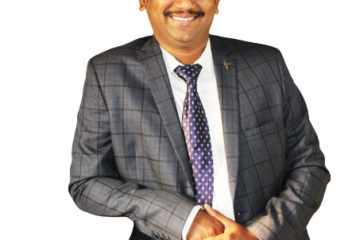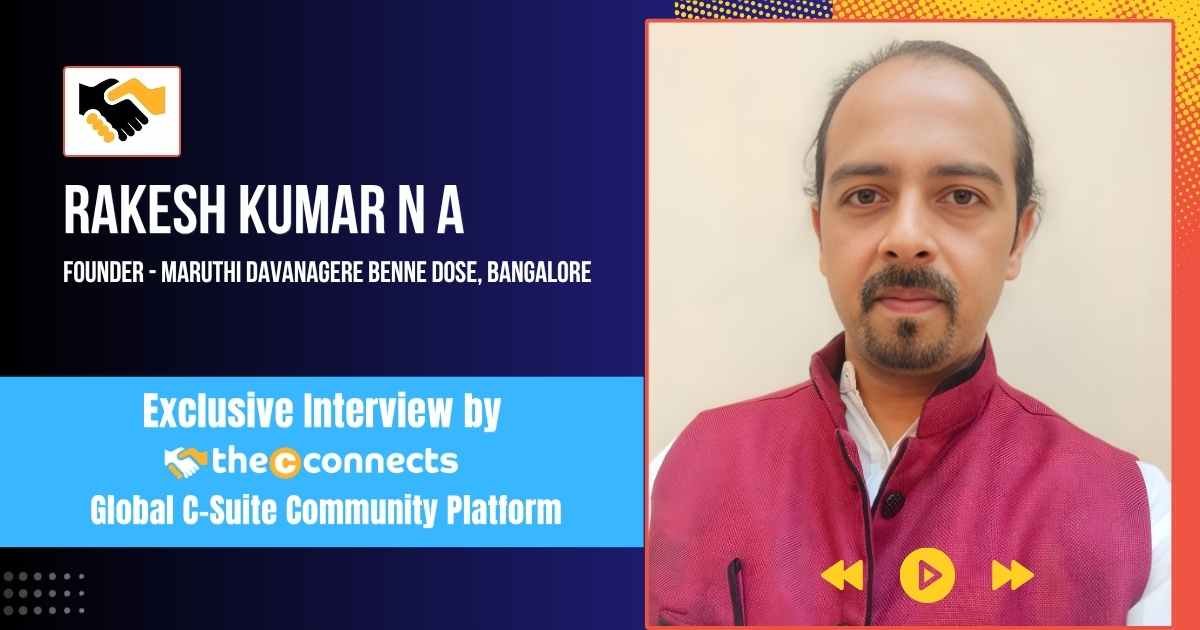

In the bustling, ever-evolving culinary landscape of Bangalore, where global trends and fusion concepts emerge daily, a quiet but powerful movement is taking root: the preservation of authentic, regional heritage. At the forefront of this movement is Rakesh Kumar N A, the passionate owner of Maruthi Davanagere Benne Dose.
Rakesh’s story is one of profound transition. Coming from a highly structured medical background and a well-established corporate career, he made the bold decision to leave the security of the boardroom to follow a childhood calling. His vision was clear: to bring the authentic, unfiltered taste of Davanagere Benne Dosa to a wider audience without sacrificing the soul of the cuisine.
Today, Maruthi Davanagere Benne Dose is more than just a restaurant; it is a meticulously crafted experience that marries traditional South Indian culinary techniques with modern hygiene, technology, and customer-centric service. With ambitious plans to scale from a strong local footprint to an international presence, Rakesh is proving that heritage and scalability can coexist.
TheCconnects sat down with Rakesh to discuss his leap from the corporate world, the delicate art of scaling a traditional recipe, and why preserving a legacy is the ultimate business strategy.
TheCconnects: Rakesh Kumar, it is an absolute pleasure to have you with us today. Your professional journey is incredibly inspiring. You come from a medical background and had a secure corporate career. What was the turning point that made you leave all of that behind to enter the highly competitive F&B industry?
Rakesh Kumar N A: Thank you for having me. The pleasure is mine. To be honest, leaving the corporate world wasn’t an overnight decision, but rather the culmination of a lifelong calling. I have had a deep, almost inescapable passion for food since childhood. It was always at the center of my thoughts and creativity.
While my medical background and corporate career provided immense security and structure, my inclination towards food never faded; if anything, it grew stronger. Eventually, I reached a point where I realized that true fulfillment would only come from creating and serving food. Starting Maruthi Davanagere Benne Dose wasn’t just a business choice for me. It was a deeply personal commitment to live out my passion and share authentic, meaningful culinary experiences with others. I traded corporate security for creative and emotional fulfillment, and I haven’t looked back since.
TheCconnects: There are countless regional cuisines and dishes to focus on. Why did you choose the Davanagere Benne Dosa as the cornerstone of your brand?
Rakesh Kumar N A: For me, this journey has never been just about serving food-it has always been about preserving a legacy on a plate. The Davanagere Benne Dosa is iconic. It carries the authenticity, tradition, and emotion of a specific region in North Karnataka, and I am deeply committed to representing that with absolute honesty.
In a time where standardization often replaces soul in the restaurant industry, we made a conscious choice to stay rooted. We focus entirely on the craft, consistency, and care in every detail. From the traditional techniques used in our kitchens to the high-quality ingredients, our goal is to create a focused South Indian dining experience. We want our customers to feel a sense of familiarity and belonging the moment they step into our modern, clean setting.
TheCconnects: Maintaining that “soul” while trying to grow a business is notoriously difficult. What are the biggest challenges you face in scaling an authentic regional brand, and how do you overcome them?
Rakesh Kumar N A: You hit the nail on the head. The biggest challenge in expanding a traditional food brand is ensuring that the 100th dosa tastes exactly as magical as the first one. When you scale, the risk of diluting the authentic flavor is very high.
To overcome this, we rely heavily on building robust internal systems. We have standardized our recipes and established centralized sourcing for our key ingredients, ensuring the raw materials are identical across the board. We also implemented well-defined Standard Operating Procedures (SOPs) for kitchen operations and service, backed by regular staff training and audits. Finally, we integrated technology for inventory management, quality checks, and real-time customer feedback. Our absolute focus is on scaling responsibly.
TheCconnects: Marketing a traditional product to a modern, urban audience requires a delicate balance. How does Maruthi Davanagere Benne Dose address the challenge of brand visibility in today’s digital space?
Rakesh Kumar N A: The biggest challenge in the digital space today is capturing attention amidst endless noise, while still conveying the tangible, sensory experience of food. We adopted a 360-degree marketing approach to tackle this.
On the digital front, we consistently leverage Facebook and Instagram. Through targeted promotions and boosted campaigns, we reach a highly relevant audience. This helps us build strong brand recall and attract new-age, younger consumers who are seeking authentic yet accessible regional cuisine.
However, we don’t ignore the physical world. We run strong offline strategies-newspaper advertisements, pamphlet insertions, and strategically placed display banners. This dual approach bridges the gap between the digital scroll and the physical neighborhood, leading to significantly increased footfall, strong word-of-mouth referrals, and consistent sales growth.
TheCconnects: When customers walk into your restaurant, what specific “pain points” are you solving for them that other dining options might miss?
Rakesh Kumar N A: Today’s consumer is caught between two extremes: highly commercialized fast food that lacks authenticity, and traditional, old-school eateries that might compromise on modern hygiene or seating comfort.
We solve this pain point by offering the best of both worlds. We provide the rich flavors and authentic techniques of North Karnataka cuisine, but we deliver it in a clean, modern, and customer-friendly setting. Families and young consumers no longer have to compromise on hygiene to get a truly traditional meal. What truly defines us is the trust we build through these genuine experiences, moving beyond mere transactions.
TheCconnects: You have established a strong presence in Bangalore. What does the roadmap for your growth look like over the next few years?
Rakesh Kumar N A: We have a very clear, phased growth strategy. In the near term, we are focusing on establishing 6 to 7 company-owned outlets. This is critical because owning the outlets initially allows us to maintain strict operational control and perfect our SOPs.
Once that foundation is rock solid, our next phase is to expand across the state of Karnataka. Following that, we have a structured plan for a national rollout, and our ultimate long-term vision is to take the authentic Davanagere Benne Dosa to international markets.
TheCconnects: Transitioning from corporate life to owning an expanding restaurant chain means your schedule must be relentless. What do you do in your free time to unwind and recharge?
Rakesh Kumar N A: Because my work is born out of a lifelong passion for food, my free time often blurs the lines with my profession! I love exploring different culinary cultures, visiting local markets, and understanding the history behind different regional cuisines. Beyond that, I value quiet time to disconnect from the operational hustle. Spending quality time with my family and returning to the roots of why I started this journey helps me stay grounded and recharged.
TheCconnects: Finally, what advice do you have for aspiring entrepreneurs who want to enter the F&B industry or bring their own regional concepts to the market?
Rakesh Kumar N A: My biggest piece of advice is: do not let standardization kill the craft. Efficiency is important, but if you lose the emotional connection and the authenticity of your product, you lose your brand’s identity.
Build your business on trust and genuine experiences, not just transactions. Marry your passion with strict discipline-use technology, build SOPs, and train your staff relentlessly, but always remember the heritage you are representing. If you build it with care, honesty, and quality, the customers will reward you with their loyalty.