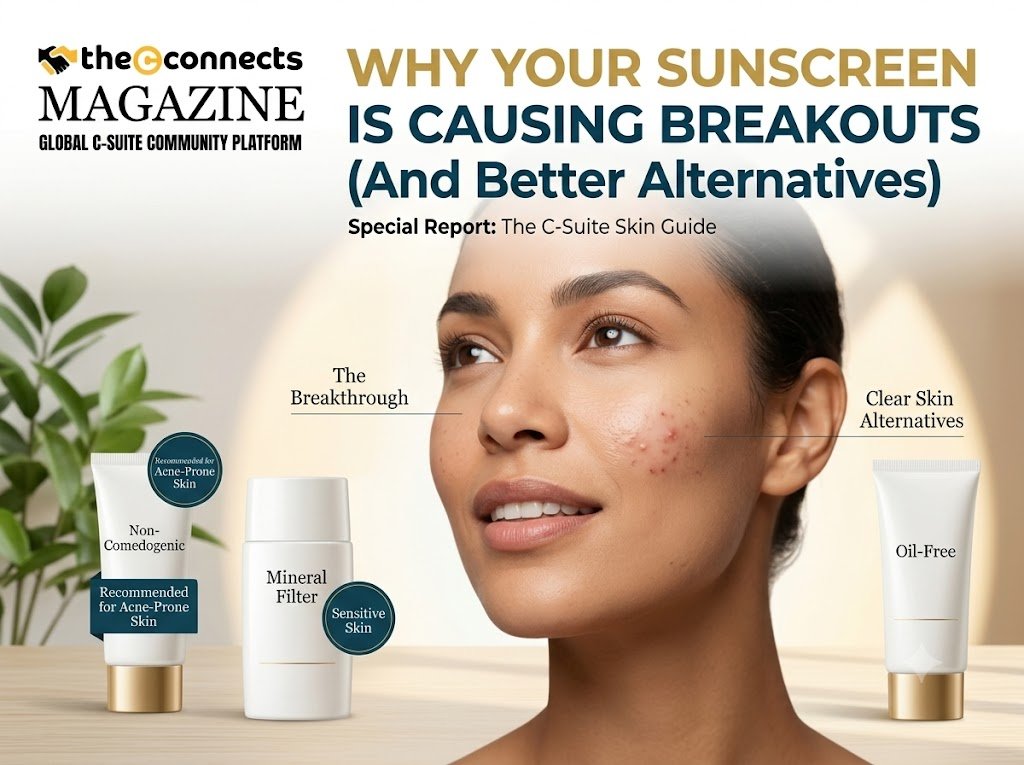

Applying sunscreen is one of the easiest parts of any skincare routine. You just have to apply, reapply, and move on.
Yet for many breakout-prone or reactive clients, SPF becomes the product they avoid. This is because it stings, pills, feels greasy, or leaves a clogged-looking texture by evening. That is where non-irritating sunscreen for sensitive skin becomes important.
For aestheticians, the issue is not “SPF is bad for acne-prone skin.” In fact, the wrong base, filter system, finish, or layering routine contributes to congestion and sunscreen sensitivity, especially when heat, sweat, sebum, and repeated reapplication are part of the day.
Non-Irritating Sunscreen Sensitive Skin: Why Breakouts Happen
In general, breakouts from sunscreen begin with a mismatch. For instance, a rich formula may sit too heavily on oil-prone skin. Meanwhile, a drying formula may cause sensitive skin to tighten. This might make the client cleanse later. Then the skin gets stuck in that annoying loop of shine, dehydration, buildup, and irritation.
In addition, sunscreen does not work alone. Rather, it sits over –
- Moisturizer
- Serum
- Primer
- Makeup
- Sweat
- Sometimes, the residue from the last day, if evening cleansing is rushed.
Therefore, the breakout may not come solely from the UV filters. Instead, it may come from the full routine around the sunscreen.
| Possible Trigger | What It Can Look Like | Professional Read |
| Heavy emollient base | Closed comedones, greasy finish | The formula may be too occlusive for the client’s oil pattern |
| Fragrance or sensitizing extras | Stinging, warmth, visible redness | Barrier may need a simpler SPF approach |
| Poor cleansing at night | Bumps near hairline, jaw, nose | Residue management needs improvement |
| Layering too many products | Pilling, congestion, uneven wear | Morning protocol may need editing |
Mineral Filters vs. Chemical Filters
In general, mineral filters (like zinc oxide + titanium dioxide) sit on the skin’s surface. These help against UV rays that damage skin.
In fact, many aestheticians prefer mineral sunscreen for clients who report –
- Stinging
- Post-procedure sensitivity
- Reactive skin.
However, texture and finish still matter a lot. Also, a mineral formula might still feel too heavy if the base is not right.
Meanwhile, chemical filters absorb UV rays and convert them into heat. In general, they are elegant and sheer. Also, they are easier to wear under makeup. This matters because clients actually need to enjoy using SPF.
However, some sensitive clients may report sunscreen sensitivity with certain chemical-filter blends. This is visible especially around the eyes or after exfoliation.
Neither category is automatically perfect. In fact, better SPF selection depends on the client’s –
- Barrier status
- Oil production
- Treatment history
- Tolerance.
Sometimes, a client who breaks out easily but also stings easily may benefit from non-irritating sunscreen and sensitive-skin support. So, it is better to choose a mineral-filter moisturizer with a lighter finish. Also, it must have barrier-supportive ingredients and fewer unnecessary extras.
Which Sunscreens Won’t Sting or Clog Pores?
The better question is not just which sunscreen protects. Rather, it is about which one protects without making the client quit by day three? In most cases, aestheticians look at the full formula architecture rather than just the SPF number or whether the label says sensitive skin.
A good option for this profile is a mineral SPF 50 moisturizer built around –
- Zinc oxide
- Peptides
- Skin-comforting hydration.
The mineral filter supports daily UV defense. Meanwhile, peptides help reinforce the look of resilient, healthy skin. Meanwhile, a balanced moisturizing base reduces the need for heavy layering underneath.
| Client Concern | Better SPF Direction | Why It Helps |
| Stinging near the cheeks or eyes | Mineral-filter SPF with zinc oxide | Often better tolerated by reactive skin types |
| Clogged-looking texture | Lightweight moisturizing SPF | Reduces heavy layering and residue buildup |
| Post-treatment sensitivity | Simple mineral sunscreen approach | Supports protection while respecting barrier comfort |
| Oiliness by midday | Satin or natural finish SPF | Helps avoid the greasy feel that leads to over-cleansing |
A Treatment-Room Protocol for SPF-Related Breakouts
Aesthetician-led troubleshooting should start with simplification. Basically, the goal is to identify where the breakout pattern comes from.
Step 1: Edit the morning routine
Make sure to keep the pre-SPF routine lean. For instance, a gentle cleanse, lightweight hydration, and mineral-filter SPF may be enough for many clients. If the SPF already functions as a moisturizer, extra cream underneath may not be necessary.
Step 2: Choose the right filter system
For reactive or post-procedure clients, mineral filters may offer a more comfortable starting point. However, the client might dislike a white cast or a heavy appearance. Then test the texture before assuming the mineral is wearable.
Step 3: Improve evening removal
A gentle double-cleanse approach helps remove sunscreen and oil. Also, it helps remove environmental residue without leaving the skin feeling tight. While the first cleanse loosens SPF, the second cleanse supports a clean, calm surface.
Step 4: Reassess after two weeks
If breakouts soften and stinging decreases, the protocol likely fits better. However, if congestion continues in the same areas, review –
- Hair products
- Makeup
- Reapplication habits
- Whether the client is using active serums frequently.
What to Avoid When SPF Keeps Breaking Clients Out
The most common mistake is switching sunscreen every few days. Basically, that makes the skin harder to read. Instead, aestheticians must build a short testing window and change one variable at a time. So, it is better to avoid the following:
- Heavy balm-like SPF textures on clients with frequent closed comedones.
- Applying strong exfoliating acids right before sunscreen on reactive skin.
- Skipping moisturizer completely if the skin feels tight under SPF.
- Assuming that every breakout is caused by the sunscreen filter.
Pro Tip: Map the Breakout Pattern Before Replacing SPF
At the start, ask where the bumps appear first. For instance, hairline congestion may indicate poor cleansing or hair product buildup.
Also, cheek stinging may suggest barrier stress or sunscreen sensitivity. Moreover, nose and chin congestion may be more related to oil, sweat, and reapplication habits.
This mapping helps aestheticians choose cleaner adjustments. Also, it supports an approach to clean clinical skincare. This is where the routine is refined with purpose rather than being replaced all at once.
Better SPF Choices Keep Skin Protected and Comfortable
In the end, daily SPF should not feel like a tradeoff between protection and clear-looking skin. The need is a right filter system, a lighter texture, thoughtful cleansing, and barrier-aware layering. This way, non-irritating sunscreen sensitive skin care supports comfort and reduces the appearance of congestion.
Moreover, these factors help clients stay consistent. However, for the best results, choose a mineral sunscreen or a well-tolerated SPF formula. Make sure to get an aesthetician-guided protocol that fits the client’s actual skin behavior.