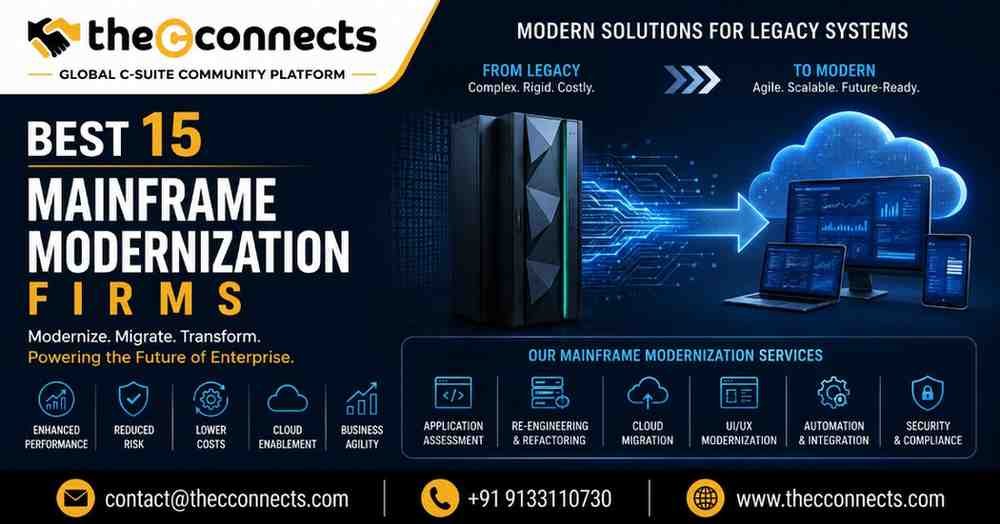

The global mainframe modernization market has reached a pivotal tipping point. For years, enterprise technology executives faced a binary choice: either execute a risky, multi-year “rip-and-replace” cloud migration or accept rising MIPS (Million Instructions Per Second) costs while maintaining legacy COBOL systems.
Modernization strategies have evolved toward pragmatic hybrid coexistence, automated code refactoring, and AI-assisted application decomposition. Rather than viewing mainframes strictly as technical debt, organizations are treating core transaction engines as critical digital assets. Today’s transformation programs focus on unlocking legacy data for cloud analytics and generative AI, establishing modern DevOps pipelines, and systematically converting monolithic logic into agile microservices.
Hyperscalers (AWS, Microsoft Azure, Google Cloud), Global System Integrators (GSIs), and specialized Independent Software Vendors (ISVs) have built an ecosystem of automated conversion engines, managed runtimes, and discovery tools.
Top 15 Mainframe Modernization Firms
1. IBM (IBM Consulting & IBM Z)
Company Name: IBM Corporation
Founders: Charles Ranlett Flint (Computing-Tabulating-Recording Company)
Founded Year: 1911
Headquarters: Armonk, New York, United States
Product Categories: Hybrid Cloud Solutions, Mainframe Hardware & Systems (IBM Z, LinuxONE), AI Tools (watsonx Code Assistant for Z), Enterprise Consulting Services
Description about the Company
IBM remains the primary architect of the mainframe ecosystem, championing a “hybrid cloud by design” strategy. Rather than advocating complete offloading, IBM focuses on modernizing applications directly on the platform while opening core data and transactions to multi-cloud environments. Its modernization capabilities blend hardware engineering with AI tools like watsonx Code Assistant for Z, which simplifies code analysis and translates legacy COBOL into modern Java. IBM enables large enterprises to maintain transactional performance and security while adopting modern, agile development environments.
Key Features
- watsonx Code Assistant for Z: AI-driven code refactoring that converts legacy COBOL code into optimized Java.
- z/OS Connect: Generates secure RESTful APIs to connect core mainframe logic with modern cloud services.
- Red Hat OpenShift Integration: Enables containerized application deployment natively across IBM Z and cloud environments.
- In-Place Modernization: Upgrades DevOps pipelines and updates code without forcing an immediate offload from IBM Z hardware.
- Pervasive Encryption & Quantum Safety: Enterprise-grade security protocols protecting transaction workloads at rest and in transit.
- Automated Application Discovery: Tools for analyzing complex dependencies across legacy enterprise portfolios.
2. Kyndryl
Company Name: Kyndryl Holdings, Inc.
Founders: Spun off from IBM Corporation (Led by CEO Martin Schroeter)
Founded Year: 2021
Headquarters: New York, New York, United States
Product Categories: Managed Infrastructure Services, Mainframe Management, Hyperscaler Integration, Managed Security Services
Description about the Company: Spun off from IBM’s Managed Infrastructure Services division in 2021, Kyndryl is the world’s largest IT infrastructure provider. Managing mission-critical mainframe environments for global enterprises, Kyndryl brings operational expertise to mainframe modernization. The company provides vendor-agnostic strategies that balance on-premise infrastructure stability with public cloud integration. Through its telemetry platform, Kyndryl Bridge, and alliances with AWS, Microsoft Azure, and Google Cloud, Kyndryl assists organizations with modernizing on-platform, offloading workloads, or managing hybrid IT systems.
Key Features:
- Kyndryl Bridge: An AI-powered operational platform providing visibility across hybrid mainframe and cloud environments.
- Hyperscaler Alliances: Co-developed modernization frameworks designed alongside AWS, Azure, and Google Cloud.
- Hybrid Operations Management: Operational support spanning legacy IBM Z systems and modern distributed clouds.
- AIOps & Automation: Automated risk management and anomaly detection during high-volume workload migrations.
- Mainframe Application Refactoring Services: Strategic guidance and tooling partnerships for database and application conversion.
- Mainframe-as-a-Service (MaaS): Flexible cloud-like consumption models for legacy infrastructure capacity.
3. Micro Focus (An OpenText Company)
Company Name: Micro Focus (A Division of OpenText)
Founders: Brian Reynolds, Paul O’Grady, and team
Founded Year: 1976 (Acquired by OpenText in 2023)
Headquarters: Waterloo, Ontario, Canada (OpenText Corporate HQ)
Product Categories: Application Modernization & Connectivity (AMC), Enterprise Analyzer, Visual COBOL, Enterprise Developer, Enterprise Server
Description about the Company: Micro Focus, now operating as a core business unit within OpenText, has delivered enterprise application modernization technologies for over four decades. Its platform centers on application rehosting, static code analysis, and refactoring. By providing development environments and code-parsing engines, Micro Focus allows organizations to test, deploy, and execute COBOL and PL/I applications on x86 Linux, Windows, or cloud environments without altering original business logic.
Key Features:
- Enterprise Analyzer: Static analysis tools for mapping software dependencies, data flows, and business rules within legacy codebases.
- Visual COBOL: Development platform that brings legacy COBOL code into modern Visual Studio and Eclipse IDEs targeting .NET and JVM.
- Enterprise Server: Scalable runtime environment to rehost mainframe applications on cloud infrastructure or local containers.
- Mainframe DevOps Pipeline: Integrates legacy code development into standard continuous integration toolchains (Git, Jenkins, Azure DevOps).
- EBCDIC to ASCII Data Transformation: Tools for converting mainframe file systems into cloud-ready relational and NoSQL formats.
- Mainframe Emulation: Full emulation support for CICS, IMS, and JCL batch processing environments.
4. Astadia (An Amdocs Company)
Company Name: Astadia, Inc.
Founders: Acquired by Amdocs (Originally established as an independent IT transformation vendor)
Founded Year: 1992 (Acquired by Amdocs in 2023)
Headquarters: Chesterfield, Missouri, United States (Amdocs US HQ) / Dallas, Texas, United States
Product Categories: Astadia FastTrack Factory, Automated Code Translation, Database Transformation, Mainframe Refactoring & Rehosting
Description about the Company: Astadia specializes in automated legacy mainframe-to-cloud migrations. Following its acquisition by Amdocs in 2023, Astadia leverages its FastTrack Factory platform to accelerate mainframe assessments, code translations, and database modernizations. Astadia automates conversions from mainframe languages-such as COBOL, Natural, Assembler, and PL/I-into modern languages like Java and C#, deploying target architectures directly to AWS, Microsoft Azure, and Google Cloud.
Key Features:
- Astadia FastTrack Factory: Automated industrial-scale software engine for code and database translation.
- Multi-Language Support: Translates legacy COBOL, Natural/Adabas, Assembler, JCL, and RPG into object-oriented languages.
- Functional Equivalence Guarantee: Ensures translated code produces identical outputs compared to the legacy system.
- Automated Testing Suite: Compares transaction results between original and target environments to validate accuracy.
- Cloud Landing Zone Deployment: Automated delivery of transformed code into microservices architectures on public cloud platforms.
- Database Migration: Converts hierarchical databases (IMS, Adabas) and relational DB2 into modern cloud databases.
5. Amazon Web Services (AWS Mainframe Modernization)
Company Name: Amazon Web Services, Inc. (AWS)
Founders: Amazon.com, Inc. (Andy Jassy / Jeff Bezos)
Founded Year: 2006 (AWS Mainframe Modernization service launched in 2022)
Headquarters: Seattle, Washington, United States
Product Categories: AWS Mainframe Modernization Service, Automated Refactoring (AWS Blu Age), Replatforming Managed Runtimes, Cloud Analytics Integration
Description about the Company: Amazon Web Services offers a fully managed platform specifically engineered to migrate, modernize, and run legacy mainframe workloads on cloud infrastructure. The AWS Mainframe Modernization service combines cloud compute with automated conversion tools. AWS supports both replatforming (rehosting) and automated refactoring (translating legacy COBOL/PL/I into Java microservices using AWS Blu Age technology). By managing the underlying infrastructure, AWS helps enterprises reduce operational management costs, eliminate hardware MIPS licenses, and connect legacy data directly to cloud-native AI and data lakes.
Key Features:
- AWS Blu Age Automation: Converts legacy COBOL, PL/I, and Natural frameworks into modern Java microservices.
- Managed Cloud Runtimes: Provides pre-configured, high-availability managed runtime environments for hosting migrated applications.
- Pattern-Based Assessment: Built-in analysis tools to evaluate codebase complexity and select optimal migration paths.
- DevOps Pipelines: Native integration with AWS CodePipeline, CloudWatch, and AWS security controls.
- Automated Elastic Scaling: Dynamically scales compute resources based on real-time transactional demand.
- Mainframe Data Ingestion: Real-time data replication tools to stream mainframe database changes into AWS analytics platforms.
6. Accenture
Company Name: Accenture plc
Founders: Clarence DeLany (Derived from Arthur Andersen’s technology division)
Founded Year: 1989 (Renamed Accenture in 2001)
Headquarters: Dublin, Ireland
Product Categories: Enterprise IT Transformation, Mainframe-to-Cloud Migration, AI-Assisted Code Modernization, Core Systems Architecture Services
Description about the Company: Accenture manages large-scale mainframe modernization initiatives for Fortune 500 enterprise clients, financial institutions, and public sector agencies. The firm combines proprietary software assets with a broad ecosystem of cloud hyperscalers and specialist software vendors. Accenture handles complex systems transformations that extend beyond basic code conversion, aligning core infrastructure modernization with corporate digital strategies, regulatory requirements, and cloud operating models.
Key Features:
- Accenture Cloud First Framework: Comprehensive methodologies for multi-cloud workload migration and operational design.
- AI-Assisted Modernization: Generative AI tools to automate legacy system analysis, code documentation, and business logic extraction.
- Microservices Deconstruction: Isolates monolithic legacy codebases into modular, cloud-native API microservices.
- Regulated Sector Methodologies: Targeted transformation patterns built specifically for banking, insurance, and government compliance requirements.
- Global Delivery Network: Specialized engineering teams operating worldwide to support large-scale enterprise migrations.
- Business Logic Mapping: Extracts embedded domain logic to streamline future application development.
7. Microsoft (Azure Mainframe Modernization)
Company Name: Microsoft Corporation
Founders: Bill Gates, Paul Allen
Founded Year: 1975
Headquarters: Redmond, Washington, United States
Product Categories: Azure Mainframe Compute Infrastructure, Azure Legacy Migration Ecosystem, Cloud Data Transformation Services
Description about the Company: Microsoft Azure provides a cloud infrastructure platform designed to host high-volume enterprise workloads migrated from legacy mainframes. Utilizing direct strategic partnerships with transformation specialists like Raincode, Micro Focus, and Skytap, Microsoft offers cloud environments capable of managing high-transaction OLTP volumes. Azure allows transformed legacy applications to connect natively with Azure OpenAI, Power Platform, and enterprise data analytics frameworks.
Key Features:
- High-Throughput OLTP Infrastructure: Azure compute resources engineered for low-latency transactional performance.
- Raincode Compiler Integration: Supports direct compilation of COBOL, PL/I, and Assembler code onto .NET Core within Azure.
- Skytap on Azure: Enables rapid rehosting of IBM Power and midrange systems without rewriting underlying application code.
- Real-Time Data Sync: Replicates transactional data from DB2 and VSAM into Azure SQL, Cosmos DB, and Fabric data platforms.
- Security & Compliance: Integration with Microsoft Defender for Cloud and Active Directory for identity and access management.
- Hybrid Connectivity Services: Enterprise connectivity pipelines linking cloud microservices to remaining on-premise mainframe assets.
8. Cognizant
Company Name: Cognizant Technology Solutions Corporation
Founders: Kumar Mahadeva, Wijeyaraj Kumar Mahadeva
Founded Year: 1994
Headquarters: Teaneck, New Jersey, United States
Product Categories: Mainframe Transformation Services, Application Remediation, Cloud Migration Solutions, Data Platform Modernization
Description about the Company: Cognizant provides application modernization services with an emphasis on core business applications. Relying on automated migration tools and domain experience across financial services, healthcare, and retail, Cognizant helps clients transition away from high MIPS operational costs. Their transformation approach covers in-place optimization, API enablement, hybrid system integration, and total cloud migration through automated code refactoring.
Key Features:
- Automated Legacy Discovery: Automated dependency mapping and static analysis tools to streamline the initial discovery phase.
- Legacy Data Unlocking: Extracts legacy VSAM/DB2 data formats into cloud data warehouses for operational analytics.
- API Wrappers: Wraps existing COBOL and CICS transaction logic within modern RESTful microservices.
- DevOps Modernization: Integrates legacy code bases into standardized continuous delivery pipelines.
- Risk Scoring Models: Proprietary evaluation frameworks to measure technical risk prior to code execution.
- Cloud Target Architectures: Pre-built deployment templates across all major public cloud providers.
9. TCS (Tata Consultancy Services)
Company Name: Tata Consultancy Services Limited (TCS)
Founders: J. R. D. Tata, F. C. Kohli
Founded Year: 1968
Headquarters: Mumbai, Maharashtra, India
Product Categories: TCS MasterCraft™, TCS Cloud Mynd™, Mainframe Transformation Services, Enterprise Application Management
Description about the Company: Tata Consultancy Services (TCS) is a global IT services and consulting company. TCS leverages its proprietary TCS MasterCraft™ platform for software development and legacy application transformation. TCS advocates an incremental, low-risk approach to legacy modernization, combining platform rehosting, code refactoring, and hybrid cloud integration. TCS assists large enterprises with reducing legacy infrastructure dependencies while managing cloud adoption programs across hyperscaler targets.
Key Features:
- TCS MasterCraft™ TransformPlus: Automated software suite for legacy application analysis, code extraction, and refactoring.
- Data Conversion Engines: Automated migration tools for converting legacy hierarchical and relational databases to modern cloud engines.
- Hybrid Coexistence Framework: Maintains operational data synchronization between cloud applications and core mainframes.
- Domain-Driven Extraction: Identifies functional business boundaries within monolithic codebases for microservices modularization.
- Automated Testing & Parity Verification: Test automation platforms to verify logic equivalence between old and new systems.
- Legacy Code Modernization: Translates legacy programming languages into Java, C#, and object-oriented architectures.
10. Capgemini
Company Name: Capgemini SE
Founders: Serge Kampf
Founded Year: 1967
Headquarters: Paris, France
Product Categories: Application Modernization Consulting, Cloud Migration Services, Legacy Re-engineering, Digital Transformation Solutions
Description about the Company: Capgemini is a global consulting, technology services, and digital transformation enterprise. Its mainframe modernization portfolio addresses both technology infrastructure and organizational transformation. Capgemini emphasizes business-driven modernization-evaluating systems based on underlying commercial value, agility requirements, and technical debt. Utilizing automated transformation engines and agile methodologies, Capgemini guides enterprise clients through rehosting, refactoring, or rebuilding mainframe applications on modern cloud ecosystems.
Key Features:
- Economic Application Modernization (EAM): Analytical framework designed to balance modernizing options against projected financial ROI.
- Automated Code Translation Engines: Converts legacy procedural code into modern Java or .NET enterprise frameworks.
- Cloud-Native Re-architecting: Transforms monolithic mainframe setups into containerized, serverless cloud microservices.
- Data Ecosystem Ingestion: Unlocks transactional mainframes to supply cloud-based analytical pipelines.
- Modern Engineering Toolchains: Implements continuous integration and deployment workflows across modernized application development teams.
- Agile Migration Methodologies: Phased iteration frameworks that reduce operational disruption during cutover phases.
11. TmaxSoft (OpenFrame)
Company Name: TmaxSoft, Co., Ltd.
Founders: Dr. Daeyeon Park (Former KAIST Professor)
Founded Year: 1997
Headquarters: Chicago, Illinois, United States (Global HQ) / Seongnam, South Korea (Corporate HQ)
Product Categories: OpenFrame (Mainframe Rehosting Platform), Tibero Database, JEUS Web Application Server
Description about the Company: TmaxSoft is a global enterprise software vendor specializing in mainframe rehosting through its core platform, OpenFrame. OpenFrame allows organizations to move mainframe applications (COBOL, PL/I, Assembler) into cloud or open-system x86 environments without rewriting the underlying business logic or source code. This approach lowers mainframe hardware and licensing costs, allowing companies to rehost first and modernize their codebases iteratively on cloud infrastructure.
Key Features:
- OpenFrame Rehosting Engine: Compiles and executes legacy mainframe COBOL, PL/I, JCL, and data files on x86 or cloud servers.
- System Subsystem Emulation: Emulates CICS, IMS-DC, and batch execution platforms natively.
- Zero Code Rewrite Approach: Preserves existing source code and user screens to reduce migration project risk.
- Database Modernization: Migrates DB2, IMS-DB, and VSAM data into relational databases like Tibero, PostgreSQL, or Oracle.
- Infrastructure TCO Reduction: Significantly reduces annual hardware maintenance, MIPS, and software licensing expenses.
- High-Volume Transaction Management: Manages high-throughput online transaction processing across open system clusters.
12. Infosys
Company Name: Infosys Limited
Founders: N. R. Narayana Murthy, Nandan Nilekani, S. Gopalakrishnan, S. D. Shibulal, K. Dinesh, N. S. Raghavan, Ashok Arora
Founded Year: 1981
Headquarters: Bengaluru, Karnataka, India
Product Categories: Infosys Cobalt™, Application Modernization Suite, Mainframe Transformation Services, Cloud Migration Services
Description about the Company: Infosys uses its Cobalt™ cloud platform alongside automated migration tools to execute mainframe transformations. Recognizing that legacy code bases hold business logic, Infosys pairs automated code extraction with domain-driven refactoring. Its services cover legacy system portfolio assessments, API-led integration, database conversion, and cloud rehosting or refactoring across major public cloud environments.
Key Features:
- Infosys Cobalt™ Modernization Suite: Automated tools for code translation, dependency mapping, and test case generation.
- Microservices Extraction: Isolates individual business capabilities within legacy monoliths to create microservices.
- Data Pipeline Transformation: Migrates flat files (VSAM) and DB2 databases to scalable modern cloud databases.
- AI-Assisted Code Parsing: Accelerates application discovery, documentation, and logic understanding using AI automation.
- Hybrid Coexistence Architecture: Manages bi-directional transactional flows between on-premise mainframes and new cloud services.
- Automated Quality Validation: Automated comparison suites to verify logic consistency across transformed systems.
13. HCLTech
Company Name: HCL Technologies Limited (HCLTech)
Founders: Shiv Nadar
Founded Year: 1976
Headquarters: Noida, Uttar Pradesh, India
Product Categories: Mainframe Modernization Framework, ADvantage Modernization Asset, CloudSMART™, Engineering & R&D Services
Description about the Company: HCLTech offers IT engineering and infrastructure management services. Its mainframe modernization practice operates on a business-centric methodology, aligning technical execution with client operational targets. Utilizing automated static code analysis, cloud software assets, and hyperscaler partnerships, HCLTech delivers rehosting, refactoring, re-architecting, and modernized DevOps services for enterprise clients.
Key Features:
- ADvantage Modernization Asset: Proprietary software asset for cloud readiness assessments, dependency mapping, and effort estimations.
- Automated Code Transformation: Conversion engines for translating legacy COBOL and PL/I into modern programming languages.
- Data Lake Integration: Extracts batch processing data for streaming into cloud analytics and reporting engines.
- Platform Engineering & DevOps: Implements modern CI/CD practices across transformed legacy applications.
- MIPS & MSU Optimization: Optimization services designed to trim on-premise mainframe operational overhead during phased cutovers.
- Hybrid Cloud Management: Operational oversight across enterprise data centers and public cloud hosting environments.
14. LTIMindtree
Company Name: LTIMindtree Limited
Founders: Larsen & Toubro Group (Merged entity of LTI and Mindtree)
Founded Year: 1996 (LTI) / Merged in 2022
Headquarters: Mumbai, Maharashtra, India
Product Categories: Canvas Modernization Suite, Cloud Migration Services, Digital Core Transformation, Data Engineering Platform
Description about the Company: LTIMindtree is a global technology consulting and digital solutions firm. Formed by the merger of Larsen & Toubro Infotech (LTI) and Mindtree, the firm delivers legacy systems modernization using its proprietary Canvas software suite. LTIMindtree emphasizes automation-led refactoring and rehosting, allowing enterprise clients in financial services, insurance, and manufacturing to transition core platforms to modern cloud systems while managing operational risk.
Key Features:
- Canvas Insights & Transform: Software toolset for automated application assessments and dependency visualization.
- Automated System Refactoring: Converts monolithic legacy applications into containerized cloud-native microservices.
- Data Lake Ingestion Pipelines: Enables real-time streaming of mainframe transactional data into modern cloud data warehouses.
- Automated Logic Validation: Verifies batch and online transaction outputs between original and target cloud systems.
- Pre-Built Blueprint Architectures: Pre-configured deployment patterns optimized for AWS, Microsoft Azure, and Google Cloud.
- API Modernization: Wraps legacy business logic in API interfaces to simplify third-party integrations.
15. Wipro
Company Name: Wipro Limited
Founders: M.H. Hasham Premji (Led and expanded into IT services by Azim Premji)
Founded Year: 1945 (Entered IT Services market in 1980)
Headquarters: Bengaluru, Karnataka, India
Product Categories: Wipro FullStride Cloud, Mainframe Modernization Practice, Application Engineering, Managed Infrastructure Services
Description about the Company: Wipro provides infrastructure and application modernization services to global enterprises. Operating through its Wipro FullStride Cloud framework, the firm combines automated application parsing, software-driven conversion, and hyperscaler alliances. Wipro helps clients modernize their core systems by combining platform rehosting, code refactoring, API enablement, and database migration-reducing technical debt while maintaining business continuity.
Key Features:
- Automated Portfolio Assessment: Discovery tools to evaluate legacy code complexity and select appropriate transformation paths.
- COBOL-to-Cloud Refactoring: Automated conversion of legacy COBOL assets into modern object-oriented codebases (Java/.NET).
- Hybrid Cloud Operations: Managed operational frameworks ensuring stability across multi-cloud and legacy system setups.
- Automated Regression Testing: Tool-driven validation suites ensuring zero functional deviation post-conversion.
- MIPS Optimization Practices: Mainframe tuning services to reduce operational consumption costs during multi-year migrations.
- Legacy Data Migration: Migrates legacy hierarchical data sources into modern relational and NoSQL cloud stores.
Executive Evaluation Framework: How to Choose a Mainframe Modernization Vendor
Selecting the right partner depends on an organization’s risk tolerance, cloud strategy, and immediate business objectives. When evaluating vendors, engineering leadership teams should weigh the following three core approaches:
- Rehosting (Lifting & Shifting): Vendors like TmaxSoft (OpenFrame) and Micro Focus excel at moving unmodified COBOL/PL/I code to x86 or cloud environments. This path provides the fastest reduction in MIPS and hardware costs with minimal code risk.
- Automated Refactoring: Providers like AWS (Blu Age), Astadia, and IBM (watsonx) automatically translate legacy code into Java or C#. This preserves existing business logic while moving systems onto modern development frameworks.
- End-to-End Enterprise Transformation: Global Systems Integrators such as Accenture, TCS, Infosys, Cognizant, Capgemini, HCLTech, LTIMindtree, Wipro, and Kyndryl provide holistic program management, handling everything from business logic extraction and API creation to full cloud migration and hybrid managed operations.
📩 Get Featured or Share Your Feedback!
If you have any feedback, updated information, or if your product or company is eligible to get featured in this article, please contact us using any of the following methods:
📧 Email us: contact@thecconnects.com
📞 Call us: +91 9133110730
💬 WhatsApp us: https://wa.me/919133110730