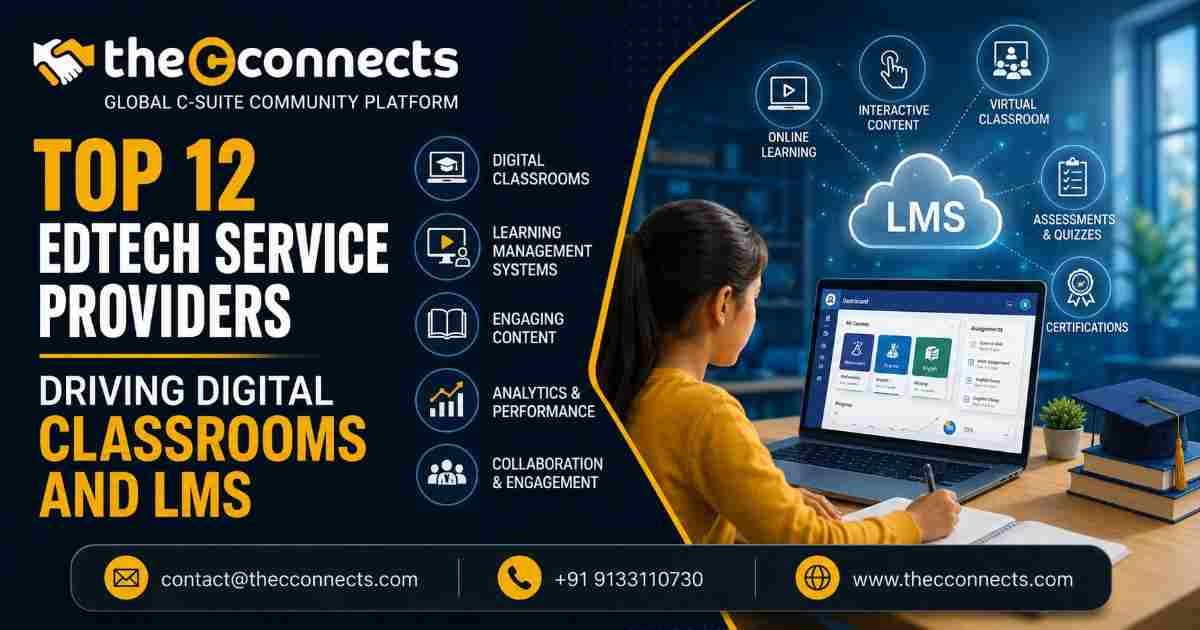

The global education technology ecosystem is undergoing a fundamental structural transition. The traditional classroom-once defined by physical bounds and static, printed curricula-has evolved into a cloud-connected, interactive ecosystem. Driven by advancements in Agentic AI, predictive learning analytics, and interoperable Cloud Learning Management Systems (LMS), educational institutions and corporate learning organizations are redefining how knowledge is imparted, evaluated, and retained.
Adopting modern EdTech infrastructure, however, requires more than simply converting analog content into digital formats. Educational leaders, instructional designers, and enterprise Chief Learning Officers face complex challenges: closing digital equity gaps, curbing drop-out rates with real-time early-warning indicators, navigating stringent data privacy standards (FERPA, COPPA, GDPR), and consolidating fragmented software stacks into single-pane-of-glass learning environments.
Market Landscape & Emerging Trends in Digital Classrooms & LMS Delivery
The software frameworks powering K–12 school districts, higher education institutions, and enterprise L&D programs are pivoting toward hyper-personalized, intelligent delivery:
- Generative & Agentic AI Integration: Modern LMS platforms are transforming from static repositories into dynamic learning engines. AI agents now handle routine administrative tasks, generate adaptive practice sets, offer 24/7 automated tutoring, and flag struggling students long before midterms.
- Unified EdTech Interoperability: Siloed tools are giving way to open ecosystems. Compliance with standards like LTI (Learning Tools Interoperability), OneRoster, and xAPI ensures frictionless data flow between LMS engines, Student Information Systems (SIS), and custom content repositories.
- Competency-Based Learning & Skill Badging: Education is increasingly aligning with tangible skill outcomes. Leading EdTech platforms feature micro-credentialing, skill mapping, and digital badge ecosystems to bridge academic learning with workforce readiness.
- Engagement via Micro-Learning & Gamification: To counter digital fatigue, modern classroom platforms break instruction down into bite-sized modules paired with interactive game mechanics, real-time polling, and collaborative digital whiteboards.
Top 12 EdTech Service Providers & LMS Vendors
1. Instructure (Canvas)
- Founders: Brian Whitmer, Devlin Daley
- Founded Year: 2008
- Headquarters: Salt Lake City, Utah, USA
- Product Categories: Cloud LMS, Assessment Management, Student Engagement, Career Pathways, Higher Ed & K–12 EdTech
- Description: Instructure is a powerhouse in global EdTech, best known for its cloud-native Learning Management System, Canvas. Built on an open, extensible architecture, Canvas serves tens of millions of students and educators across K–12, higher education, and vocational institutions globally. Instructure’s ecosystem provides seamless integration with thousands of third-party tools via open APIs and LTI standards. Its focus on intuitive UI design, reliable cloud uptime, and continuous updates makes it a top choice for institutions moving away from legacy, on-premise platforms.
- Key Features:
- Intuitive Canvas LMS interface designed for rapid student and faculty adoption
- Open API architecture with extensive LTI integration capabilities
- Canvas Studio for integrated video learning, interactive media, and inline commenting
- Canvas MasteryConnect for standards-based assessment and progress tracking
- SpeedGrader functionality enabling streamlined, rubric-based, and video feedback
- Native mobile applications tailored for students, instructors, and parents
- Predictive student analytics and early-intervention dashboards
2. Blackboard (formerly Anthology)
- Founders: Michael Chasen, Matthew Pittinsky, Stephen Gilfus, Daniel Cane
- Founded Year: 1997
- Headquarters: Boca Raton, Florida, USA
- Product Categories: Enterprise Cloud LMS (Blackboard Learn Ultra), Higher Ed Analytics, Digital Classroom Tools
- Description: Following a multi-year integration and subsequent market rebranding around its core teaching offerings, Blackboard delivers a comprehensive learning management environment. Its flagship LMS, Blackboard Learn Ultra, features a redesigned, mobile-first cloud platform engineered for blended and remote instruction. Blackboard leverages data insights across the student journey-connecting admissions, classroom engagement, and institutional analytics to equip academic leaders with complete visibility into student progress.
- Key Features:
- Blackboard Learn Ultra cloud LMS featuring modern, responsive workflow design
- AI-assisted course-building tools for curriculum generation and rubric setup
- Integrated Blackboard Illuminate engine for cross-institutional data analytics
- Blackboard Ally built-in accessibility engine for auto-converting course content into accessible formats
- Native interoperability with leading Student Information Systems (SIS)
- Flexible assessment formats including peer reviews, group assignments, and automated tests
- Robust communication suites with real-time alerts, mobile notifications, and virtual class hubs
3. D2L (Desire2Learn – Brightspace)
- Founders: John Baker
- Founded Year: 1999
- Headquarters: Kitchener, Ontario, Canada
- Product Categories: Cloud LMS (Brightspace), Content Authoring (Creator+), Learning Analytics, K–12, Higher Ed & Enterprise Upskilling
- Description: D2L (Desire2Learn) is a pioneer in accessible, personalized digital learning platforms. Its signature platform, D2L Brightspace, focuses on mobile usability, universal accessibility, and outcome-based competency tracking. Serving K–12 school districts, higher education systems, and corporate enterprise clients, Brightspace enables educators to construct adaptive learning pathways based on real-time performance metrics. D2L stands out for its commitment to Universal Design for Learning (UDL), ensuring high-quality online learning for diverse user demographics.
- Key Features:
- D2L Brightspace cloud LMS featuring an accessible, user-friendly interface
- D2L Creator+ authoring tool for building interactive, media-rich content without code
- Automation engines enabling condition-based personalized learning paths
- Advanced competency-based education (CBE) mapping and mastery tracking
- Integrated AI capabilities for automated video transcripts, inline quizzes, and student insights
- Digital portfolio tools designed for K–12 visual learning and artifact collection
- Comprehensive learner performance analytics featuring risk-prediction models
4. PowerSchool
- Founders: Greg Porter
- Founded Year: 1997
- Headquarters: Folsom, California, USA
- Product Categories: K–12 Student Information Systems (SIS), Cloud LMS (Schoology), Predictive Analytics, Special Education Software
- Description: PowerSchool is a premier provider of cloud-based technology solutions for primary and secondary education across North America. The company provides a unified software ecosystem that connects administrative functions with classroom instruction. Through its integrated Schoology LMS platform, PowerSchool offers a single digital workspace where teachers manage assignments, gradebooks, attendance, and individualized education plans (IEPs). Its centralized data engines empower school districts to monitor student progress in real time while elevating parent-teacher engagement.
- Key Features:
- Unified K–12 technology ecosystem connecting SIS, Schoology LMS, and special education workflows
- Dedicated portals for real-time parent and student tracking of grades, attendance, and schedules
- Schoology Learning LMS built specifically for K–12 instructional workflows
- Personalized Learning Cloud providing targeted content and custom assessments
- Automated behavioral tracking, SEL monitoring, and academic intervention planning
- Centralized district, state, and federal compliance reporting capabilities
- Role-based data access controls meeting high K–12 student privacy standards
5. Google for Education (Google Classroom)
- Founders: Larry Page, Sergey Brin (Alphabet Inc.)
- Founded Year: 1998 (Google) / 2014 (Google Classroom launch)
- Headquarters: Mountain View, California, USA
- Product Categories: Cloud Learning Hub, Productivity Applications (Workspace for Education), Digital Classroom Management
- Description: Google for Education has democratized classroom technology through its accessible, cloud-first management tool, Google Classroom. Designed for low-friction setup, Google Classroom connects educators and learners by integrating seamlessly with the broader Google Workspace suite (Docs, Slides, Drive, and Meet). Serving as an intuitive central portal, it allows teachers to create classes, distribute assignments, assign grades, and provide feedback in real time. Its minimal technical barrier and tight integration with cost-effective Chromebook devices make it a globally adopted tool.
- Key Features:
- Native integration with Google Workspace for Education tools (Docs, Sheets, Slides, Drive)
- Simple stream-based interface for rapid assignment creation and distribution
- Originality reports powered by Google Search algorithms to check for academic integrity
- Interactive practice sets offering automated hints and immediate student feedback
- Direct Google Meet integration for hybrid and synchronous online instruction
- Accessibility support including dynamic closed captioning, screen readers, and multi-language translation
- Expansive open API ecosystem supporting third-party add-ons and integrations
6. Moodle
- Founders: Martin Dougiamas
- Founded Year: 2002
- Headquarters: Perth, Western Australia
- Product Categories: Open-Source LMS (Moodle LMS), Cloud LMS (MoodleCloud), Enterprise LMS (Moodle Workplace)
- Description: Moodle is the world’s most widely deployed open-source Learning Management System, powering hundreds of thousands of learning sites across universities, schools, governments, and enterprise organizations. Rooted in social constructionist pedagogy, Moodle provides a highly flexible platform where administrators and developers can customize every aspect of the learning experience. While MoodleCloud offers streamlined managed hosting, Moodle Workplace delivers enterprise capabilities tailored for corporate compliance, multi-tenant learning, and workforce development.
- Key Features:
- Open-source core architecture supported by a massive library of community-built plugins
- Multi-lingual support accommodating learning portals in over 100 languages
- Highly customizable assessment tools supporting peer assessments, workshops, and automated testing
- LTI-compliant framework for connecting external learning tools and digital content
- Native mobile application support with offline synchronization for remote learners
- Moodle Workplace expansion for organizational hierarchy mapping and automated certification
- Global partner network offering certified hosting, custom development, and system integrations
7. Docebo
- Founders: Claudio Erba
- Founded Year: 2005
- Headquarters: Toronto, Ontario, Canada / Biassono, Italy
- Product Categories: AI-Powered Cloud LMS, Learning Experience Platform (LXP), Enterprise Customer & Employee Training
- Description: Docebo is an industry leader in enterprise cloud learning, leveraging artificial intelligence to power dynamic training for employees, partners, and customers. Recognized for its scalability and modern UI, Docebo automates complex workflow tasks such as course enrollment, content tagging, and translation. Beyond traditional internal training, Docebo excels in “extended enterprise” environments, enabling mid-sized and global companies to deliver branded, external-facing learning programs that drive customer retention and partner enablement.
- Key Features:
- AI-driven core platform automating course enrollments, skill tagging, and content delivery
- Docebo Shape Generative AI content creator for rapidly converting business data into training modules
- Multi-audience framework for managing employee, partner, and customer learning within one system
- Seamless native integrations with enterprise stacks including Salesforce, Microsoft Teams, and HRIS tools
- Advanced reporting and analytics correlating training metrics directly with business KPIs
- E-commerce functionality for selling online courses and certification pathways
- Fully customizable white-label branding and localized learner mobile applications
8. iSpring Solutions
- Founders: Yury Uskov
- Founded Year: 2001
- Headquarters: Alexandria, Virginia, USA
- Product Categories: Authoring Software (iSpring Suite), Cloud LMS (iSpring Learn), Micro-learning Tools
- Description: iSpring Solutions is a recognized software developer focused on rapid eLearning authoring tools and cloud-based learning management systems. Its flagship authoring tool, iSpring Suite, integrates directly into Microsoft PowerPoint, allowing educators and instructional designers to transform standard presentations into interactive SCORM-compliant courses, quizzes, and role-play simulations. Paired with iSpring Learn LMS, the company offers a complete, low-friction solution for rapid onboarding, corporate compliance, and continuous digital training.
- Key Features:
- iSpring Suite PowerPoint-integrated course authoring software with built-in AI assistants
- Turnkey iSpring Learn cloud LMS designed for rapid corporate and academic deployment
- Robust content library containing thousands of ready-to-use slide templates, avatars, and assets
- Interactive scenario-based role-play creation tool for communication and sales training
- Automated reporting suites tracking progress, completion rates, and test scores
- Native offline mobile app support with automatic progress sync upon reconnecting
- Full SCORM, xAPI, and cmi5 standards compatibility for seamless content migration
9. Kahoot!
- Founders: Johan Brand, Asmund Furuseth, Morten Versvik
- Founded Year: 2012
- Headquarters: Oslo, Norway
- Product Categories: Gamified Learning Platform, Interactive Assessment Tools, Audience Engagement Software
- Description: Kahoot! pioneered game-based learning and interactive audience participation across digital and physical classrooms. By integrating game mechanics into formative assessment, Kahoot! turns static lectures into engaging learning competitions. Users construct, share, and play multiple-choice learning games (“kahoots”) via web browsers or mobile devices. Expanding beyond traditional classrooms into corporate L&D and higher education, Kahoot! has built a comprehensive learning ecosystem through key acquisitions, including the Clever K–12 SSO portal and DragonBox learning apps.
- Key Features:
- Gamified quiz-creation software accessible on any web browser or mobile platform
- Live classroom game modes driving real-time student engagement and instant feedback
- Self-paced challenge assignments tailored for asynchronous homework and study sessions
- Dynamic analytics dashboards giving teachers immediate insight into student comprehension gaps
- Integration with virtual meeting software including Zoom, Microsoft Teams, and Google Meet
- Access to a vast public library containing millions of pre-made learning games
- Single Sign-On (SSO) integration with major school district administrative systems
10. Coursera
- Founders: Andrew Ng, Daphne Koller
- Founded Year: 2012
- Headquarters: Mountain View, California, USA
- Product Categories: Enterprise Learning Platform, Online Degree Hosting, Professional Micro-Credentials, Higher Ed Courseware
- Description: Coursera is a global online learning platform bridging higher education, industry leaders, and worldwide learners. Partnering with over 300 top universities and technology corporations (including Stanford, Yale, Google, and IBM), Coursera delivers accredited online degrees, professional certificates, and skill-based courses. Through Coursera for Campus and Coursera for Business, the platform enables educational institutions and corporate enterprises to integrate turnkey digital curricula directly into their physical degree paths and workforce retraining initiatives.
- Key Features:
- Catalog of thousands of courses spanning AI, data science, software engineering, and business management
- Guided Projects providing hands-on, browser-based technical learning environments
- Industry Micro-Credentials mapped directly to high-demand job roles and skills
- Coursera for Campus platform enabling universities to offer credit-eligible digital courses
- AI-powered learning engines suggesting personalized content based on career trajectories
- Multi-language subtitle support, downloadable video lectures, and offline viewing
- Enterprise management dashboards tracking learner skill acquisition and course completion rates
11. Class Technologies (Class)
- Founders: Michael Chasen
- Founded Year: 2020
- Headquarters: Washington, D.C., USA
- Product Categories: Virtual Classroom Software, Synchronous Learning Tools, Video-Based Instruction
- Description: Class Technologies was founded to transform standard web conferencing tools into purpose-built digital learning environments. Designed specifically for synchronous online education, Class adds essential instructional workflows directly on top of video interfaces. Teachers can manage attendance, run quizzes, share interactive whiteboards, lead small breakout discussion groups, and monitor learner participation without leaving the video portal. Class provides the missing pedagogical layer for real-time online instruction across K–12, higher education, and corporate training.
- Key Features:
- Specialized virtual classroom interface featuring teacher podiums, screen layouts, and seating charts
- Integrated instructional tools including real-time quizzes, polls, assignments, and whiteboards
- Advanced breakout rooms permitting instructors to observe multiple discussion groups at once
- Automated attendance recording and active learner participation monitoring
- Screen-sharing oversight enabling instructors to view student progress in real time
- Native integration with major LMS engines including Canvas, Blackboard, Moodle, and Brightspace
- Accessibility features including live captioning, transcript logs, and screen reader support
12. Absorb LMS
- Founders: Blayne Sears, Mike Owens
- Founded Year: 2002
- Headquarters: Calgary, Alberta, Canada
- Product Categories: Enterprise Cloud LMS, Agentic AI Learning Platform, Corporate & Higher Ed Upskilling
- Description: Absorb LMS is an agentic AI-powered learning platform engineered to deliver automated, highly tailored training experiences. Built to serve businesses, higher education institutions, and extended enterprise networks, Absorb simplifies complex administrative processes through intelligent automation. The platform uses AI agents to streamline course creation, learner enrollment, content curation, and compliance management. Featuring a sleek UI and modular architecture, Absorb allows organizations to deliver white-labeled, brand-consistent learning environments across global user bases.
- Key Features:
- Absorb Pinpoint AI tool utilizing natural language processing to search and jump to exact video segments
- Agentic AI architecture automating administrative workloads, content tagging, and enrollments
- Fully responsive, customizable UI enabling tailored, white-labeled brand portals
- Comprehensive e-commerce module for monetizing external training programs and courses
- Integrated content authoring tools and pre-built course libraries
- Robust reporting and analytics engine for tracking compliance, competencies, and ROI
- Flexible integration architecture connecting seamlessly with HRIS, CRM, and enterprise platforms
Get Featured or Share Your Feedback
If you have any feedback, updated information, or if your product or company is eligible to get featured in this article, please contact us using any of the following methods:
📩 Email us: contact@thecconnects.com
📞 Call us: +91 9133110730
💬 WhatsApp us: https://wa.me/919133110730