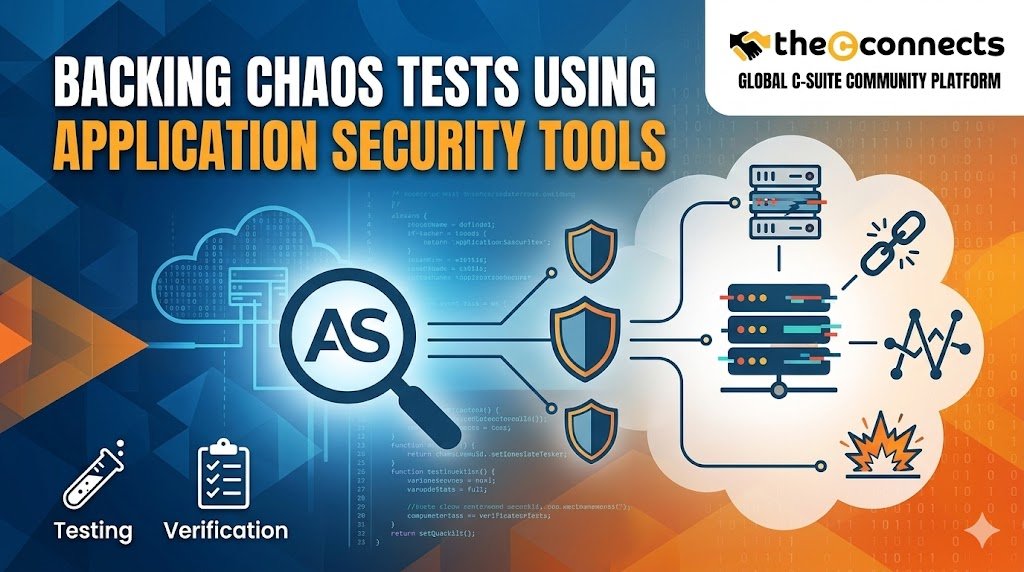

Chaos testing has a way of making even seasoned teams uneasy. You deliberately introduce failure, watch systems bend, and hope they do not break in ways that hurt customers. It sounds reckless at first. Yet when done well, it is one of the most honest ways to learn how your applications behave under stress. The missing piece, for many teams, is security. If you are injecting faults without understanding the security impact, you may be creating blind spots right when you think you are building resilience.
That is why backing chaos tests with security tooling matters so much. You are not just asking whether the app stays up. You are asking whether it stays safe. A service can recover from latency spikes and still leak secrets, expose misconfigurations, or open strange little doors attackers love to find. Resilience without security is only half a victory.
Why Chaos Testing Needs an Application Security Platform
Chaos engineering traditionally focuses on availability, latency, and recovery. Those are crucial. But modern applications are sprawling, interconnected, and full of tiny dependencies that can fail in surprising ways. During a controlled failure, auth services may time out, logs may disappear, and fallback logic may act in aberrant ways.
That word, aberrant, reminds many teams of a late-night test where one harmless config change turned a healthy login flow into something bizarre. Users were suddenly routed through an outdated endpoint that no one had touched in months. It was not a dramatic breach, but it was deeply unsettling. The behavior was aberrant in the truest sense: unexpected, irregular, and just dangerous enough to reveal a weakness everyone had overlooked.
This is where an application security platform earns its place. It helps you correlate operational chaos with security consequences. Instead of only tracking whether a service failed over successfully, you can also see whether that failover introduced vulnerable states, weakened access controls, or triggered risky API behavior. In other words, you stop testing systems as machines alone and start testing them as real attack surfaces.
Key Risks Chaos Tests Can Expose with Application Security Solutions
When chaos tests are paired with the right security visibility, they reveal far more than uptime issues. You may discover broken authentication flows when identity providers degrade. You may uncover insecure retries that resubmit sensitive data. You may also find permissions expanding quietly during failover, as if the system is saying, “We will sort out security later.” Attackers count on moments like that.
Strong application security solutions help catch these problems while the experiment is happening, not weeks later in a report no one wants to read. They can flag abnormal requests, detect policy drift, and surface vulnerable components that become reachable only under stress conditions. That matters because some of the most dangerous weaknesses are not always visible in normal operation. They emerge only when your stack is tired, noisy, and improvising.
There is also a deeply human side to this. Teams often recognize problems only after they have seen them in motion. One engineer once watched a chaos drill knock a dependency offline, and suddenly recognized a pattern from a minor incident months earlier. Back then, the clue looked harmless. During the test, it became obvious that the same condition could have escalated into something far worse. Sometimes you do not truly recognize a risk until the system reenacts the story in front of you.
How to Prepare Security-Aware Chaos Experiments
The smartest path is to define security expectations before you inject any failure. Ask simple but powerful questions. If a service goes down, should authentication fail closed? If a queue backs up, what data might be exposed in logs? If traffic reroutes, which controls must stay intact no matter what? These guardrails keep chaos from becoming guesswork.
It also helps to build experiments in layers. Start with low-blast-radius scenarios in staging, then move carefully into production with strict observability. Your telemetry should include not just performance and reliability metrics, but also signals from your application security platform. Look for suspicious request patterns, privilege changes, secret access, and policy violations during every experiment.
And keep the scope realistic. A good chaos test does not need to simulate the end of the world. It only needs to reveal truth. Sometimes the truth arrives through a tiny failure: a revoked token, a delayed API response, a dropped container, a misbehaving proxy. Small disruptions often expose the biggest assumptions.
Choosing Application Security Solutions That Support Chaos Work
Not every tool is built for this kind of dynamic testing. You need application security solutions that can keep up with live systems, not just scan code in isolation. Runtime visibility is critical. API monitoring is critical. Context is critical. During a chaos experiment, raw alerts without context will bury you.
Look for tools that help you connect technical events to business risk. Can they show which customer-facing workflows were affected? Can they identify when a degraded service changed the attack surface? Can they separate meaningful anomalies from expected test noise? The right tooling should calm the room, not add panic.
A short story captures this beautifully. Think of an apple sitting on a kitchen counter. It looks perfect from one side, polished and bright. Turn it just a little, and there is a bruise beginning to spread under the skin. Systems are often like that. During normal operations, they look clean and healthy. Chaos testing turns the apple so you can finally see what was hiding.
Turning Findings Into Lasting Resilience
The real value of these tests is not the adrenaline of breaking things. It is what you do afterward. Every experiment should produce action: harden fallback paths, tighten identity controls, improve logging hygiene, reduce secret exposure, and patch vulnerable services. The lessons need to feed engineering, operations, and security together.
This is also the moment to improve communication. Chaos testing backed by security data gives everyone a shared language. Reliability teams see why security matters during outages. Security teams see how resilience choices affect exposure. Leadership sees risk in practical, measurable terms. That alignment is powerful.
When you support chaos engineering with an application security platform, you transform failure from a source of fear into a source of clarity. When you reinforce those efforts with application security solutions, you gain the confidence to test harder questions without losing sight of what matters most. Your goal is not to create perfect systems. It is to build systems that stumble, recover, and protect people anyway.
That is the heart of the guide. Chaos will come, whether you invite it or not. By testing it deliberately and backing those tests with security insight, you give your team something rare: not false comfort, but earned trust.