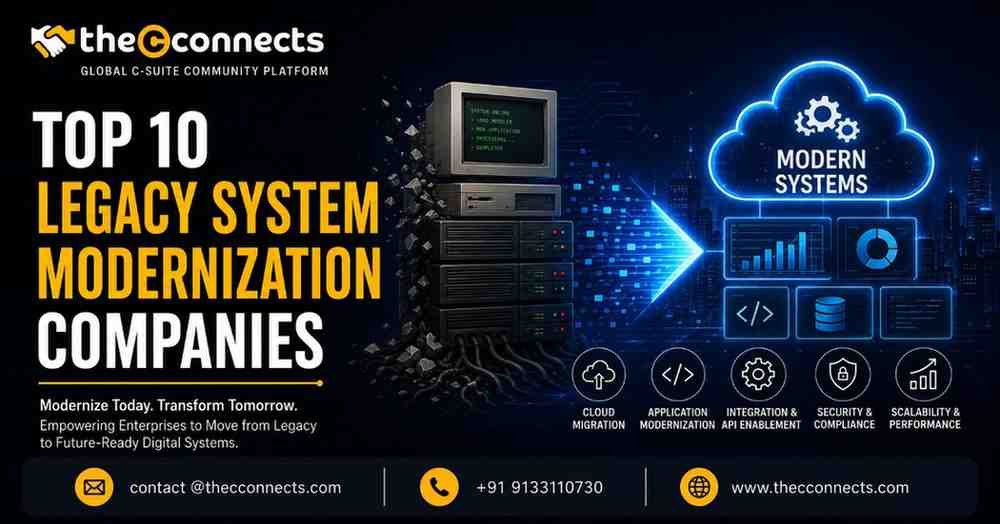

As digital transformation shifts from discretionary innovation to an urgent operational requirement, enterprise legacy system modernization has reached a critical inflection point. Organizations across banking, financial services, healthcare, retail, and government sectors are confronting the mounting risks of aging monolithic architectures. Monolithic legacy codebases, COBOL mainframes, and tightly coupled legacy databases consume between 60% and 80% of enterprise IT budgets in pure maintenance, creating severe barriers to adopting AI, edge computing, and real-time data streaming.
As a market research head examining global technology estates, several major market trends define the modern legacy transformation ecosystem:
- From “Rip-and-Replace” to Evolutionary Architecture: High failure rates and operational risks associated with “big-bang” system overhauls have driven enterprises toward incremental modernization strategies. Techniques like the Strangler Fig pattern, domain event modeling, and microservices extraction allow organizations to migrate core capabilities piece-by-piece without disrupting ongoing operations.
- GenAI-Assisted Automated Refactoring: Generative AI and domain-specific language models (DSLMs) are revolutionizing code discovery, documentation, and reverse engineering. AI agents automatically map dense, undocumented legacy dependency trees and translate legacy languages (e.g., COBOL, RPG, PL/I) into cloud-native Java, C#, or Go with significantly reduced manual effort.
- Mainframe Offloading and Hybrid Cloud Coexistence: Legacy modernization no longer implies abandoning core hardware overnight. Organizations increasingly favor hybrid approaches-offloading compute-heavy analytics and customer-facing workflows to distributed cloud platforms while maintaining highly optimized transactional engines on core mainframes.
- API-First Composable Integration: To unlock locked data without altering baseline transaction engines, companies rely on API wrapping and event-driven integration layers. Exposing legacy functions through REST or gRPC APIs turns rigid monoliths into flexible, composable building blocks.
Strategic Evaluation Framework: Selecting a Modernization Partner
Choosing the right modernization partner requires evaluating specific operational drivers rather than selecting a generic software development vendor:
- Domain & Language Coverage: Ensure the provider has verified experience handling your legacy source stack-whether that involves COBOL, Pascal, RPG, Natural ADABAS, or legacy .NET/Java versions.
- Automation Assets & Tooling: Leading vendors differentiate through proprietary static code analyzers, automated translation platforms, and AI-driven regression testing frameworks.
- Regulatory Track Record: Modernizing systems in regulated verticals (BFSI, healthcare, public infrastructure) requires strict adherence to security frameworks, data residency requirements, and continuous audit trails.
- Organizational Change Management: Technical conversion is only half the battle; top firms help upskill internal teams to operate and maintain modern microservices architectures after deployment.
Top 10 Legacy System Modernization Companies
1. IBM Corporation
- Company Name: IBM Corporation
- Founders: Charles Ranlett Flint (CTR Co. merger) and Thomas J. Watson Sr.
- Founded Year: 1911
- Headquarters: Armonk, New York, United States
- Product Categories: Mainframe Modernization, Hybrid Cloud Platforms, AI Code Translation, Enterprise Software, IT Consulting
Company Description:
IBM Corporation remains a premier authority in global enterprise computing, infrastructure, and core systems engineering. Combining its historical hardware engineering legacy with modern platforms like Red Hat OpenShift and watsonx AI, IBM helps global enterprises modernize mission-critical systems without compromising security or operational uptime. IBM Consulting employs structured methodologies to analyze monolithic codebases, refactor mainframe applications, and build seamless cloud-native integrations. Their risk-averse, phased approach allows organizations in highly regulated markets to untangle legacy tech debt and transition toward agile hybrid cloud infrastructures.
Key Features:
- watsonx Code Assistant for Z: Generative AI-powered code translation and automated documentation for legacy COBOL environments.
- Red Hat OpenShift Ecosystem: Enables unified cloud-native software execution across multi-cloud and on-premises deployments.
- Mainframe Engineering Depth: Deep proprietary expertise in IBM Z-series hardware, CICS, and high-throughput transactional architectures.
- IBM Garage Methodology: Collaborative co-creation framework for rapid prototyping and phased modernizations.
- API Wrapping & Middleware: Exposes core transactional logic to web and mobile channels via secure enterprise API layers.
- Automated Testing Suites: Generates synthetic test vectors to guarantee functional equivalence between legacy and modern outputs.
- Enterprise-Grade Compliance: Tailored governance frameworks designed for central banks, healthcare networks, and defense sectors.
2. Accenture plc
- Company Name: Accenture plc
- Founders: Spun off from Arthur Andersen (Business Consulting Division)
- Founded Year: 1989
- Headquarters: Dublin, Ireland
- Product Categories: Enterprise Cloud Migration, Application Re-architecting, Mainframe Modernization, Core Platform Transformation
Company Description:
Accenture plc is one of the world’s largest digital transformation and strategic technology consultancies. The firm enables Fortune 500 enterprises to navigate complex legacy modernizations through a blend of cloud platforms, hyperscaler partnerships, and automated code migration frameworks. Accenture focuses on business outcome mapping, converting technical debt reduction into tangible speed-to-market and reduced total cost of ownership (TCO). Their modernization services span portfolio rationalization, mainframe-to-cloud offloading, automated refactoring, and modern platform engineering.
Key Features:
- Accenture Cloud First Suite: Integrated automation assets and diagnostic toolsets accelerating enterprise migration.
- AI-Assisted Code Refactoring: Automated analysis and translation tools reducing manual refactoring overhead.
- Hyperscaler Ecosystem Alliances: Premier partner status with AWS, Microsoft Azure, and Google Cloud.
- Industry-Specific Blueprints: Pre-configured migration templates tailored to banking, insurance, retail, and public sector domains.
- End-to-End Modernization Lifecycle: Full coverage across portfolio discovery, re-architecting, cloud migration, and managed services.
- Change Enablement Programs: Training and workforce transformation to build modern engineering habits in client organizations.
3. Infosys Limited
- Company Name: Infosys Limited
- Founders: N. R. Narayana Murthy, Nandan Nilekani, Kris Gopalakrishnan, S. D. Shibulal, K. Dinesh, N. S. Raghavan, and Ashok Arora
- Founded Year: 1981
- Headquarters: Bengaluru, Karnataka, India
- Product Categories: Cloud Services (Infosys Cobalt), AI Platforms (Infosys Topaz), Application Modernization, Core Banking Solutions
Company Description:
Infosys Limited is a global IT services and consulting pioneer recognized for its structured enterprise modernization frameworks. Powered by Infosys Cobalt (cloud transformation) and Infosys Topaz (generative AI assets), Infosys guides companies through a systematic multi-path strategy (Rehost, Replatform, Refactor, Rearchitect, Rewrite, and Retire). Infosys employs automated telemetry and code intelligence platforms to map complex system dependencies, allowing companies to untangle monolithic platforms into scalable, microservices-driven architectures.
Key Features:
- Infosys Topaz & Cobalt Integration: Combined AI asset catalog and cloud framework supporting automated legacy discovery.
- Finacle Core Modernization: Market-leading solution suite for transforming legacy core banking databases and logic.
- Automated Code Translation Engines: Fast-path conversion platforms turning legacy procedural code into object-oriented languages.
- Application Modernization Methodology: Structured assessment tools prioritizing applications based on technical debt and business value.
- DevOps & Platform Integration: Automates CI/CD delivery pipelines to sustain agile deployments post-migration.
- Microservices Extraction Framework: Systematic isolation of monolith modules into resilient RESTful API microservices.
4. Tata Consultancy Services (TCS)
- Company Name: Tata Consultancy Services (TCS)
- Founders: J. R. D. Tata and F. C. Kohli
- Founded Year: 1968
- Headquarters: Mumbai, Maharashtra, India
- Product Categories: Application Automation (TCS MasterCraft), Mainframe Re-platforming, Cloud Transformation, Enterprise Integration
Company Description:
Tata Consultancy Services (TCS) brings global scale and technical rigor to legacy system modernizations. Utilizing its proprietary TCS MasterCraft™ product suite, TCS automates legacy system analysis, reverse engineering, and code translation. The company specializes in executing large-scale mainframe transformations, database modernizations, and cloud migrations for global banking, logistics, and retail institutions. TCS emphasizes risk-mitigated delivery models backed by a vast international network of innovation hubs and delivery centers.
Key Features:
- TCS MasterCraft™ TransformPlus: Suite of tools automating code analysis, business rules extraction, and code conversion.
- Proven Mainframe Offloading Models: Systematically moves mainframe workloads to distributed cloud architectures.
- Machine First Delivery Model (MFDM): Embeds automation and machine learning across all stages of application transformation.
- Deep Legacy Language Support: Technical proficiency in legacy stacks including COBOL, PL/I, Natural ADABAS, and RPG.
- Parallel System Testing: Automated validation engines ensuring data parity between legacy and modernized builds.
- Enterprise Security Standards: Rigid regulatory controls built directly into target architectures for global compliance.
5. Cognizant Technology Solutions
- Company Name: Cognizant Technology Solutions
- Founders: Kumar Mahadeva and Francisco D’Souza
- Founded Year: 1994
- Headquarters: Teaneck, New Jersey, United States
- Product Categories: Modern Application Engineering, Cloud Transformation, Mainframe Migration, Data & API Management
Company Description:
Cognizant Technology Solutions assists mid-market and Fortune 500 enterprises in modernizing legacy IT estates into modern, cloud-native operational engines. Combining domain knowledge across healthcare, banking, and insurance with platform engineering, Cognizant systematically de-risks digital transformations. The company focuses on turning legacy core systems into microservices architectures, surfacing business logic through secure APIs, and migrating data to scalable public or hybrid cloud environments.
Key Features:
- Cognizant Neuro AI Platform: AI-driven application discovery, code line analysis, and automated migration planning.
- Modern Application Engineering (MAE): Structured blueprint for building cloud-native, microservice-based software architectures.
- Domain-Specific Modernization Accelerators: Specialized transformation assets tailored for insurance claims, healthcare EHRs, and core banking.
- API Management & Integration: Wraps legacy engines in GraphQL or RESTful interfaces for cross-platform interoperability.
- DevSecOps Embedded Security: Integrates security policy checks into CI/CD pipelines during system re-engineering.
- Mainframe Modernization Suite: Automated tools for business rule extraction and target platform refactoring.
6. Capgemini SE
- Company Name: Capgemini SE
- Founders: Serge Kampf
- Founded Year: 1967
- Headquarters: Paris, France
- Product Categories: Application Development & Maintenance (eADM), Mainframe Modernization, Cloud Infrastructure, Custom Engineering
Company Description:
Capgemini SE is a European technology leader with global consulting and custom system engineering capabilities. Capgemini’s application modernization approach emphasizes agile delivery, cloud adoption, and software sustainable engineering. The firm collaborates closely with client leadership to align legacy upgrades with operational objectives, ensuring that code refactoring directly improves business agility and reduces compute energy consumption.
Key Features:
- eADM (economic Application Development & Maintenance): Structured approach balancing legacy system upkeep with cloud refactoring.
- AI-Assisted Code Extraction: Proprietary tooling for reverse engineering logic and optimizing legacy application portfolios.
- Capgemini Engineering Strength: Technical expertise in industrial software, embedded systems, and enterprise backends.
- Sustainable IT Focus: Optimizes modernized code execution to minimize cloud compute consumption and carbon footprints.
- European Regulatory Compliance: Deep expertise navigating strict compliance regimes like GDPR, DORA, and regional data sovereign laws.
- Service Mesh & API Integration: Modernizes connection layers to link core transaction backends with modern user interfaces.
7. Thoughtworks Holding, Inc.
- Company Name: Thoughtworks Holding, Inc.
- Founders: Neville Roy Singham
- Founded Year: 1993
- Headquarters: Chicago, Illinois, United States
- Product Categories: Evolutionary Architecture, Domain-Driven Design (DDD), Platform Engineering, Modern Delivery Consulting
Company Description:
Thoughtworks is globally recognized as an innovator in software engineering practices, agile software development, and evolutionary architecture. Unlike high-volume outsourcers that focus primarily on automated code conversion, Thoughtworks takes a product-centric, high-touch engineering approach to system modernization. Using Domain-Driven Design (DDD), Thoughtworks breaks down monolithic systems into clean, maintainable microservices while guiding client organizations through modern platform engineering practices.
Key Features:
- Evolutionary Architecture Practice: Enables continuous incremental architectural refactoring without multi-year code freezes.
- Domain-Driven Design (DDD) Leadership: Decouples legacy monoliths based on core business boundaries rather than arbitrary code modules.
- Strangler Fig Pattern Implementation: Incremental replacement of legacy system capabilities to eliminate operational downtime.
- Platform Engineering Expertise: Builds internal developer platforms that maintain codebase quality long after initial migration.
- AI-Augmented Developer Tooling: Integrates generative coding assistants directly into client engineering teams.
- High-Touch Mentorship Culture: Upskills internal IT teams to adopt modern engineering and CI/CD practices.
8. EPAM Systems, Inc.
- Company Name: EPAM Systems, Inc.
- Founders: Arkadiy Dobkin and Leonid Lozner
- Founded Year: 1993
- Headquarters: Newtown, Pennsylvania, United States
- Product Categories: Digital Platform Engineering, Cloud Re-architecting, Custom Software Re-engineering, DevSecOps Automation
Company Description:
EPAM Systems, Inc. is a digital platform engineering and software development services provider. Founded on deep custom software development and product engineering principles, EPAM excels at complex software re-engineering projects requiring high custom code fidelity. EPAM helps enterprise organizations convert rigid legacy codebases into cloud-native digital platforms by employing advanced automation, containerization, modern database designs, and user-centric UI/UX refactoring.
Key Features:
- Custom Software Engineering Talent: Elite engineering talent specializing in complex algorithms and multi-tier system redesign.
- EPAM Cloud Pipeline & Tooling: Proprietary accelerators designed for cloud refactoring, microservices generation, and container orchestration.
- Frontend & UX Modernization: Refreshes legacy user interfaces alongside backend core transformations.
- Data Pipeline Transformation: Migrates legacy relational databases (e.g., Oracle, DB2) to modern distributed data platforms.
- DevSecOps Integration: Embeds security testing and infrastructure automation across the full software engineering lifecycle.
- Product Engineering Philosophy: Treats modernized enterprise assets as continuously evolving software platforms.
9. Wipro Limited
- Company Name: Wipro Limited
- Founders: M. H. Hasham Premji (IT services expanded under Azim Premji)
- Founded Year: 1945 (IT Services established in 1980)
- Headquarters: Bengaluru, Karnataka, India
- Product Categories: Wipro FullStride Cloud, Application Transformation, Mainframe Migration, API & Integration Management
Company Description:
Wipro Limited is a global technology service and consulting company offering end-to-end legacy modernization capabilities. Through its unified Wipro FullStride Cloud Services framework, Wipro manages the full transformation lifecycle-from legacy portfolio assessment to cloud migration and operational optimization. Wipro combines automated conversion tooling with industry-specific domain expertise to help financial, retail, and manufacturing enterprises modernize legacy code bases with minimal operational disruption.
Key Features:
- Wipro FullStride Cloud Framework: Unified transformation ecosystem covering discovery, cloud migration, and managed operations.
- Mainframe-to-Cloud Studio: Tooling suite for reverse engineering business rules and converting legacy procedural platforms.
- Financial Services Capabilities: Deep core banking modernization experience supported by strategic acquisitions like Capco.
- Automated Code Conversion: Multi-language support for translating COBOL, CICS, and DB2 configurations into modern Java or .NET stacks.
- API Gateway Deployment: Establishes secure enterprise API layers over legacy transactional backends.
- Global Delivery Footprint: Multi-region delivery infrastructure ensuring high geographic redundancy and regulatory compliance.
10. DXC Technology
- Company Name: DXC Technology
- Founders: Formed through the merger of Computer Sciences Corporation (CSC) and HPE Enterprise Services
- Founded Year: 2017
- Headquarters: Ashburn, Virginia, United States
- Product Categories: Mainframe Modernization, Cloud Infrastructure, Application Management, Managed IT Services
Company Description:
DXC Technology manages critical legacy IT infrastructures for large-scale enterprise and public sector accounts worldwide. Formed via the merger of CSC and HPE Enterprise Services, DXC brings extensive operational knowledge of complex mainframe, midrange, and distributed legacy systems. DXC specializes in pragmatic, risk-mitigated modernizations, helping organizations stabilize, optimize, and incrementally transition legacy estate workloads into secure hybrid cloud environments.
Key Features:
- Deep Mainframe & Midrange Knowledge: Direct operational expertise managing complex mission-critical legacy hardware.
- DXC Modernization Studio: Automated diagnostic platforms for portfolio analysis, code mapping, and re-platforming planning.
- Hybrid IT Management: Connects traditional on-premises data centers with AWS, Azure, and Google Cloud platforms.
- Mainframe Workload Optimization: Offloads non-essential data queries to modern cloud databases while keeping core transaction engines stable.
- Public Sector Compliance: High-security modernization standards designed for federal defense, civic infrastructure, and healthcare.
- Zero-Downtime Migration Protocols: Structured cutover practices ensuring business continuity throughout backend database transformations.
Contact & Feedback Information
If you have any feedback, updated information, or if your product or company is eligible to get featured in this article, please contact us using any of the following methods:
- 📧 Email us: contact@thecconnects.com
- 📞 Call us: +91 9133110730
- 💬 WhatsApp us: https://wa.me/919133110730