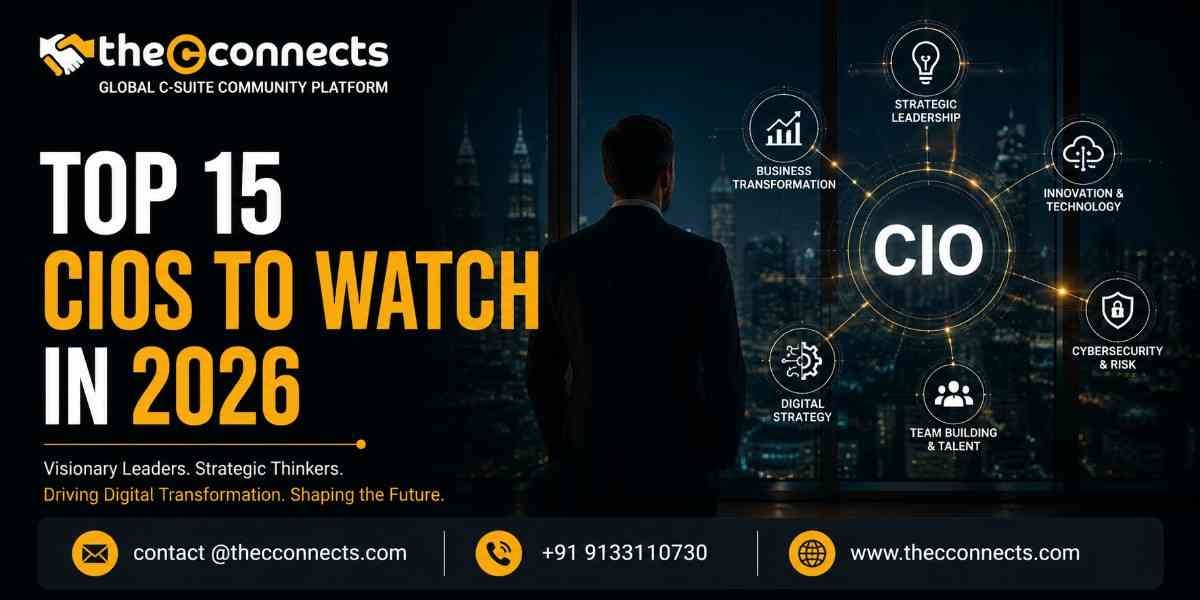

The role of the Chief Information Officer (CIO) has fundamentally shifted. Historically viewed as custodians of IT infrastructure and cost management, today’s CIOs function as primary orchestrators of business growth, enterprise risk, and technological innovation.
Driving this evolution is the rapid transition from experimental generative AI to operationalized Agentic AI, heightened geopolitical cyber threats, and demanding board-level directives requiring clear ROI on cloud and data investments.
Key Market Trends Shaping Technology Leadership
- Agentic AI Replaces Point Automation: Enterprise architectures are pivoting toward multi-agent systems where AI autonomous agents coordinate complex cross-functional workflows.
- Cyber Resilience as the Primary Benchmark: Cybersecurity and digital trust remain the top investment priority for technology leaders globally. CIOs are working alongside CISOs to embed security directly into developer pipelines and data stores.
- Aggressive Elimination of Technical Debt: Unlocking budget for AI transformation requires stripping away legacy shelfware and consolidating redundant software stacks.
- Data Coherence and Governance: Unstructured data silos represent the biggest bottleneck to scaling enterprise AI safely. Modern CIOs prioritize establishing single sources of truth.
Below is an in-depth analysis of the Top 15 Companies and their Visionary CIOs/Tech Chiefs setting the standard for digital enterprise leadership.
Top 15 CIOs & Enterprise Platforms to Watch
1. JPMorgan Chase & Co.
- Company Name: JPMorgan Chase & Co. (Global CIO: Lori Beer)
- Founders: J. Pierpont Morgan, Aaron Burr (via heritage banks including The Manhattan Company)
- Founded Year: 1799
- Headquarters: New York, New York, United States
- Product Categories: Enterprise Financial Systems, Investment Banking Tech, Asset Management Platforms, FinTech Infrastructure, Cyber Security
- Description: JPMorgan Chase & Co. is a global financial services firm and one of the largest banking institutions in the world. Under the leadership of Global CIO Lori Beer, the enterprise manages a multi-billion-dollar technology budget powering an army of tens of thousands of technologists. The bank sets global standards for financial cloud migration, AI-driven fraud mitigation, resilient payment processing, and large-scale data engineering. Their technology architecture handles trillions of dollars in daily transactions while maintaining strict security and regulatory compliance across global markets.
- Key Features:
- Multi-billion-dollar annual technology budget driving core banking modernization.
- Enterprise-wide deployment of custom proprietary AI and LLM models for financial analysis.
- Resilient multi-region cloud architecture supporting high-frequency transaction engines.
- Advanced Zero Trust cybersecurity frameworks protecting global customer assets.
- Hybrid cloud data ecosystems processing petabytes of real-time market data.
- Continuous developer enablement through modern platform engineering frameworks.
- Strict automated governance and regulatory compliance reporting engines.
2. Microsoft Corporation
- Company Name: Microsoft Corporation (EVP & CTO: Kevin Scott / Azure CTO: Mark Russinovich)
- Founders: Bill Gates and Paul Allen
- Founded Year: 1975
- Headquarters: Redmond, Washington, United States
- Product Categories: Cloud Computing (Azure), Enterprise AI (Copilot), Productivity Suites (Microsoft 365), Enterprise Security, Operating Systems
- Description: Microsoft Corporation is a global technology powerhouse driving cloud infrastructure, enterprise productivity, and artificial intelligence. Guided by executive technology visionaries including Kevin Scott and Mark Russinovich, Microsoft has redefined modern work through Azure and Copilot platform integrations. The firm provides foundational cloud infrastructure and enterprise applications to over 95% of Fortune 500 companies. Microsoft continues to pioneer agentic AI deployment, developer productivity systems, and zero-trust cloud security protocols on a global scale.
- Key Features:
- Azure Cloud platform providing scalable infrastructure for enterprise AI workloads.
- Microsoft 365 Copilot suite embedding generative AI into daily enterprise workflows.
- Advanced Azure OpenAI Service enabling custom agentic AI solution development.
- Microsoft Defender and Sentinel providing AI-powered enterprise cyber threat intelligence.
- Fabric data analytics platform unifying warehouse and lakehouse architectures.
- Modern developer tools ecosystem centered around GitHub and automated CI/CD pipelines.
- Enterprise hybrid cloud deployment options via Azure Arc.
3. ServiceNow, Inc.
- Company Name: ServiceNow, Inc. (Chief Digital Information Officer: Chris Bedi)
- Founders: Fred Luddy
- Founded Year: 2004
- Headquarters: Santa Clara, California, United States
- Product Categories: Enterprise Workflow Automation, IT Service Management (ITSM), Agentic AI Workflows, Digital Employee Experience
- Description: ServiceNow, Inc. provides cloud-based platform solutions that automate digital workflows across complex enterprise operations. Under Chief Digital Information Officer Chris Bedi, ServiceNow serves as a real-world testbed for its own platform, driving hyper-automation, internal developer velocity, and agentic AI adoption across business units. The company’s Now Platform connects legacy siloes, orchestrates cross-departmental operations, and simplifies IT, HR, and customer service delivery for global organizations.
- Key Features:
- Single digital platform unifying enterprise IT, customer, and employee workflow automation.
- Now Assist Generative AI capabilities embedded directly into service management workflows.
- Automated ITSM and ITOM engines reducing incident response times.
- Low-code App Engine allowing business users to safely construct custom applications.
- Intelligent asset management and cloud cost optimization modules.
- Seamless API integration layers linking legacy databases with modern user interfaces.
- Enterprise governance engines for monitoring agentic workflow automations.
4. Palo Alto Networks, Inc.
- Company Name: Palo Alto Networks, Inc. (Global CIO: Meerah Rajavel)
- Founders: Nir Zuk
- Founded Year: 2005
- Headquarters: Santa Clara, California, United States
- Product Categories: Cybersecurity Platforms, Next-Generation Firewalls, SASE, Cloud Security (Prisma), AI Security Operations (Cortex XSIAM)
- Description: Palo Alto Networks, Inc. is a global leader in cybersecurity, pioneering platformization across network, cloud, and security operations. Led by Global CIO Meerah Rajavel, the organization leverages its own security platforms to defend global infrastructures while transforming internal IT operations. Palo Alto Networks protects thousands of global enterprises, governments, and critical infrastructure providers by applying real-time precision AI to halt sophisticated cyber threats, secure remote workforces, and protect cloud-native applications.
- Key Features:
- Cortex XSIAM platform delivering AI-driven security operations center (SOC) automation.
- Prisma Cloud suite providing comprehensive cloud-native application protection (CNAPP).
- Palo Alto SASE architecture enabling secure Zero Trust network access for hybrid teams.
- Next-Generation Firewalls (NGFW) with real-time inline threat prevention engines.
- Precision AI engines analyzing billions of daily security events autonomously.
- Centralized management dashboards delivering complete IT attack surface visibility.
- Automated incident response playbooks mitigating security incidents within seconds.
5. Salesforce, Inc.
- Company Name: Salesforce, Inc. (EVP & CIO: Juan Perez)
- Founders: Marc Benioff, Parker Harris, Frank Dominguez, and Dave Moellenhoff
- Founded Year: 1999
- Headquarters: San Francisco, California, United States
- Product Categories: Customer Relationship Management (CRM), Agentic AI (Agentforce), Enterprise Data Cloud, Analytics (Tableau), Workflow Automation
- Description: Salesforce, Inc. is a pioneer in enterprise cloud computing and customer relationship management. Guided by EVP & CIO Juan Perez, Salesforce’s internal IT organization orchestrates digital transformation at massive scale, proving new cloud, data, and agentic AI architectures internally before bringing them to market. The company’s platform connects sales, service, marketing, and commerce operations on a single unified customer data architecture, enabling enterprises to build autonomous AI agents that act safely on enterprise data.
- Key Features:
- Agentforce platform enabling the creation and deployment of autonomous AI enterprise agents.
- Salesforce Data Cloud unifying real-time customer data across disparate enterprise siloes.
- Einstein AI engine driving predictive and generative analytics across all CRM workflows.
- Tableau analytics integration offering visual data discovery and operational insights.
- MuleSoft integration platform connecting legacy legacy systems with cloud applications.
- Trust Layer technology guaranteeing enterprise data security and privacy during AI execution.
- Scalable SaaS architecture servicing millions of enterprise global users simultaneously.
6. Abbott Laboratories
- Company Name: Abbott Laboratories (SVP Business & Tech Services & Global CIO: Sabina Ewing)
- Founders: Dr. Wallace C. Abbott
- Founded Year: 1888
- Headquarters: Abbott Park, Illinois, United States
- Product Categories: Connected Health IT, Medical Devices, Diagnostic Platforms, Nutritional Technology, Enterprise Life Sciences Software
- Description: Abbott Laboratories is a healthcare and medical technology leader producing life-changing diagnostic tools, medical devices, nutritionals, and branded generic medicines. Led by Global CIO Sabina Ewing, Abbott’s technology group bridges life sciences, physical devices, and modern cloud infrastructure. Their team builds digital health platforms like continuous glucose monitoring systems and cloud-connected diagnostics, translating complex biological data into real-time health insights while upholding stringent global patient privacy standards.
- Key Features:
- Connected digital health ecosystem serving millions of global patients real-time diagnostic data.
- Advanced cloud telemetry infrastructure handling high-throughput medical sensor feeds.
- Highly compliant healthcare data environments adhering to HIPAA and international health laws.
- AI-driven predictive supply chain analytics for global pharmaceutical distribution.
- Secure edge computing solutions integrated directly into hospital diagnostic systems.
- Modernized enterprise ERP suites supporting global healthcare manufacturing logistics.
- Patient-centric mobile platform architectures prioritizing data security and accessibility.
7. Workday, Inc.
- Company Name: Workday, Inc. (Chief Information Officer: Sheri Rhodes)
- Founders: Aneel Bhusri and Dave Duffield
- Founded Year: 2005
- Headquarters: Pleasanton, California, United States
- Product Categories: Enterprise Human Capital Management (HCM), Financial Management Systems, AI Workforce Analytics, Enterprise Resource Planning (ERP)
- Description: Workday, Inc. provides enterprise cloud applications for finance, human resources, and business planning. Managed internally from a technology perspective by CIO Sheri Rhodes, Workday delivers real-time operational visibility and financial control to global enterprises. Workday embeds machine learning and AI directly into core business operations, enabling organizations to manage workforce evolution, optimize financial planning, and automate complex administrative transactions within a single cloud-native architecture.
- Key Features:
- Unified single-codebase architecture combining global HCM and financial management.
- Workday Illuminate AI platform automating repetitive financial and HR tasks.
- Real-time financial consolidation and continuous accounting engines.
- Predictive talent analytics and AI-powered workforce planning tools.
- Configurable business process frameworks adapting to changing corporate compliance needs.
- Advanced data encryption and privacy protections built at the core application layer.
- Open API ecosystem allowing rapid integration with third-party enterprise tools.
8. Walmart Inc.
- Company Name: Walmart Inc. (Global CTO & CDO: Suresh Kumar / Global CISO: Jerry Geisler)
- Founders: Sam Walton
- Founded Year: 1962
- Headquarters: Bentonville, Arkansas, United States
- Product Categories: Retail Technology Platforms, Supply Chain Analytics, E-Commerce Infrastructure, Edge Computing Systems, FinTech Services
- Description: Walmart Inc. is a global retail leader operating a massive physical and digital supply chain network. Tech leaders Suresh Kumar and Global CISO Jerry Geisler manage an enterprise infrastructure engineered to serve hundreds of millions of weekly customers. Walmart’s technology organization operates at the intersection of physical retail and cloud computing, deploying real-time inventory edge models, computer vision in distribution hubs, and AI supply chain forecasting to optimize retail logistics globally.
- Key Features:
- Hybrid edge and cloud computing infrastructure linking thousands of global retail stores.
- Real-time computer vision and IoT sensor networks optimizing store logistics.
- AI-powered predictive inventory forecasting engines minimizing supply chain bottlenecks.
- Massively scalable e-commerce infrastructure supporting high-concurrency peak event traffic.
- Automated distribution centers leveraging robotics and real-time route optimization.
- Enterprise cyber defense protecting millions of daily consumer financial transactions.
- Custom employee-facing digital tools streamlining store operations for millions of associates.
9. Snowflake Inc.
- Company Name: Snowflake Inc. (CIO & CDO: Sunny Bedi)
- Founders: Benoit Dageville, Thierry Cruanes, and Marcin Zukowski
- Founded Year: 2012
- Headquarters: Bozeman, Montana, United States
- Product Categories: AI Data Cloud, Data Warehousing, Data Lakehouse, Data Sharing Platforms, Machine Learning Workflows (Cortex)
- Description: Snowflake Inc. delivers the AI Data Cloud, a platform enabling enterprises to mobilize data at scale. Overseen internally by CIO & CDO Sunny Bedi, Snowflake demonstrates how modern companies can operate entirely on unified, cloud-agnostic data architectures. The platform decouples compute and storage, allowing thousands of organizations to run simultaneous analytics workloads, securely share live data, and train generative AI models across AWS, Azure, and Google Cloud without data movement.
- Key Features:
- Multi-cloud architecture delivering identical functionality across AWS, GCP, and Azure.
- Snowflake Cortex AI bringing built-in LLMs and machine learning directly to enterprise data.
- Separated storage and compute architecture offering dynamic, independent scaling.
- Secure Data Sharing allowing cross-organizational data exchange without ETL pipelines.
- Native App Framework enabling developers to build and run apps directly inside Snowflake.
- Centralized data governance, access controls, and role-based security policies.
- High-concurrency SQL execution engine optimizing complex enterprise queries.
10. Databricks, Inc.
- Company Name: Databricks, Inc. (Co-Founder & CTO: Matei Zaharia)
- Founders: Ali Ghodsi, Matei Zaharia, Ion Stoica, Patrick Wendell, Reynold Xin, Andy Konwinski, and Arsalan Tavakoli-Shiraji
- Founded Year: 2013
- Headquarters: San Francisco, California, United States
- Product Categories: Unified Data & AI Platforms, Data Lakehouse Architecture, Delta Lake, MLflow, Generative AI Engineering Systems
- Description: Databricks, Inc. is a data and AI firm that pioneered the Lakehouse architecture, combining the best elements of data lakes and data warehouses. Co-founded by CTO Matei Zaharia (creator of Apache Spark), Databricks enables tech leaders to construct scalable data pipelines, deploy open-source LLMs, and manage enterprise machine learning models. Their platform serves as the core analytical engine for thousands of global organizations building custom agentic AI applications directly on governance-backed lakehouses.
- Key Features:
- Delta Lake platform providing ACID transaction guarantees on cloud object stores.
- Unity Catalog delivering unified governance across data, analytics, and AI assets.
- MLflow integration for full lifecycle management of machine learning models.
- Apache Spark engine accelerating big data computing workloads.
- Mosaic AI toolset enabling cost-effective fine-tuning and deployment of enterprise LLMs.
- Real-time streaming analytics processing complex event-driven data flows.
- Collaborative workspace supporting SQL, Python, Scala, and R environments natively.
11. Mastercard Incorporated
- Company Name: Mastercard Incorporated (CTO: Ed McLaughlin / Deputy CSO: Dr. Alissa “Dr Jay” Abdullah)
- Founders: Alliance of regional bank card associations (Interbank Card Association)
- Founded Year: 1966
- Headquarters: Purchase, New York, United States
- Product Categories: Payment Processing Infrastructure, Cyber & Intelligence Solutions, Fraud Mitigation Platforms, Financial APIs
- Description: Mastercard Incorporated is a global technology leader in the financial payments industry, linking consumers, financial institutions, merchants, and governments across more than 210 countries. Guided by executive technologists including CTO Ed McLaughlin and Deputy CSO Dr. Alissa Abdullah, Mastercard operates high-speed payment networks capable of processing thousands of secure transactions per second. The firm uses real-time AI to analyze authorization requests, block fraud instantly, and deliver secure digital payment rails worldwide.
- Key Features:
- High-concurrency global transaction network executing authorization in milliseconds.
- Decision Intelligence AI platform scoring real-time transactions for fraud risk.
- Comprehensive Zero Trust security architecture defending critical global financial rails.
- Open banking and API platform enabling secure consumer financial data access.
- Advanced tokenization technologies securing mobile and digital wallet payments.
- Biometric authorization engines enhancing merchant checkout security.
- Quantum-resistant cryptographic research protecting long-term financial settlement pipelines.
12. Rubrik, Inc.
- Company Name: Rubrik, Inc. (CIO & CDO: Ajay Sabhlok)
- Founders: Bipul Sinha, Arvind Nithrakashyap, Arvind Jain, and Soham Mazumdar
- Founded Year: 2014
- Headquarters: Palo Alto, California, United States
- Product Categories: Zero Trust Data Security, Cyber Resilience, Data Threat Analytics, Ransomware Recovery, AI Data Protection
- Description: Rubrik, Inc. is a pioneer in Zero Trust Data Security, helping organizations achieve cyber resilience against cyberattacks, malicious insiders, and operational disruptions. Led internally from an IT and data transformation perspective by CIO & CDO Ajay Sabhlok, Rubrik enables enterprises to secure data across cloud, on-premises, and SaaS applications. The Rubrik Data Security Center monitors data threat posture, detects anomalous behavior, and guarantees clean, rapid data recovery during ransomware emergencies.
- Key Features:
- Immutable backup architecture preventing unauthorized modification or encryption.
- Sensitive Data Discovery automatically classifying protected enterprise information.
- Threat Monitoring and Threat Hunting analyzing backup snapshots for malware presence.
- Anomaly detection algorithms spotting sudden data deletion or encryption activity.
- Orchestrated ransomware recovery restoring business-critical applications swiftly.
- Cloud-native data protection across AWS, Azure, Google Cloud, and Microsoft 365.
- Automated compliance auditing engines validating data governance postures.
13. Unilever PLC
- Company Name: Unilever PLC (Global CIO: Reema Jain)
- Founders: William Lever, James Darcy Lever, and Margarine Unie (Anton Jurgens, Samuel van den Bergh)
- Founded Year: 1929
- Headquarters: London, United Kingdom
- Product Categories: Enterprise Consumer Goods IT, Digital Supply Chain Platforms, Consumer Analytics, Smart Manufacturing
- Description: Unilever PLC is one of the world’s largest consumer goods companies, spanning hundreds of household brands across personal care, home care, and nutrition. Under the leadership of Global CIO Reema Jain, Unilever’s IT division is undergoing a major core technology modernization, utilizing cloud infrastructure, real-time analytics, and automated supply chains. The firm deploys digital twins across manufacturing facilities, optimizes global product logistics using predictive AI, and uses modern enterprise platforms to streamline operations across international markets.
- Key Features:
- Digital twin manufacturing platform optimizing global production line efficiencies.
- Real-time supply chain control tower providing end-to-end cargo visibility.
- Enterprise cloud transformation modernizing legacy ERP suites globally.
- Advanced consumer analytics platforms aggregating insights across retail channels.
- Sustainable IT practices reducing energy consumption across data centers and facilities.
- Automated inventory allocation algorithms mitigating global distribution bottlenecks.
- Enterprise collaboration tools connecting global workforces across over 190 countries.
14. Delta Air Lines, Inc.
- Company Name: Delta Air Lines, Inc. (EVP & Chief Digital & Technology Officer: Amala Duggirala)
- Founders: C.E. Woolman
- Founded Year: 1925
- Headquarters: Atlanta, Georgia, United States
- Product Categories: Airline Operational Tech, Passenger Experience Platforms, Enterprise Cloud, Fleet Predictive Analytics
- Description: Delta Air Lines, Inc. is a premier global airline known for operational reliability and flight performance. Technology leadership is driven by EVP & Chief Digital & Technology Officer Amala Duggirala, who oversees a complete digital overhaul of passenger touchpoints and airline operational backends. Delta’s technology organization handles real-time flight scheduling, crew optimization, baggage tracking, and passenger applications, relying on cloud-native software and predictive AI to minimize flight delays and elevate passenger travel experiences.
- Key Features:
- Real-time flight operations management system coordinating global aircraft movements.
- Fly Delta passenger mobile app delivering real-time bag tracking and dynamic ticketing.
- Predictive maintenance analytics anticipating aircraft component servicing needs.
- Cloud infrastructure migration offloading legacy mainframes to scalable cloud nodes.
- Intelligent crew scheduling engines accommodating weather disruptions dynamically.
- High-speed biometric boarding platform integration at international terminal gates.
- Robust IT resilience framework maintaining 24/7 aviation operational continuity.
15. United Airlines Holdings, Inc.
- Company Name: United Airlines Holdings, Inc. (VP & CISO: Deneen DeFiore / CIO: Jason Birnbaum)
- Founders: Walter Varney (Varney Air Lines heritage)
- Founded Year: 1926
- Headquarters: Chicago, Illinois, United States
- Product Categories: Aviation IT, Operational Fleet Analytics, Passenger Mobile Platforms, Cyber Resilience Systems
- Description: United Airlines Holdings, Inc. operates a global air transportation network connecting continents and major business hubs. Tech and security leadership, including VP & CISO Deneen DeFiore, focuses on building operational resilience where digital security, physical safety, and passenger trust intersect. United’s technology teams deploy modern flight management software, passenger personal assistant features, and cloud security frameworks to keep millions of annual travelers moving safely and on schedule.
- Key Features:
- Cyber resilience program linking aircraft digital safety with enterprise IT security.
- Connection Saver technology using AI to help passengers make tight connecting flights.
- Real-time turbulence tracking and weather routing tools for flight crews.
- Scalable customer service mobile features handling flight changes and baggage tracking.
- High-availability hybrid cloud platform supporting flight dispatch and maintenance.
- Automated airport gate management optimization platforms.
- Comprehensive Zero Trust framework defending customer data and operational networks.
Contact Us & Editorial Submissions
If you have any feedback, updated information, or if your product, company, or CIO is eligible to get featured in this article, please contact us using any of the following methods:
- 📧 Email us: contact@thecconnects.com
- 📞 Call us: +91 9133110730
- 💬 WhatsApp us: https://wa.me/919133110730