
Introduction
In today’s digital age, which is seeing information pass very quickly, teams turn to accurate knowledge sharing to stay productive. As seen in the onboarding of new staff, the training of customers, the development of internal processes, and the management of technical instructions, businesses require a method that is reliable for the organization and distribution of info. This is what documentation software provides.
Companies which of various sizes are reporting that they have been plagued by disjointed documents, out-of-date procedures, and poor communication, which in turn has been slowing growth and causing confusion. In today’s business environment, it is the responsibility of companies to put in place centralized documentation and improved methods of communication, which, in fact, will see better collaboration between teams and also give all employees access to the latest info. As businesses move further into a remote and hybrid work world, having a structured system of documentation is not a nice-to-have but a true business requirement.
What Is Documentation Software?
Documentation tools are digital platforms that create, organize, store, and share info very well. These also present businesses with solutions for internal processes and employee handbooks, which may include health and safety info and also include customer support resources and tech manuals.
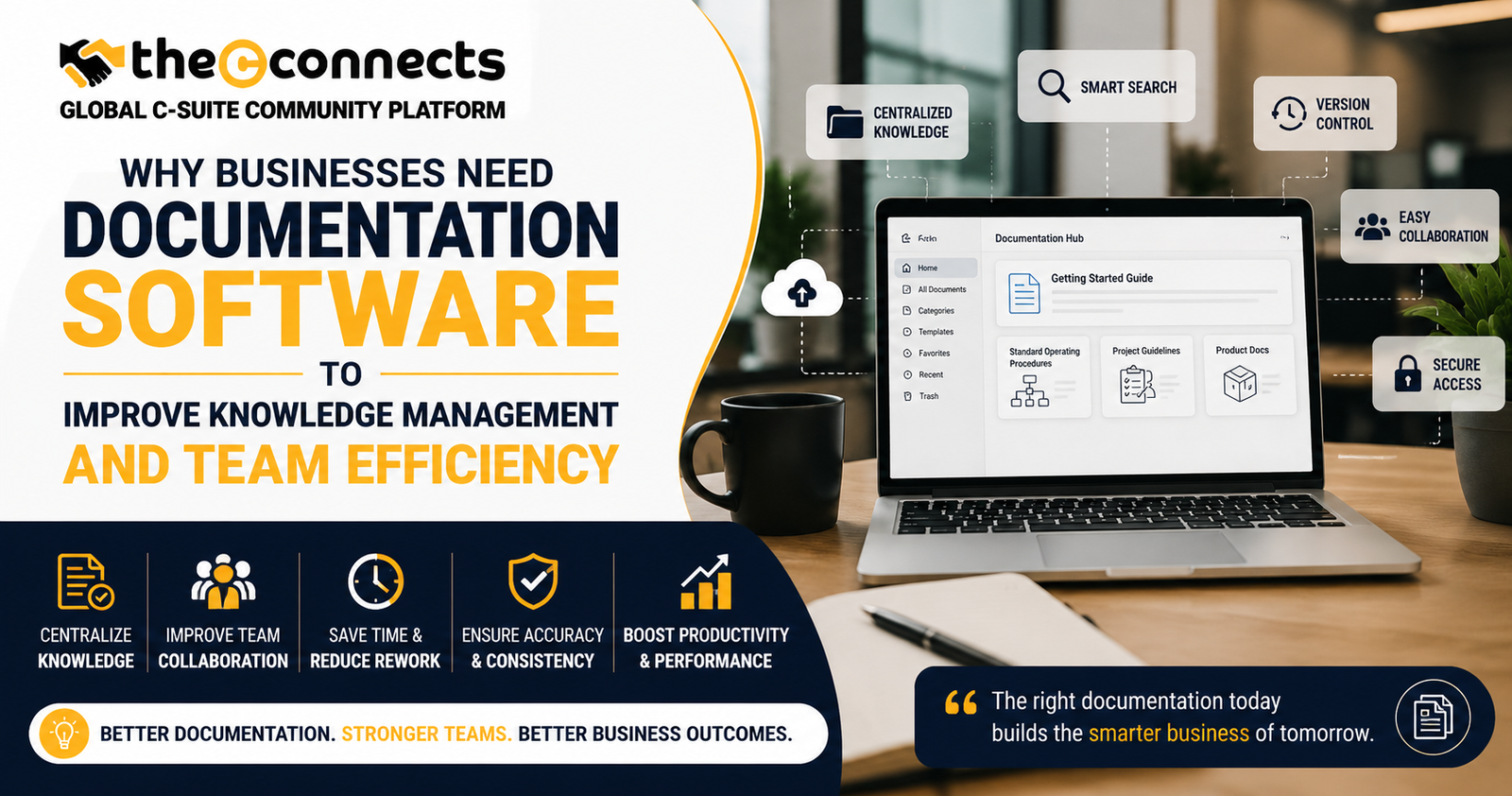
In contrast to old document storage methods, which were basic at best, modern documentation platforms have a great deal to offer in terms of search functionality, version control, collaboration tools, access management, and cloud-based storage. These tools not only improve the accuracy of the info presented but also make it simple for employees and customers to find what they are looking for in real time.
Businesses often use documentation systems for:
- Internal knowledge bases
- Employee training materials
- Technical documentation
- Product manuals
- Customer self-service portals
- Standard operating procedures
- Project documentation
A structured documentation system, which in turn reduces confusion and also produces consistency across departments.
The Importance of Centralized Knowledge Management
In the issue of knowledge fragmentation, one of the largest problems businesses deal with becomes clear. Important info is often stored in emails, spreadsheets, shared drives, and personal notes. As employees are not able to access the right info fast enough productivity falls.
Centralized documentation which is the solution to this problem of information being in many places. Employees don’t have to go to many different systems or bother colleagues with basic questions. Instead they have instant access to updated procedures.
Centralized knowledge management also reduces the reliance on key employees. In many companies very valuable operational knowledge is held in the heads of senior staff. Should these employees leave the company that information may leave with them. Documentation software plays a role in the preservation of that which makes an organization tick for the long term.
Improving Team Collaboration
In today’s work environments there is a great deal of collaboration. Teams which may be based in different departments, time zones, and remote locations work together. In the absence of organized documentation issues in communication are very easy to come up.
Documentation tools improve collaboration by allowing simultaneous input from many users. Team members put forward comments, present updates, and track changes without the need to create duplicate files.
This cooperative setting helps maintain consistency which also reduces misunderstandings. Employees may access the same info source, which in turn makes it so that everyone is following the same procedures and policies.
Also many platforms are integrated into communication and project management tools which in turn allows teams to tie in documentation with day to day work.
Enhancing Employee Onboarding and Training
Employee integration is a very key stage in workforce development. New members are welcomed and then briefed on company policies, workflows, tools and expectations. Poor onboarding which is not given enough attention early on can result in confusion, reduced productivity and also higher employee turnover.
Documentation software provides a single source for training materials, which is very beneficial in the onboarding process. At their own pace new employees may go through guides, tutorials, policies and procedures instead of constantly approaching managers for help.
This approach creates a more uniform training process across the organization. All employees go over the same material, which in turn reduces issues caused by variable instructions.
Over time businesses see that managerial time and resources are reduced because managers are no longer required to give the same explanations to each new hire.
Supporting Customer Self-Service
Customers are turning to self-service solutions for simple issues more and more which in turn businesses which put forth good self service resources see improved customer satisfaction and reduced support costs.
Documentation platforms have the ability to develop searchable knowledge bases, FAQs, troubleshooting guides, and product tutorials. Customers are able to find answers to common issues right away instead of waiting for help.
This also improves the customer experience and at the same time support agents have less work. Support teams are able to deal with more complex issues instead of repeat requests.
Well prepared documentation also presents a professional and transparent image to customers.
Maintaining Accuracy Through Version Control
Out-of-date info causes issues in operation. Employees may make large-scale errors as a result of old instructions, and customers may become frustrated because of using out-of-date product info.
One of the great benefits of documentation software is version control. Also, with this feature, businesses are able to see changes, review edits, and keep current records of all content changes.
Version control, which ensures that employees have access to the latest approved info. Also, it presents a feature that allows teams to go back to previous versions when needed, which in turn prevents accidental data loss or incorrect updates.
This is a key element for industries that require compliance, technical accuracy, or standardized procedures.
Increasing Productivity and Efficiency
When it comes to productivity, a large amount of time spent by employees in finding information reduces overall performance. Employees may go over old emails, spend time asking the same questions of colleagues, or track down outdated files, which results in the loss of productive time.
Documentation tools improve efficiency by making info easily accessible. Employees may put their hands on what they need immediately and avoid disrupting colleagues in person.
This quicker access to info helps teams finish tasks more efficiently and also reduces operational delays. Employees are able to focus more on important work instead of administrative tasks, which waste time.
Improved documentation also reduces errors because workers follow clear and standard procedures instead of making assumptions or filling in gaps in info.
Conclusion
Effective information management is key to business success. Companies that do not put in place and maintain proper systems of knowledge face issues with communication, low productivity, inconsistent training, and operational inefficiencies.
Through the use of Documentation Software, companies are able to centralize info, improve collaboration, smooth out onboarding, support customer self service, and maintain accurate records. These platforms also enable organizations to work better as a team and at the same time preserve what may be termed as institutional memory for the future.
As workplaces continue transforming into a digital first setting documentation software is expected to play a key role in improving team performance and also long term organizational growth.