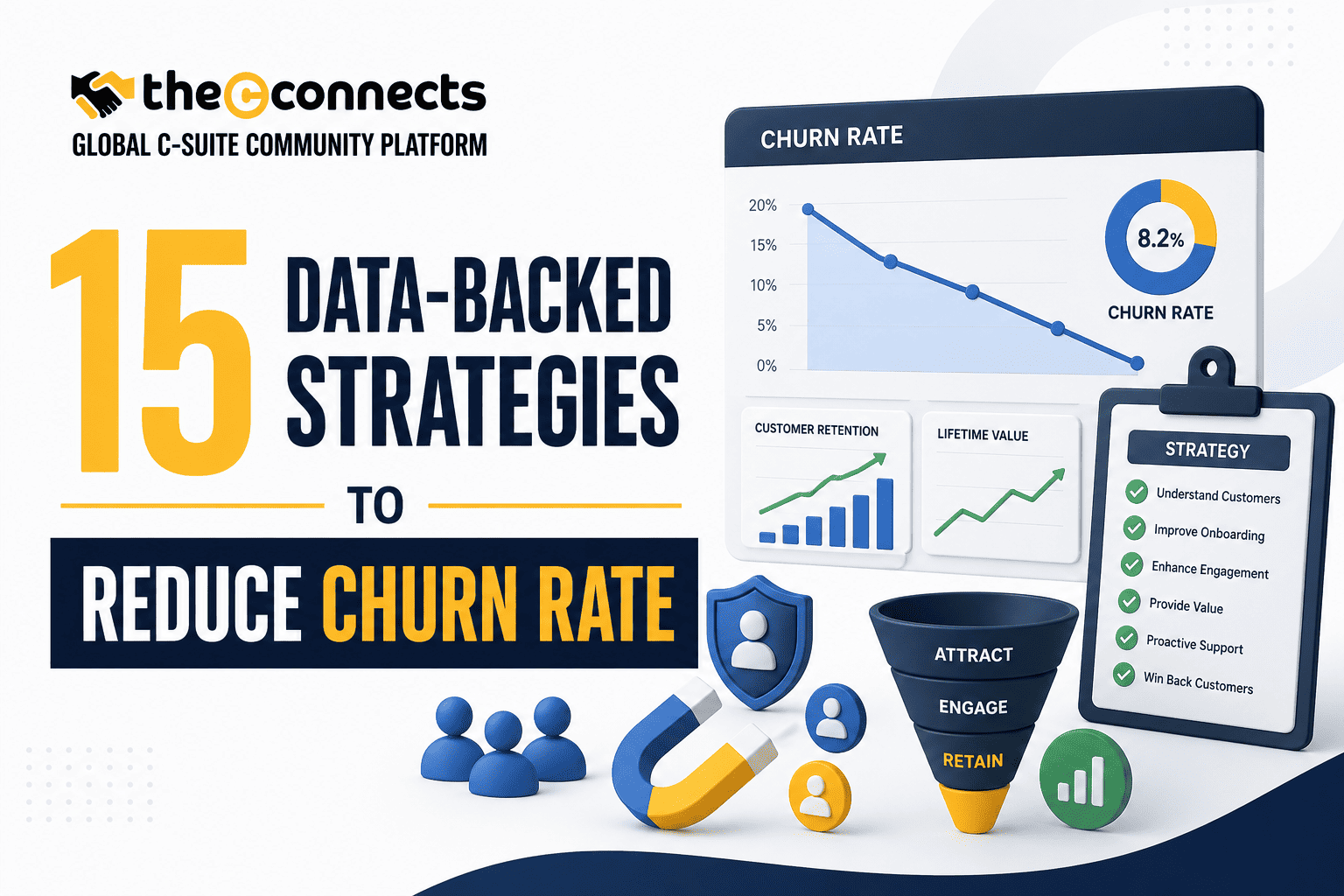

For subscription businesses, SaaS platforms, and any company operating on recurring revenue, churn rate has become the most telling indicator of whether a business is building durable value or simply processing transactions. The distinction matters enormously for valuation, for fundraising, and for the fundamental sustainability of the revenue model.
The economics are clear. Acquiring a new customer consistently costs significantly more than retaining an existing one. Companies with high churn rates spend disproportionately on acquisition just to maintain flat revenue, while companies with strong retention compound their customer base, their revenue predictability, and their customer lifetime value simultaneously. For investors, churn is the single metric that most directly reveals whether the product is genuinely solving a problem worth paying for repeatedly.
What has changed in recent years is the availability of data to diagnose, predict, and prevent churn in ways that were not previously accessible to most businesses. Product analytics, behavioral segmentation, predictive modeling, and customer health scoring have collectively created an environment where churn reduction can be genuinely data-backed rather than driven by intuition and guesswork.
This feature covers the 15 data-backed strategies to reduce churn rate that revenue leaders, customer success teams, and founders are using to build retention programs that compound in value over time.
1. Track Churn Reasons With Customer Data, Not Assumptions
What it is: A systematic process for collecting, categorizing, and analyzing the actual reasons customers churn, through exit surveys, cancellation interviews, CRM analysis, and support ticket review.
Why it matters: Companies that assume they know why customers churn frequently address the wrong problems. Product teams invest in features that churned customers never mentioned, while the actual friction points go unaddressed because nobody asked the right questions at the right time.
How to apply it: Automate a brief exit survey at the point of cancellation. Conduct qualitative interviews with churned customers from high-value segments. Categorize churn reasons by segment, by cohort, and by tenure to identify patterns rather than isolated cases.
Example: A B2B SaaS company discovered through exit interviews that 40 percent of churned customers left not because of product dissatisfaction but because they never successfully completed their initial implementation. The solution, an improved onboarding program, was invisible until the data revealed it.
2. Segment Customers by Value, Behavior, and Risk
What it is: Dividing the customer base into meaningful segments, based on revenue contribution, product usage patterns, support frequency, and engagement scores, and applying differentiated retention strategies to each segment.
Why it matters: Applying the same retention approach to your highest-value enterprise customers and your lowest-tier trial conversions is both inefficient and ineffective. Segmentation allows retention investment to be directed where it creates the most business value.
How to apply it: Develop a customer health score that combines product usage, support interactions, billing history, and engagement signals. Use the score to segment customers into health tiers, then assign appropriate intervention protocols to each tier.
Measurable benefit: Companies that implement health-score-based segmentation consistently report better allocation of customer success resources and faster identification of at-risk accounts.
3. Improve Onboarding and Time-to-First-Value
What it is: Redesigning the onboarding experience to minimize the time between product adoption and the moment a customer achieves a meaningful result, their “aha moment”, that confirms the product’s value.
Why it matters: A significant proportion of churn occurs in the first 90 days, before customers have experienced enough product value to justify continued investment. Slow, complex, or poorly structured onboarding dramatically increases early churn.
How to apply it: Map the specific actions that correlate with long-term retention in your product. Design onboarding flows that guide every new customer toward those actions as quickly as possible. Remove steps that add time without adding value.
Example: A project management platform analyzed their retention cohorts and discovered that users who created their first project within 48 hours of signup had a 90-day retention rate more than 30 percent higher than those who did not. The finding led to a complete onboarding redesign focused on project creation as the primary activation event.
4. Monitor Product Adoption and Usage Drop-Offs
What it is: Using product analytics to track feature adoption rates, session frequency, and usage depth across the customer base, identifying customers whose usage is declining before they initiate cancellation.
Why it matters: Usage decline precedes churn. Customers who are about to leave almost always show reduced product engagement before they formally cancel. Identifying these signals early creates intervention opportunities that waiting for cancellation does not.
How to apply it: Instrument your product to track key usage events. Build dashboards that surface customers with declining engagement trends. Configure automated alerts for accounts that drop below defined usage thresholds.
5. Use Proactive Customer Success Outreach
What it is: Transitioning customer success from a reactive, support-driven function to a proactive one, where customer success managers reach out to customers based on behavioral signals rather than waiting for problems to be reported.
Why it matters: By the time a customer contacts support about a problem serious enough to consider cancellation, the damage is often partially done. Proactive outreach, triggered by usage signals, milestone events, or health score changes, addresses issues before they become reasons to leave.
How to apply it: Define trigger-based outreach workflows for specific behavioral signals, first login in 30 days, critical feature not yet adopted, renewal approaching for a declining-health account. Assign CSM time based on customer segment and risk level.
Example: A customer success team at a marketing automation company implemented automated outreach triggered by a 14-day login absence. The program recovered 18 percent of at-risk accounts that would otherwise have churned before renewal.
6. Identify At-Risk Accounts With Predictive Analytics
What it is: Using historical churn data combined with current customer behavioral signals to build predictive models that score accounts on their churn probability, enabling preemptive intervention.
Why it matters: Reactive churn management is inherently expensive, it invests resources in saving accounts that are already in decline. Predictive analytics shifts the intervention earlier in the deterioration curve, where recovery rates are significantly higher and intervention costs are lower.
How to apply it: Work with your data team to build a churn prediction model trained on historical customer data. Integrate the model scores into your CRM and customer success platform to prioritize outreach queues.
7. Align Pricing and Packaging With Customer Value
What it is: Regularly reviewing and adjusting pricing tiers, feature bundling, and contract structures to ensure that customers in each tier are receiving clear, proportionate value for what they are paying.
Why it matters: Pricing misalignment is a structural churn driver. Customers who are paying for capabilities they do not use, or who cannot access the features most relevant to their use case without upgrading, are consistently at higher churn risk.
How to apply it: Analyze feature usage by pricing tier. Identify features with high usage and high impact in lower tiers that might be creating upgrade friction or perceived poor value. Conduct pricing research with churned customers to understand how pricing perception contributed to their decision.
8. Improve Support Response Time and Resolution Quality
What it is: Using support analytics, response time distributions, first contact resolution rates, CSAT scores by issue category, to systematically improve the quality and speed of customer support interactions.
Why it matters: Support experience quality is a direct predictor of renewal decisions. Customers who have experienced unresolved or poorly handled support issues are significantly more likely to churn than those whose issues were resolved quickly and satisfactorily.
Measurable benefit: Research from Bain & Company has consistently shown that improving customer experience scores is directly correlated with higher retention rates and increased customer lifetime value.
9. Strengthen Communication During Product Changes or Outages
What it is: Developing and implementing structured communication protocols for product changes, service disruptions, and feature deprecations, ensuring customers are informed proactively, honestly, and with clear guidance on impact and resolution timelines.
Why it matters: Customers who feel blindsided by product changes or who receive inadequate communication during outages experience a disproportionate loss of trust that frequently precipitates churn decisions at the next renewal.
How to apply it: Establish a customer communication runbook for different event types. Prioritize proactive notification over reactive response. Segment communications by impact, customers who will be significantly affected deserve more detailed, personalized communication than those who will be minimally impacted.
10. Build Loyalty Through Personalization
What it is: Using customer data, usage history, industry, company size, role, and behavioral patterns, to deliver personalized product experiences, communications, and success resources that are specifically relevant to each customer’s context.
Why it matters: Customers who receive generic communications and one-size-fits-all product experiences are less likely to feel that the product was built for them, a perception that reduces switching costs in their minds and increases churn risk.
Example: A customer intelligence platform that personalized in-app recommendations based on user role and most-frequently-used features reported a 22 percent improvement in feature adoption rates among personalized cohorts compared to control groups.
11. Collect and Act on Feedback Consistently
What it is: Implementing systematic feedback collection, through NPS surveys, CSAT responses, in-product feedback mechanisms, and QBR conversations, and building closed-loop processes that ensure feedback generates visible product or service changes.
Why it matters: Customers who give feedback and see no response are more frustrated than customers who never gave feedback at all. Closing the feedback loop, informing customers when their suggestions have been acted on, creates the relationship evidence that builds retention.
How to apply it: Segment NPS detractors for immediate follow-up by customer success. Track the resolution status of feedback themes and communicate outcomes to the customers who submitted them.
12. Reduce Friction in the Customer Journey
What it is: Systematically identifying and removing the points of unnecessary effort, confusion, or frustration in the customer experience, from onboarding through renewal, using journey mapping, UX research, and behavioral analytics.
Why it matters: Friction accumulates. Each unnecessary step, unclear instruction, or cumbersome process adds to the cognitive and operational cost of being a customer. Over time, accumulated friction tips the cost-benefit analysis toward cancellation.
How to apply it: Map the full customer journey with input from customer success, support, product, and actual customers. Identify the highest-friction moments. Prioritize friction reduction based on the frequency and severity of the friction experience.
13. Use Lifecycle Campaigns to Re-Engage Dormant Users
What it is: Automated email and in-product campaigns triggered by extended inactivity, designed to re-engage customers who have reduced their product usage before they formally initiate cancellation.
Why it matters: Dormant users are pre-churners. Every week of inactivity that passes without outreach is a week in which the customer’s perception of the product’s value is depreciating without any offsetting investment.
How to apply it: Define activity thresholds that trigger re-engagement workflows. Design campaign content that surfaces specific value reminders relevant to the customer’s use case, not generic “we miss you” messaging, but specific feature highlights tied to their actual usage history.
14. Train Teams to Spot Churn Warning Signs Early
What it is: Building churn signal awareness into the skills and workflows of every customer-facing team, sales, onboarding, support, and customer success, so that warning signs are recognized and escalated regardless of which team first encounters them.
Why it matters: Customer success managers cannot monitor every account continuously. Training the broader customer-facing organization to recognize behavioral warning signs, expressed frustration, reduced engagement, competitor research questions, creates a distributed early warning system.
How to apply it: Develop a churn signal guide that lists specific warning behaviors and the appropriate escalation path for each. Include churn signal recognition in onboarding training for every customer-facing role.
15. Connect Churn Metrics to Leadership Dashboards and Goals
What it is: Elevating churn and retention metrics to executive and board-level visibility, treating them as primary business health indicators alongside revenue growth, new logo acquisition, and gross margin.
Why it matters: Metrics that live only in customer success dashboards do not receive the resource investment, cross-functional attention, or strategic prioritization that metrics reviewed by leadership do. Churn that is a C-suite priority becomes a company-wide retention culture.
How to apply it: Build a retention dashboard that surfaces net revenue retention, gross revenue retention, churn rate by segment, and cohort retention curves. Present it in every executive review alongside revenue and growth metrics.
Conclusion:
The framing of churn reduction as a defensive activity, damage control for a business that is losing customers, misses the strategic opportunity. Companies that build world-class retention programs are not just preventing losses. They are compounding growth from an existing customer base, reducing the acquisition investment required to sustain revenue targets, and building the durable customer relationships that create the strongest competitive moats in any market.
The 15 data-backed strategies to reduce churn rate covered in this guide provide a comprehensive framework for building that kind of retention program, grounded in customer data, operationalized across functions, and connected to the leadership visibility that makes retention a company-wide priority.
The companies that grow most efficiently are not always the ones that acquire the most customers. They are the ones that keep the most of them.
Contact TheCconnects
If you are a founder, revenue leader, customer success professional, product strategist, or data expert with experience in reducing churn and building high-retention businesses, your insights can help others create more predictable and sustainable growth. Practical, data-backed perspectives on customer behavior, lifecycle management, and retention strategy are critical in today’s subscription-driven economy.
We invite contributors who can share actionable frameworks, real-world case studies, and measurable strategies that go beyond theory. Whether you’re looking to publish your article on this platform or expand your reach across other leading platforms, we’d be glad to collaborate.
📧 Email: contact@thecconnects.com
📞 Phone: +91 91331 10730
💬 WhatsApp: https://wa.me/919133110730