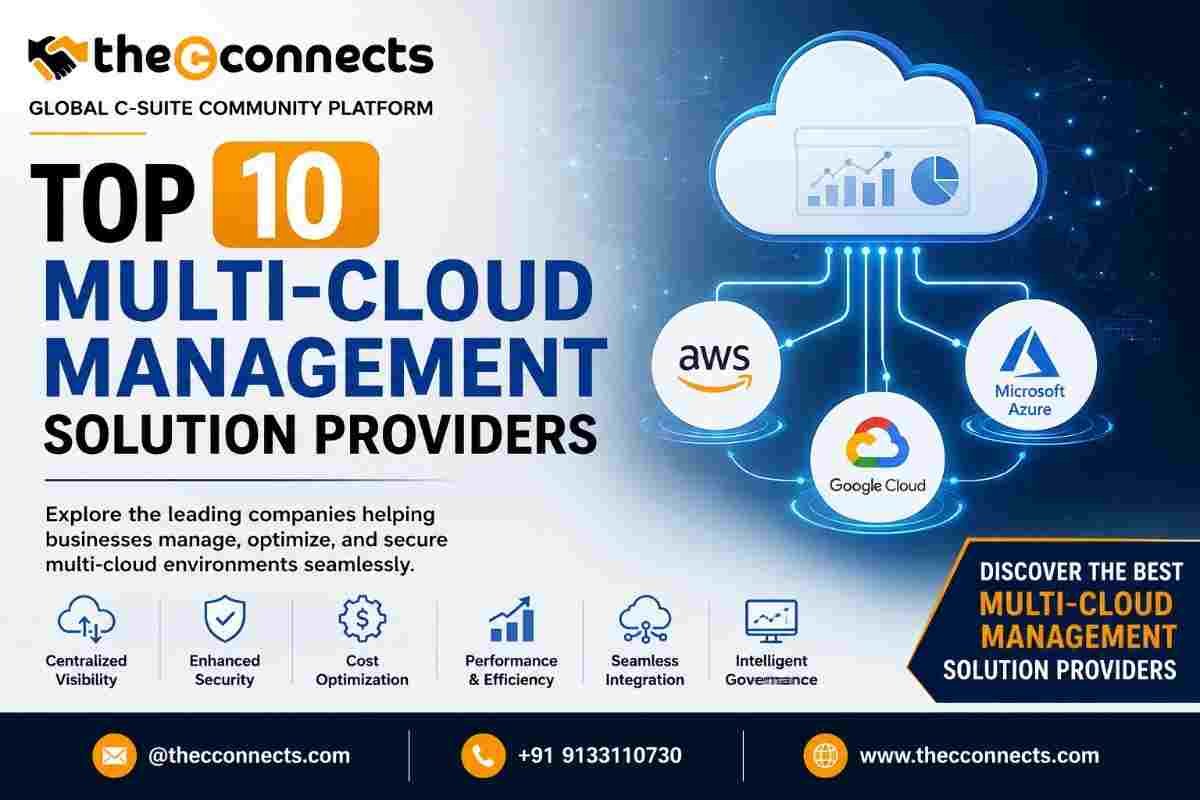

The modern enterprise infrastructure stack is irrevocably multi-cloud. Rather than standardizing on a single hyper-scaler, IT organizations routinely leverage a hybrid blend of AWS, Microsoft Azure, Google Cloud Platform (GCP), and specialized private cloud footprints. While this strategy offers resilience and flexibility, it introduces significant operational challenges-most notably cost governance, fragmented observability, inconsistent security guardrails, and operational overhead.
To overcome these barriers, organizations rely on Multi-Cloud Management Platforms (CMPs). Today’s CMPs extend far beyond static billing dashboards; they act as unified control planes that automate orchestration, enforce policy guardrails, streamline FinOps, and provide end-to-end security governance across heterogeneous cloud environments.
Strategic Trends Shaping the Multi-Cloud Market
- AI-Driven FinOps & Predictive Optimization: Simple cost reporting has evolved into predictive resource management. Modern CMPs incorporate AI agents to automatically right-size workloads, adjust reservation commitments, and terminate idle infrastructure across multiple clouds.
- Policy-as-Code & Automated Governance: CMPs now leverage declarative Infrastructure-as-Code (IaC) frameworks-such as OpenTofu, Terraform, and Ansible-to enforce universal compliance and security policies before provisioning occurs.
- Unified Kubernetes & Container Abstraction: As Kubernetes becomes the standard OS for cloud-native workloads, CMPs serve as central control planes to manage Kubernetes distribution sprawl across hyperscalers and bare-metal edge environments.
- Zero-Trust Access & Multicloud Posture Management: Multi-cloud CMPs integrate identity, policy, and cloud security posture management (CSPM) to eliminate fragmented access rights across AWS, Azure, and GCP.
Below is an in-depth evaluation of the Top 10 Multi-Cloud Management Solution Providers empowering enterprises to simplify, secure, and optimize their multi-cloud estates.
Top 10 Multi-Cloud Management Solution Providers
1. Broadcom (VMware Tanzu & Aria)
- Founders: Hock Tan (Broadcom) / Diane Greene, Mendel Rosenblum, Scott Devine, Edward Wang, Edouard Bugnion (VMware legacy)
- Founded Year: 1998 (VMware), 1961 / 1991 (Broadcom)
- Headquarters: Palo Alto, California, USA
- Product Categories: Cloud Management Platforms, FinOps, Cloud Security & Governance, Hybrid Cloud Infrastructure
- Description: Broadcom’s software portfolio-powered by VMware Tanzu CloudHealth and VMware Aria (formerly vRealize)-delivers an enterprise-grade multi-cloud management suite. The platform provides centralized visibility, operational control, and cost governance across AWS, Azure, GCP, and VMware-based private clouds. Built for complex, global infrastructure estates, VMware’s suite allows IT teams to enforce consistent policies, automate day-2 operations, and optimize multi-cloud spend through advanced analytics.
- Key Features:
- Multi-cloud cost aggregation, allocation, and FinOps reporting via Tanzu CloudHealth
- Comprehensive policy enforcement and automated remediation engines
- Deep integration across VMware Cloud Foundation and major public cloud providers
- Centralized topology mapping and dependency visualizers
- Unified Kubernetes cluster management across hybrid and multi-cloud targets
- Capacity planning and predictive workload placements
- Automated compliance auditing against CIS, HIPAA, and GDPR standards
2. IBM (Turbonomic & Apptio)
- Founders: Charles Ranlett Flint (IBM) / Ben Nye, Shmuel Kliger (Turbonomic) / Sunny Gupta (Apptio)
- Founded Year: 1911 (IBM) / 2007 (Turbonomic) / 2007 (Apptio)
- Headquarters: Armonk, New York, USA
- Product Categories: Application Resource Management (ARM), Financial Operations (FinOps), Multi-Cloud Analytics
- Description: IBM has assembled a multi-cloud management powerhouse through its acquisitions of Turbonomic and Apptio. IBM Turbonomic delivers dynamic application resource management, automatically scaling cloud compute, storage, and database tiers to match application demand. Combined with Apptio Cloudability’s enterprise FinOps capabilities, IBM provides C-suite visibility and real-time execution-ensuring multi-cloud environments achieve optimal performance at the lowest possible cost.
- Key Features:
- Automated resource rightsizing and scaling without causing downtime
- Continuous application performance optimization matching compute to workload spikes
- Advanced cloud financial management, forecasting, and anomaly detection
- ITSM integration with platforms like ServiceNow for ticket-driven automation
- Full-stack visibility from virtual machines and container layers down to storage arrays
- Multi-cloud commitment management for AWS Savings Plans, Azure RIs, and GCP CUDs
- Declarative policy frameworks ensuring resource compliance
3. HPE Morpheus (Morpheus Data)
- Founders: Brian Wheeler (Morpheus Data)
- Founded Year: 2010 (Acquired by HPE)
- Headquarters: Greenwood Village, Colorado, USA
- Product Categories: Hybrid Cloud Orchestration, Self-Service Provisioning, Governance & FinOps
- Description: HPE Morpheus (acquired by Hewlett Packard Enterprise) is an agile, agnostic multi-cloud management platform engineered for self-service provisioning and day-2 lifecycle operations. Morpheus simplifies multi-cloud complexity by unifying bare metal, virtual machines, and Kubernetes clusters across on-premises hypervisors and public clouds under a single pane of glass. Its low-code orchestration engine enables IT platform teams to deliver self-service catalog options with embedded security, quota limits, and cost tracking.
- Key Features:
- Self-service provisioning portal supporting multi-cloud and hybrid environments
- Native Kubernetes lifecycle orchestration and container fleet management
- Built-in cost metering, cloud discovery, and rightsizing recommendations
- Fine-grained Role-Based Access Control (RBAC) and multi-tenant governance
- Codeless integration with hundreds of ITSM, IPAM, DNS, and CI/CD tools
- Automated database provisioning and lifecycle administration
- Infrastructure-as-Code integration leveraging Terraform, Ansible, and CloudFormation
4. Flexera
- Founders: Mark S. Hoffman (InstallShield lineage)
- Founded Year: 2008 (Spinoff from Macrovision)
- Headquarters: Itasca, Illinois, USA
- Product Categories: Flexera One, Cloud Cost Optimization, SaaS & Software Asset Management, IT Visibility
- Description: Flexera is a technology intelligence leader whose platform, Flexera One, provides comprehensive visibility across hybrid, multi-cloud, and SaaS investments. Evolving from its acquisition of RightScale, Flexera offers multi-cloud orchestration combined with deep software licensing insights (BYOL). Its multi-cloud cost optimization capabilities help enterprise IT and FinOps teams control cloud consumption, untangle complex billing files, and ensure compliance across distributed cloud footprints.
- Key Features:
- Unification of IT Asset Management (ITAM) and Cloud FinOps within one platform
- Automated cloud spend governance and multi-cloud cost reduction policies
- Comprehensive Bring Your Own License (BYOL) mapping across AWS, Azure, and GCP
- Automated cloud discovery and inventory cataloging across multi-cloud estates
- Policy-driven automated cleanup of unattached resources and orphaned storage
- Advanced multi-cloud cost allocation and business unit showback/chargeback models
- Native integration with enterprise ITSM platforms like ServiceNow
5. CloudBolt Software
- Founders: Bernard Golden
- Founded Year: 2011
- Headquarters: Rockville, Maryland, USA
- Product Categories: Hybrid Cloud Orchestration, FinOps & Cost Management, Continuous Infrastructure Assurance
- Description: CloudBolt Software provides a comprehensive multi-cloud management platform built to unite hybrid cloud provisioning, policy-based governance, and continuous cost optimization. CloudBolt abstracts underlying cloud complexity, giving platform engineers and developers a streamlined self-service interface to deploy resources on-demand across VMware, AWS, Azure, and GCP. With its focus on automation, CloudBolt enables organizations to eliminate cloud sprawl, enforce compliance guardrails, and execute FinOps best practices automatically.
- Key Features:
- Customizable self-service IT portal and blue-printing engine
- Orchestration across multi-cloud, container, and legacy hypervisor environments
- Real-time FinOps cost reporting, anomaly detection, and budget tracking
- Continuous policy enforcement and security guardrails pre-deployment
- Deep ITSM integrations allowing automated provisioning directly from ServiceNow tickets
- Extensible plugin framework supporting custom scripts, Python, and IaC tools
- Built-in multi-tenancy and white-labeling features for Managed Service Providers (MSPs)
6. Nutanix (Nutanix Cloud Manager)
- Founders: Dheeraj Pandey, Mohit Aron, Aashish Parikh
- Founded Year: 2009
- Headquarters: San Jose, California, USA
- Product Categories: Nutanix Cloud Platform, Nutanix Cloud Manager (NCM), Hybrid & Multi-Cloud Infrastructure
- Description: Nutanix is a pioneer in hyperconverged infrastructure (HCI) that has transformed into a leader in hybrid multi-cloud management. Nutanix Cloud Manager (NCM) delivers unified management, operational automation, cost governance, and security compliance across hypervisors, native public clouds (AWS/Azure), and edge deployments. NCM bridges the gap between private cloud infrastructure and public cloud environments, giving enterprises a consistent operating model and single-pane management layer.
- Key Features:
- Unified operational control plane for on-premises Nutanix, AWS, and Azure
- Intelligent capacity planning and machine learning-driven anomaly detection
- Cross-cloud cost visibility, chargeback, and budget control guardrails
- One-click application orchestration using customizable blueprints
- Automated security auditing and one-click compliance remediation
- Seamless container management via Nutanix Kubernetes Engine (NKE)
- Low-code workflow automation simplifying day-2 operations
7. Microsoft (Azure Arc)
- Founders: Bill Gates, Paul Allen (Microsoft)
- Founded Year: 1975 (Microsoft) / Azure Arc launched 2019
- Headquarters: Redmond, Washington, USA
- Product Categories: Multi-Cloud Governance, Hybrid Infrastructure Management, Azure Arc Enabled Services
- Description: Microsoft Azure Arc represents a shift in multi-cloud governance by extending Azure management, security, and services to any infrastructure-including AWS, GCP, and on-premises datacenters. Azure Arc enables organizations to govern virtual machines, Kubernetes clusters, and databases running outside Azure as if they were native Azure resources. By centralizing governance, security policies, and monitoring under Azure Resource Manager (ARM), Microsoft delivers a unified control plane for heterogeneous IT environments.
- Key Features:
- Extension of Azure Policy, RBAC, and Microsoft Defender across non-Azure servers
- Multi-cluster Kubernetes management across AWS EKS, Google GKE, and on-prem clusters
- Ability to run Azure data services (Azure SQL, PostgreSQL) on any Kubernetes deployment
- GitOps-based configuration management for continuous infrastructure delivery
- Centralized telemetry, logging, and observability via Azure Monitor
- Automated patch management and software updating for multi-cloud server fleets
- Standardized RBAC and identity management integrated with Microsoft Entra ID
8. DoiT International
- Founders: Yoav Toussia-Cohen, Vadim Solovey
- Founded Year: 2011
- Headquarters: Santa Clara, California, USA
- Product Categories: Cloud Intelligence™, Multi-Cloud Optimization, FinOps Software & Consulting
- Description: DoiT International is a specialized multi-cloud technology and software provider that helps digital-native and enterprise businesses maximize value across AWS, Google Cloud, and Microsoft Azure. DoiT’s Cloud Intelligence™ platform delivers AI-driven cloud cost management, automated commitment management, and multi-cloud architecture analytics. Paired with deep senior cloud engineering consulting, DoiT empowers CloudOps and FinOps teams to prevent cloud waste and scale multi-cloud footprints efficiently.
- Key Features:
- AI-powered cost allocation, anomaly detection, and budget reporting
- Automated commitment management (Flexsave) for AWS and GCP infrastructure
- Cross-cloud cost normalization and Kubernetes workload cost allocation
- Real-time multi-cloud architecture consulting included with platform access
- Automated rightsizing recommendations across compute, memory, and storage assets
- Custom metric tracking linking cloud costs directly to business product features
- Native integrations with Slack, Jira, and PagerDuty for instant alerts
9. HashiCorp (IBM)
- Founders: Mitchell Hashimoto, Armon Dadgar
- Founded Year: 2012 (Acquired by IBM)
- Headquarters: San Francisco, California, USA
- Product Categories: Infrastructure as Code (Terraform), Multi-Cloud Security (Vault), Networking (Consul)
- Description: HashiCorp (an IBM company) provides the foundational, declarative software layer that powers modern multi-cloud provisioning and security. Its flagship products-Terraform Cloud, Vault, and Consul-form a de facto standard for multi-cloud automation. Rather than relying on rigid GUI management suites, HashiCorp enables developers and platform teams to provision infrastructure, manage secrets, and connect services across AWS, Azure, GCP, and private clouds using standard code.
- Key Features:
- Multi-cloud Infrastructure-as-Code (IaC) deployment standardizing provisioning
- Centralized secrets management and data protection across clouds via HashiCorp Vault
- Service mesh and multi-cloud service discovery powered by HashiCorp Consul
- Policy-as-Code enforcement using HashiCorp Sentinel pre-deployment
- Self-service infrastructure module registries for internal platform engineering
- Continuous drift detection comparing real-world cloud state to declarative code
- Secure, credential-less access management for hybrid infrastructure via Boundary
10. Platform9
- Founders: Sirish Raghuram, Madhura Maskasky, Bich Le, Roopak Parikh
- Founded Year: 2013
- Headquarters: San Jose, California, USA
- Product Categories: Managed Kubernetes, Multi-Cloud Orchestration, Open-Source Cloud Platforms
- Description: Platform9 provides a SaaS-managed multi-cloud control plane that simplifies Kubernetes and VM infrastructure management across public clouds, on-premises datacenters, and edge locations. Platform9 abstracts infrastructure management away from the operator, offering a fully managed, production-grade Kubernetes service that runs consistently across AWS, Azure, GCP, and bare metal. It is ideal for platform engineering teams seeking cloud-native consistency without vendor lock-in.
- Key Features:
- SaaS-based unified management plane for multi-cloud Kubernetes clusters
- Zero-touch provisioning and automated remote cluster upgrades
- Unified management for both container workloads (K8s) and virtual machines (KubeVirt)
- Built-in observability, metrics, and alerting frameworks out-of-the-box
- 24/7 proactive monitoring and SLA-backed management by Platform9 engineers
- Cost-effective alternative to hyperscaler-managed Kubernetes offerings
- High-availability architecture with automated failover across multi-region deployments
📬 Get Featured or Share Your Feedback
Have updated information, feedback on this market evaluation, or believe your company or product qualifies to be featured in upcoming iterations of this list? Connect with our research team through any of the following channels:
📧 Email us: contact@thecconnects.com
📞 Call us: +91 9133110730
💬 WhatsApp us: https://wa.me/919133110730