
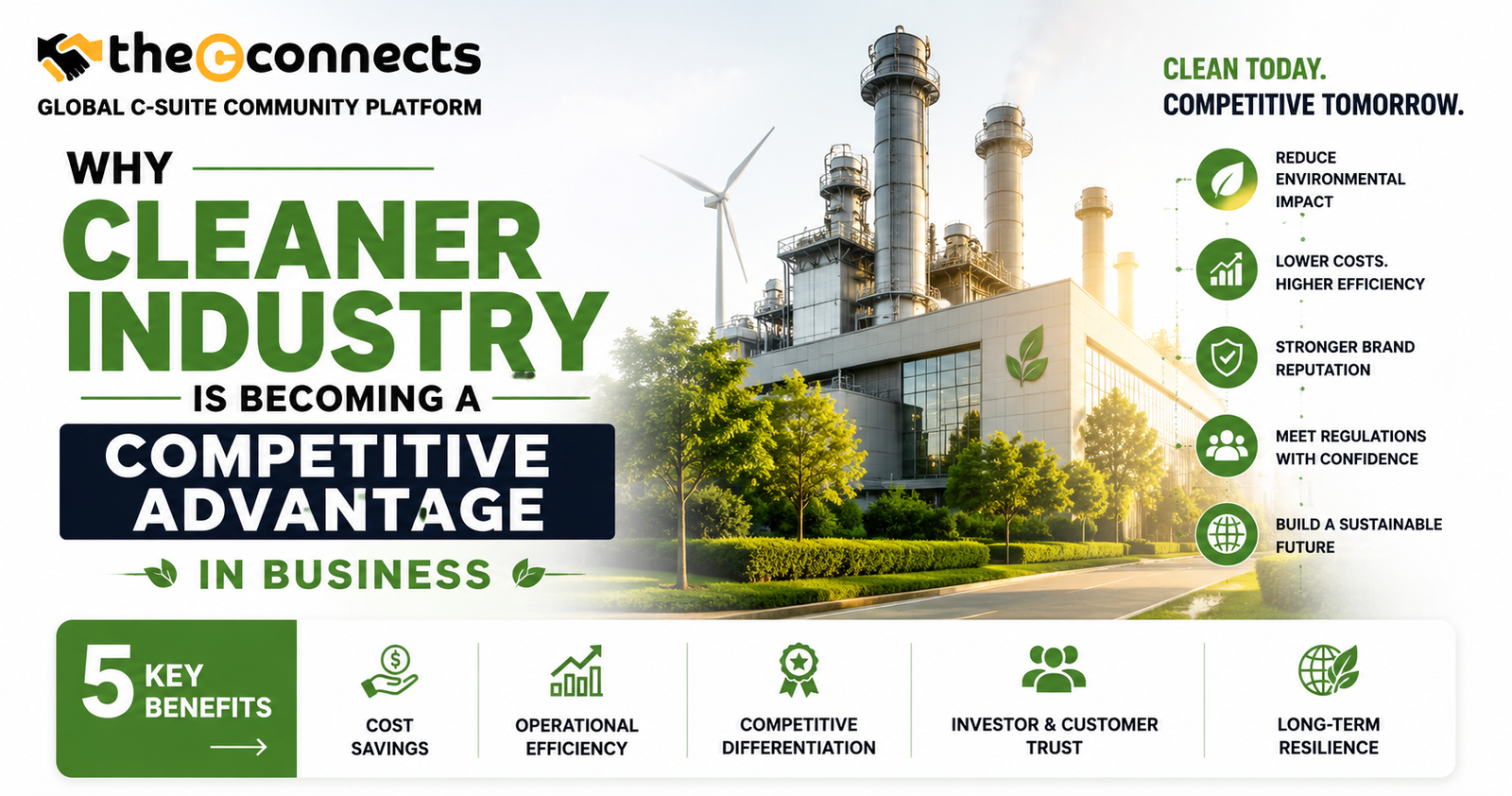

The cleaner industry is no longer just a sustainability goal or a corporate responsibility talking point. It is quickly becoming a real competitive advantage for businesses that want to grow, protect their reputation, and stay ahead of changing market expectations. As customers, investors, regulators, and supply chain partners pay closer attention to environmental performance, companies that reduce emissions and operate more efficiently are better positioned for long-term success.
For many years, industrial businesses saw sustainability as a cost. Today, that view is changing. Cleaner operations can help companies reduce waste, lower energy use, improve resource efficiency, and manage risk. These improvements do not just support environmental goals. They can also strengthen profitability, resilience, and brand value.
Customers Are Paying Attention
Modern customers want to know more about where products come from, how they are made, and what impact they have on the planet. This is true for individual consumers, but it is also increasingly important in business-to-business markets. Companies are under pressure to choose suppliers that support their own environmental targets.
A manufacturer with lower-carbon processes may therefore stand out during procurement decisions. If two suppliers offer similar quality and pricing, the one with cleaner operations may be seen as the safer and more future-ready choice. This can open doors to new contracts, stronger partnerships, and greater customer loyalty.
Investors Want Future-Ready Businesses
Investors are also looking more closely at environmental performance. Businesses that ignore decarbonization may face higher risks, from regulatory penalties to rising energy costs or reputational damage. In contrast, companies that invest in cleaner technologies show they are preparing for the future rather than reacting to it.
Cleaner industry signals good governance, strategic planning, and operational discipline. It shows that a company understands market direction and is taking practical steps to adapt. For investors, that can make a business more attractive and more resilient.
Regulation Is Raising the Bar
Environmental regulation is becoming stricter in many sectors, especially those with high emissions. Companies that wait until rules force them to act may face rushed decisions, higher costs, and operational disruption. Those who start early can spread investment over time and build expertise gradually.
Working with experienced partners such as Carbon Clean can help industrial businesses explore practical ways to reduce emissions while maintaining productivity. This is especially important for hard-to-abate sectors where cleaner operations require smart technology, planning and long-term commitment.
Efficiency Can Improve Performance
Cleaner industry is not only about reducing carbon. It is also about creating smarter, leaner, and more efficient operations. Energy efficiency, better process control, improved materials management, and reduced waste can all lower operating costs.
These gains can make businesses more competitive in markets where margins are tight. A company that uses fewer resources to produce the same output has a clear advantage, especially when energy prices are volatile.
Reputation Matters More Than Ever
A strong reputation can influence everything from customer trust to employee recruitment. People want to work for and buy from businesses that take responsibility for their impact. Cleaner industry helps companies tell a stronger story about innovation, progress, and leadership.
Ultimately, cleaner industry is becoming a business advantage because it aligns environmental responsibility with commercial performance. Companies that act now can reduce risk, improve efficiency, attract partners, and build stronger brands. In a changing economy, cleaner businesses are not just doing the right thing. They are positioning themselves to compete and win.


