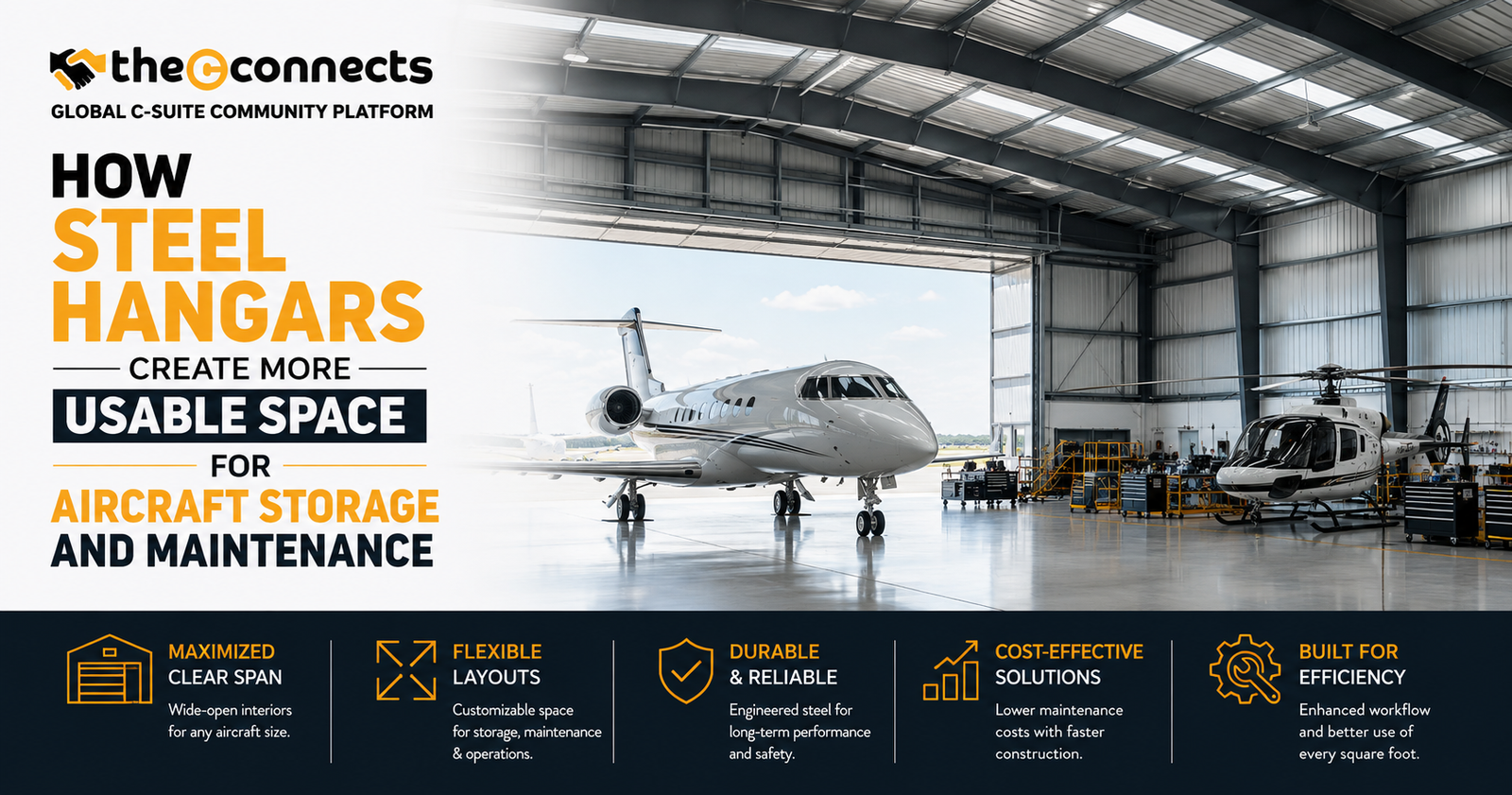

Aircraft owners and aviation operators need dependable structures that support smooth operations while protecting valuable equipment. A well-designed hangar creates a productive environment where crews can manage aircraft movement, inspections, and servicing more efficiently. Steel structures continue to gain attention because they provide wide interiors and practical layouts that improve space usage. Modern aviation facilities also require organized work areas for maintenance teams and storage needs. This article explains how steel hangars create more usable space for aircraft storage and maintenance while supporting efficient aviation operations.
Wide Interior Layouts Improve Operational Capacity
Steel hangars create large open interiors because they require fewer support columns throughout the structure. This design allows aviation crews to position aircraft more efficiently and use available floor space without unnecessary barriers. Large entry doors and open-span framing also support different aircraft sizes while maintaining easy access across the facility.
Many aviation businesses select metal aircraft hangars because these structures improve interior organization for storage and maintenance activities. Technicians can move service carts, lifts, and repair tools more easily through open work zones. This arrangement supports faster inspections, fueling procedures, and servicing tasks while reducing congestion during busy schedules. Spacious interiors also create safer working conditions because employees can move around the aircraft without limited clearance.
Better Storage Planning Supports Aircraft Protection
Efficient storage planning helps aviation facilities use every part of the building more effectively. Steel hangars support practical interior arrangements that allow operators to separate tools, equipment, and aircraft components into designated sections. Organized layouts improve accessibility while helping crews maintain cleaner and safer work environments.
A well-planned facility may include:
- Dedicated aircraft parking sections
- Separate storage rooms for maintenance supplies
- Secure spaces for aviation tools and equipment
- Office areas for operational staff
- Organized sections for replacement components
These organized areas reduce clutter and support a smoother workflow inside the structure. Maintenance crews can locate equipment quickly, which saves valuable time during inspections and repairs.
Strong Structural Design Helps Maintenance Operations
Aircraft servicing requires a dependable shelter that supports heavy equipment and constant activity without limiting movement. Steel hangars provide strong framing systems that maintain wide work areas while supporting demanding maintenance tasks. Technicians gain enough room to access engines, wings, landing gear, and tail sections with greater ease.
Good lighting and ventilation also improve maintenance conditions inside the structure. Steel buildings can accommodate skylights, overhead lighting systems, and airflow features that improve visibility and indoor comfort. Better lighting helps technicians complete inspections more accurately, while improved ventilation creates a healthier workspace. These features contribute to more efficient repair operations and support steady daily productivity within the facility.
Expandable Designs Meet Future Aviation Needs
Aviation facilities frequently grow as operational demands increase over time. Steel hangars support expansion projects because their structural systems allow easier modifications compared to many traditional building methods. Owners can enlarge maintenance areas, add storage sections, or create additional service bays without rebuilding the entire structure.
Many operators choose metal aircraft hangars because they provide long-term practicality along with efficient space management. A facility that adapts to changing operational needs offers greater value for aviation businesses. As aircraft fleets expand, these structures can support additional equipment and larger service requirements without major interruptions. This adaptability helps operators maintain smooth aviation activities while preparing for future growth.
Steel hangars continue to serve as an effective solution for aviation facilities that require organized storage and dependable maintenance space. Their open interiors, durable framework, and efficient layouts help operators maximize usable room while improving workflow inside the structure. These buildings support better aircraft protection, smoother servicing operations, and long-term operational efficiency for aviation businesses.Aircraft owners and aviation operators need dependable structures that support smooth operations while protecting valuable equipment. A well-designed hangar creates a productive environment where crews can manage aircraft movement, inspections, and servicing more efficiently. Steel structures continue to gain attention because they provide wide interiors and practical layouts that improve space usage. Modern aviation facilities also require organized work areas for maintenance teams and storage needs. This article explains how steel hangars create more usable space for aircraft storage and maintenance while supporting efficient aviation operations.
Wide Interior Layouts Improve Operational Capacity
Steel hangars create large open interiors because they require fewer support columns throughout the structure. This design allows aviation crews to position aircraft more efficiently and use available floor space without unnecessary barriers. Large entry doors and open-span framing also support different aircraft sizes while maintaining easy access across the facility.
Many aviation businesses select metal aircraft hangars because these structures improve interior organization for storage and maintenance activities. Technicians can move service carts, lifts, and repair tools more easily through open work zones. This arrangement supports faster inspections, fueling procedures, and servicing tasks while reducing congestion during busy schedules. Spacious interiors also create safer working conditions because employees can move around the aircraft without limited clearance.
Better Storage Planning Supports Aircraft Protection
Efficient storage planning helps aviation facilities use every part of the building more effectively. Steel hangars support practical interior arrangements that allow operators to separate tools, equipment, and aircraft components into designated sections. Organized layouts improve accessibility while helping crews maintain cleaner and safer work environments.
A well-planned facility may include:
- Dedicated aircraft parking sections
- Separate storage rooms for maintenance supplies
- Secure spaces for aviation tools and equipment
- Office areas for operational staff
- Organized sections for replacement components
These organized areas reduce clutter and support a smoother workflow inside the structure. Maintenance crews can locate equipment quickly, which saves valuable time during inspections and repairs.
Strong Structural Design Helps Maintenance Operations
Aircraft servicing requires a dependable shelter that supports heavy equipment and constant activity without limiting movement. Steel hangars provide strong framing systems that maintain wide work areas while supporting demanding maintenance tasks. Technicians gain enough room to access engines, wings, landing gear, and tail sections with greater ease.
Good lighting and ventilation also improve maintenance conditions inside the structure. Steel buildings can accommodate skylights, overhead lighting systems, and airflow features that improve visibility and indoor comfort. Better lighting helps technicians complete inspections more accurately, while improved ventilation creates a healthier workspace. These features contribute to more efficient repair operations and support steady daily productivity within the facility.
Expandable Designs Meet Future Aviation Needs
Aviation facilities frequently grow as operational demands increase over time. Steel hangars support expansion projects because their structural systems allow easier modifications compared to many traditional building methods. Owners can enlarge maintenance areas, add storage sections, or create additional service bays without rebuilding the entire structure.
Many operators choose metal aircraft hangars because they provide long-term practicality along with efficient space management. A facility that adapts to changing operational needs offers greater value for aviation businesses. As aircraft fleets expand, these structures can support additional equipment and larger service requirements without major interruptions. This adaptability helps operators maintain smooth aviation activities while preparing for future growth.
Steel hangars continue to serve as an effective solution for aviation facilities that require organized storage and dependable maintenance space. Their open interiors, durable framework, and efficient layouts help operators maximize usable room while improving workflow inside the structure. These buildings support better aircraft protection, smoother servicing operations, and long-term operational efficiency for aviation businesses.