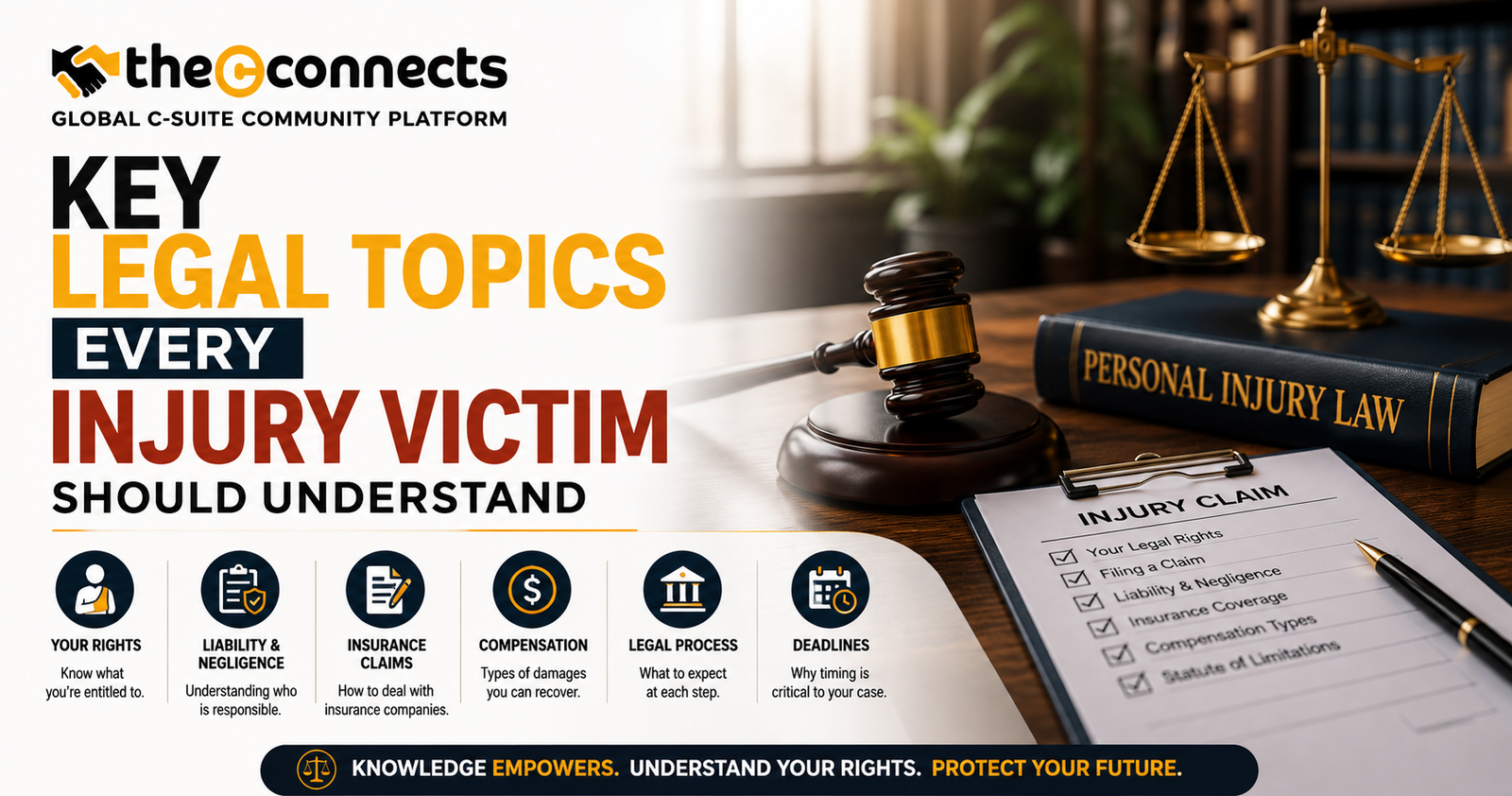

Texas sees a wide range of injury claims each year, from roadway collisions on busy interstates to workplace incidents in growing industrial corridors and everyday accidents in commercial spaces. In the aftermath, injured individuals are often focused on medical care and financial stability, yet the legal issues surrounding their situation begin developing immediately.
Understanding how these cases are evaluated can make a meaningful difference in how a claim progresses. Key legal topics such as fault, medical documentation, insurance communication, and compensation structure all play a role in shaping a case’s outcome. For many people, taking time to learn these essentials provides a clearer picture of what to expect and how to respond effectively. Those seeking further guidance may choose to view their homepage to explore educational resources and better understand how their rights may apply to a specific injury situation.
Deadlines Matter
Many families start by collecting discharge notes, imaging results, wage records, and incident reports before they compare case focus, attorney experience, and office access. That step has real value because filing limits, notice rules, and proof standards can shape a personal injury or car accident claim early on. Delay can narrow options, weaken witness memory, and increase pressure on a person already coping with pain, fatigue, or restricted movement.
Fault Shapes Recovery
Liability usually turns on whether another party failed to use reasonable care. That failure must also connect directly to the physical injury. Drivers, property owners, employers, and manufacturers may each be at fault, depending on what happened. Photographs, witness names, and prompt clinical evaluation often help link harmful conduct with tissue damage, symptoms, and measurable loss.
Damages Include More Than Bills
Emergency charges are only one part of a claim. Compensation may also cover lost wages, future treatment, prescription costs, rehabilitation, and assistance with routine home tasks. Lasting pain can matter as much as a hospital invoice. Careful tracking from the first week is useful. Receipts, payroll records, and treatment notes usually carry more weight than memory recalled months later.
Non-Economic Damages Matter
Some injuries alter life in ways no bill can show. Nerve pain, reduced grip strength, poor sleep, anxiety, and strain within close relationships may all affect value. Insurers and courts often look for steady chart notes and consistent personal reports when judging those losses. Long gaps in care can raise doubt, even where symptoms are genuine and persistent.
Insurance Companies Protect Their Side
Insurance representatives often reach out quickly after an accident. Their tone may sound calm, yet each answer can shape later arguments about pain, timing, or responsibility. Recorded statements can be risky when medication, shock, or exhaustion affects recall. A brief comment made too soon may later be framed as proof that symptoms were minor, even if inflammation rose over several days.
Medical Care Builds Evidence
Treatment supports healing, but it also creates a medical timeline. That record can connect the event with fractures, soft tissue injury, concussion symptoms, or restricted range of motion. Missed visits and long delays may weaken that link. Physicians, therapists, imaging scans, and medication histories often become central proof when the other side questions severity, cause, or expected recovery.
Social Media Can Hurt a Claim
Online activity can damage a case more than many people expect. A smiling photo, a short video, or a casual remark may be taken out of context and used to question pain levels. Privacy settings offer limited protection. Friends may repost images, and defense lawyers can seek useful content through formal requests during the case.
Settlements Require Careful Review
An early offer can feel tempting when bills keep arriving. Even so, fast payment may come before the full medical picture is clear. Some conditions worsen slowly, including disc injury, chronic headaches, or joint instability. Signed releases usually end the claim for good. Timing matters greatly where surgery, extended therapy, or permanent restriction remains a real possibility.
More Than One Party May Owe
Some injury events involve several responsible parties. A truck collision may raise issues involving the driver, employer, maintenance contractor, or cargo company. A fall on business property may involve an owner, a tenant, a cleaning vendor, or a repair crew. Finding each source of liability matters because one defendant may lack enough coverage to pay the full value of a serious loss.
Conclusion
Legal issues after an injury reach far beyond forms and deadlines. They touch pain control, treatment choices, household income, and the chance of fair compensation after preventable harm. People who learn the basics early are often better able to protect both health and legal rights. Fault, evidence, insurance tactics, and full damage review all matter. When those areas receive close attention, avoidable mistakes are less likely to weaken the final result.