

Most startup founders love to talk about “impact” from the comfort of an air-conditioned boardroom. Shamim H. is living it-one harvest at a time, standing inside a polyhouse in the hills of North Bengal.
An engineer and IIM Calcutta alumnus, Shamim spent over a decade at the sharp end of India’s tech-driven economy. He mastered the science of moving things efficiently at scale, holding leadership roles at Zomato (where he served as COO – City Operation), Amazon, Blinkit, and Rapido. Yet, despite optimizing the “last mile” of food delivery brilliantly, he realized the “first mile”-the farmer and the soil-was fundamentally broken.
To fix this, he founded The Carrot India Co., an AgriTech platform transforming the agricultural landscape of Eastern India. By bridging cutting-edge technology-such as Nanobubbles, Plasma-Activated Water, and Artificial Intelligence-with traditional farming, The Carrot India Co. has empowered over 500 farmers to grow high-value exotic crops locally.
TheCconnects recently sat down with Shamim to discuss his extraordinary pivot from corporate tech to agriculture, the science of hydroponics, and what it truly means to build a farm-to-fork ecosystem.
TheCconnects: Shamim, it is an absolute privilege to speak with you. Your professional journey is a masterclass in operational scaling. You’ve held key roles at Zomato, Amazon, and Blinkit. What made you leave the peak of the corporate tech world to start an agriculture company in North Bengal?
Shamim H.: Thank you for having me. The transition really started with a simple observation that wouldn’t leave my mind. During my time at companies like Zomato and Amazon, we were optimizing the last mile brilliantly. We could deliver food or packages in minutes. But the first mile-the farmer, the harvest, the exact moment food leaves the soil-was completely broken, especially in Eastern India.
I looked at the hills of North Bengal and Sikkim. The climate-cool, humid, rich soil, dynamic altitude-is absolutely perfect for premium exotic vegetables. Yet, we were importing broccoli, colored capsicum, and zucchini from hundreds of kilometers away, losing freshness and value at every middleman’s stop. I realized nobody with a deep technology and operations background was fixing this at the source. We had the land, but the farmers didn’t have the know-how or the market guarantee. I stepped away from the corporate world to build that bridge.
TheCconnects: Making a leap like that requires immense conviction. Who has influenced you the most on this journey?
Shamim H.: My biggest influence has been the collective ecosystem of partners and farmers who believed in this vision. Transforming what an entire community grows cannot be done alone. Institutions like the National Horticulture Board, specifically Mr. Sansar Ahmed, and North Bengal University under Mr. Amrendra Pandey, provided the agronomic backing we needed.
But on a deeply personal level, my co-founder, Joydip Sarkar, has been a massive influence. We were close friends, and while he is a mechanical engineer by education, he was working comfortably as a supply chain professional in a Japanese MNC. When he saw what we were building, he walked away from his stable career to join me. Having someone who bets on the mission as deeply as you do changes everything.
TheCconnects: Bringing exotic horticulture to traditional farmers sounds incredibly challenging. What were the biggest hurdles you faced, and how did you overcome them?
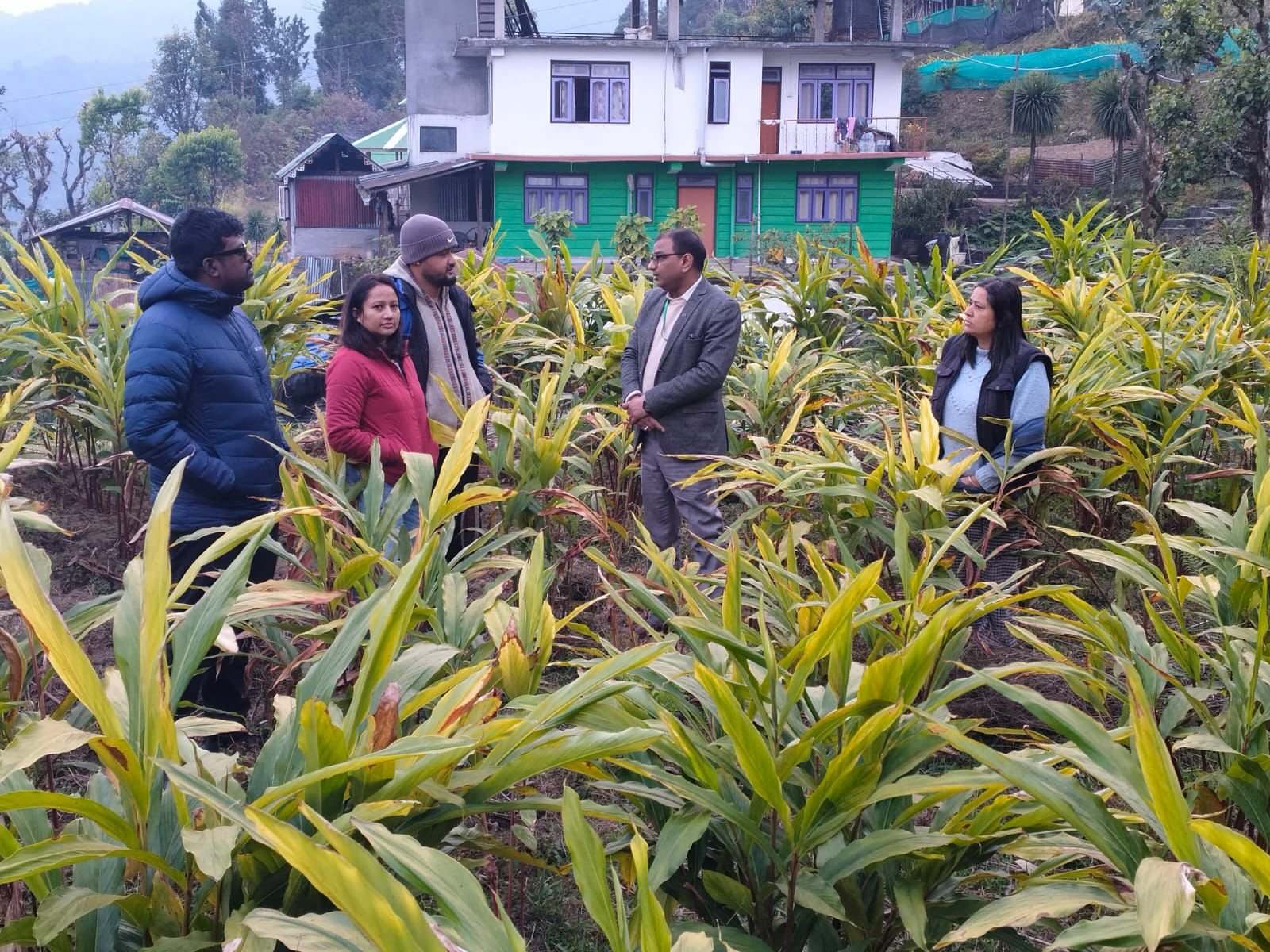
Shamim H.: The primary challenge was trust. For generations, farmers in these hills grew what their fathers grew, sold at traditional prices to the same middlemen. If I just showed up with a business pitch, it wouldn’t have worked.
We overcame this by leading by example. The Carrot India Co. isn’t just an aggregator; we farm ourselves. We set up our own hydroponic units and polyhouses. We used our farms as living demonstration centers so the farmers could see practically that growing exotic vegetables works, the market exists, and the income is real. Furthermore, being incubated by IIT Kharagpur’s Agro Food Business Incubation Centre (AFBIC) gave us access to world-class agricultural research, which we transferred directly to the farmers. We didn’t just ask them to take a risk; we shared the risk with them.
TheCconnects: You have implemented some fascinating deep-tech solutions at The Carrot India Co., like Nanobubble Technology and Plasma-Activated Water. Can you share a key lesson you’ve learned from integrating this level of tech into agriculture?
Shamim H.: The biggest lesson is that technology in agriculture shouldn’t just be about software; it must fundamentally respect biology.
Take Nanobubble technology, for instance. By injecting ultra-fine oxygen bubbles into our hydroponic water, we’ve seen incredible improvements in root health and nutrient uptake, completely eliminating the need for fungicides. Similarly, Plasma-Activated Water acts as a natural biostimulant, allowing us to reduce synthetic fertilizers. The lesson here is that true agricultural technology doesn’t fight nature-it amplifies it. We use AI for demand forecasting and supply chain optimization, but the core of our tech stack is about growing cleaner, healthier food.
TheCconnects: You operate in a space that relies heavily on consumer trust. What do you see as the biggest challenge for AgriTech brands in the digital space today?
Shamim H.: The biggest challenge is the dilution of words like “farm-fresh” or “traceable.” In the digital space, it is incredibly easy for a brand to use green aesthetics and claim they support farmers, even if they are just buying from the same opaque mandis (wholesale markets) as everyone else.
The challenge is proving authenticity. We tackled this head-on. Every product that leaves The Carrot India Co.’s farm carries a QR code. When a consumer scans it, they don’t just see a marketing video-they see the exact farmer’s name, the farm’s location, and the precise time of harvest. We made traceability a digital reality, not a marketing gimmick.
TheCconnects: How does The Carrot India Co. directly address the pain points of both your B2B clients and end consumers?
Shamim H.: Eastern India’s exotic vegetable market is worth roughly ₹3,500 crore, driven by a booming HoReCa (Hotel/Restaurant/Café) sector and health-conscious consumers. Their biggest pain point was paying a premium for imported exotic vegetables that were already days old and wilting by the time they arrived.
Our solution is proximity and operational rigor. We operate on a strict promise: Harvested at Dawn. Delivered by Dusk. By growing locally what was earlier being imported from other states, we are drastically reducing “food miles.” This shift alone reduces 45-55 tons of carbon emissions annually-which is equivalent to planting 2,500 trees a year.
Furthermore, imported exotics typically suffer up to 30% post-harvest loss during transit and storage. Our local network reduces this to under 5%, saving approximately 25% of the total volume. To reduce this post-harvest loss even further, we are actively working on value addition along with ICAR. Ultimately, by removing commission agents and shortening the supply chain, we provide five-star hotels and regular households in eight cities with produce that is genuinely farm-fresh, grown strictly to specification, and competitively priced.
TheCconnects: Your days must be incredibly packed, managing everything from AI supply chains to farm operations. What do you do in your free time?
Shamim H.: My free time blends heavily into my passion for the future of farming. Right now, I spend a lot of time in the highlands of Sikkim. We are currently running trials for crops that have never been commercially cultivated at scale in Eastern India-like Haas avocados, blueberries, and persimmons. Exploring these terrains, understanding the soil, and envisioning what this region could produce next is how I recharge.
TheCconnects: You’ve scaled The Carrot India Co. past ₹5 crore in revenue in just 18 months, with your eyes set on ₹10 crore for FY26-27. Do you have any advice for aspiring entrepreneurs looking to enter the AgriTech or supply chain industry?
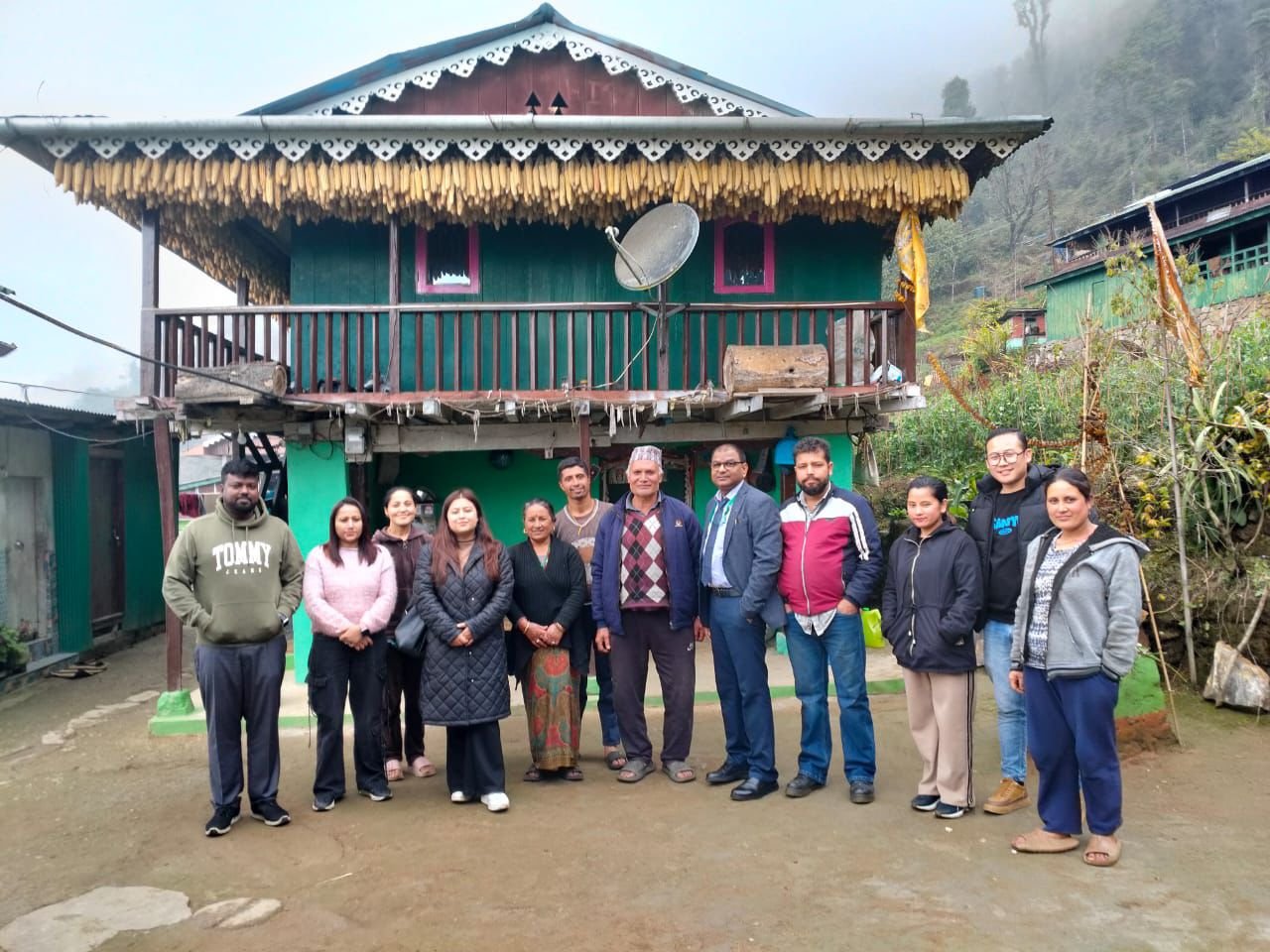
Shamim H.: Don’t just build an app; solve the ground-level infrastructure. Many founders want to aggregate without getting their hands dirty. If you want to change agriculture, you have to understand the soil, the science, and the farmer’s daily reality.
Build strong institutional partnerships early on, and never compromise on operational discipline. But most importantly, measure your success by the lives you touch. I used to be a City COO looking at delivery metrics. Now, I know 500 farmers by their first names. That human connection is the ultimate foundation of a resilient business.
TheCconnects: Shamim, thank you so much for your time and for sharing your profound journey with us today. Thanks for a very, very good interview; it has been packed with incredible insights.
Shamim H.: Thank you for having me. Yes, it was indeed a very, very good interview and a fantastic conversation! I deeply appreciate the opportunity to share our mission at The Carrot India Co. with your readers.